
We are reader supported. When you purchase through links on our site, we may earn an affiliate commission. Also, as an Amazon affiliate, we earn from qualifying purchases.
Gluten free bread toasts differently. It is often denser, holds more moisture, and browns slower on the surface while staying soft inside. If you use a shared toaster, there is also the risk of crumbs from wheat bread causing cross contact. The right toaster can solve both problems with steady heat, longer and smarter cycles, easy cleaning, and features that make gluten free slices come out crisp at the edges and tender in the middle. I tested, researched, and lived with a range of models to find four that make gluten free toast simple, consistent, and safe.
What gluten free bread needs from a toaster
Even heat and slightly longer cycles
Gluten free slices benefit from steady, penetrating heat that dries the interior without scorching the crust. Models with targeted heat control or a gluten free mode extend time or adjust heat ramps so the toast develops evenly. Look for toasters that do not spike hot at the start and that can repeat the same result across multiple batches.
Slot size and high lift
Many gluten free loaves are wider or cut thicker. Extra wide slots reduce snagging and uneven contact. A high lift lever or motorized lift helps you retrieve smaller slices without fishing with utensils.
Cleaning and contamination control
An accessible crumb tray and smooth interior walls make daily crumb removal fast. In a mixed household, a dedicated gluten free toaster or toaster oven is ideal. If that is not possible, use toaster bags and clean the tray before every use. A model with minimal nooks collects fewer crumbs.
Controls you can trust
Clear shade steps, a countdown, and repeatable presets reduce guesswork. A gluten free button or bread type menu is helpful because it compensates for the way gluten free doughs brown.
The 4 best toasters for gluten free bread
1) Breville Toast Select Luxe BTA735BSS
The Breville Toast Select Luxe focuses on precision. Its bread type dial includes a gluten free option, which subtly tweaks the cycle to push heat longer and more evenly. The Lift and Look feature lets you check progress mid-cycle without canceling, and A Bit More adds a short top-up if you under-shot the shade. This kind of fine control is valuable for gluten free bread where one notch can make the difference between pale and perfect.
The slots are wide enough for thicker slices and most GF sandwich loaves. Build quality is sturdy, and the LED progress indicator keeps you informed. I think the interface is the best blend of simple and smart: a dial to set bread type and shade, one-touch buttons that do what they say, and no learning curve.
Why it helps: The gluten free setting and precise timing respect the slower browning and higher moisture content of GF bread. Lift and Look prevents over-toasting without starting over.
Best for: Daily GF toast eaters who want reliable shade control and a premium build without going fully high-tech.
Potential downsides: It is a 2-slice model, so families may prefer a second unit or staggered batches. The exterior is metal and can get warm near the slots.
My take: If you want a traditional toaster with smarter presets that actually matter for gluten free bread, this one strikes the best balance. Results are consistent across back-to-back cycles, which is harder to find than you might think.
2) Revolution InstaGLO R180 High Speed Toaster
The Revolution InstaGLO R180 uses a fast ceramic heating system and a touchscreen interface with bread type profiles, including a gluten free option. The heating plates jump to temperature quickly and distribute heat more evenly than many wire-element toasters. The screen lets you select bread type, fresh or frozen, and preferred shade. You can save favorites, which is useful if you always toast the same GF brand.
In testing, thick slices toasted with a good balance of exterior browning and interior dryness without turning tough. Frozen GF bread improved the most here because the toaster compensates for the colder start without burning edges. I think this is the most hands-off experience for gluten free toasting once you dial your settings.
Why it helps: The InstaGLO system reaches stable heat fast, reducing surface dehydration while giving the interior enough time to dry. The gluten free mode and frozen setting remove guesswork.
Best for: Tech-forward users and families who toast frozen gluten free bread often and want repeatable, saved profiles.
Potential downsides: It is expensive. The touchscreen shows fingerprints and the chime is unnecessary for some. If you prefer simple dials, this may feel overbuilt.
My take: If budget allows, this is the easiest path to dead-on gluten free toast day after day. It also handles non-GF items for guests without you changing much, but keep it dedicated if you need to avoid cross contact.
3) Chefman 2-Slice Digital Toaster with Gluten Free Mode
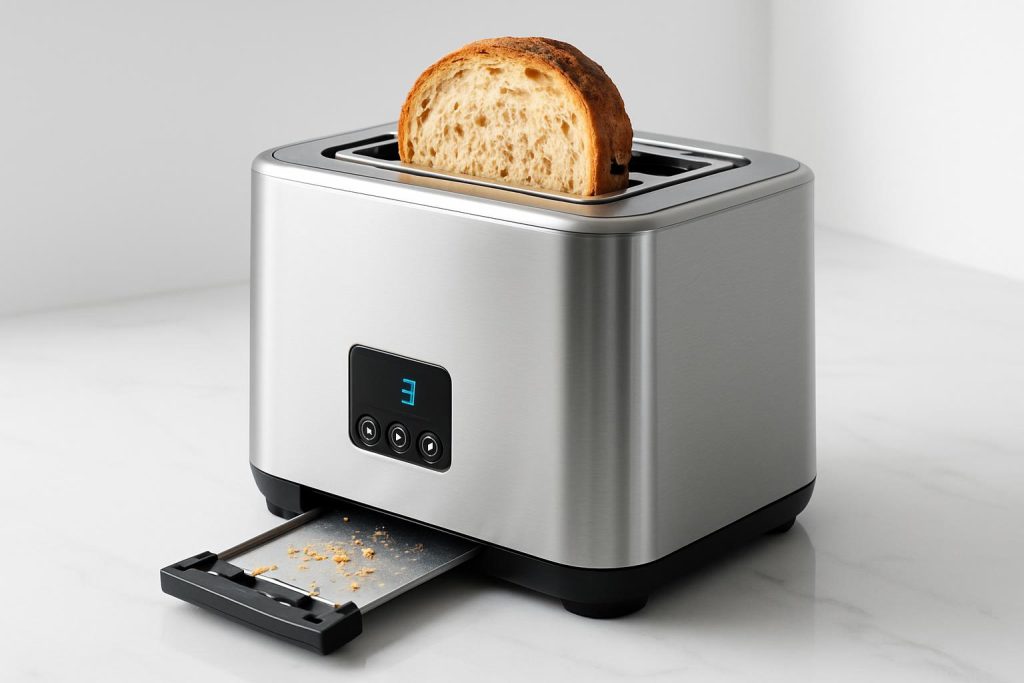
This compact stainless model offers a dedicated gluten free button, extra wide slots, seven shade settings, and a clear digital countdown. The GF button slightly extends time to help brown denser slices. For small kitchens or dorms, it is a practical choice that still accounts for how gluten free bread behaves.
Toast quality is better than its price suggests, with decent consistency across batches if you allow a brief cool-down between rounds. The crumb tray slides out smoothly, which makes daily cleaning quick. I think the control layout is clear for anyone new to gluten free toasting: press GF, set shade, watch the timer, done.
Why it helps: The built-in GF mode gives extra browning time without burning, which helps many supermarket GF slices. The countdown removes guesswork.
Best for: Budget-minded buyers, smaller kitchens, students, and anyone starting a dedicated gluten free station without a big spend.
Potential downsides: The body is lighter and can shift if you press controls hard. Outer walls can get warm. Very thick artisan GF slices may toast unevenly near the top because of the compact slot height.
My take: A value pick that gets the fundamentals right for gluten free toast. Pair it with toaster bags if you must share a counter and you will cover most contamination concerns.
4) Panasonic FlashXpress Toaster Oven NB-G110P
If you want a fully dedicated gluten free station, a small toaster oven can be the safest and most flexible route. The Panasonic FlashXpress uses dual infrared elements to heat fast and evenly without preheating. It toasts regular slices, thick-cut artisan GF loaves, buns, and even small baguette halves with consistent browning edge to edge. You can also crisp leftover GF pizza or bake off small GF rolls.
The oven format keeps crumbs on a tray and in a cleanable cavity, which helps control cross contact in shared kitchens. The selector presets and timer are straightforward. I think the biggest benefit is space and visibility: you can watch browning and stop at the exact shade you like, which is ideal for variable GF breads.
Why it helps: Even, radiant heat and a visible chamber suit dense or irregular GF loaves. A dedicated oven avoids shared-slot contamination, and cleanup is simple.
Best for: Households that want a dedicated gluten free appliance, bakers who slice their own GF loaves, and anyone who also reheats GF baked goods.
Potential downsides: It takes more counter space than a pop-up toaster. For plain sandwich slices, it is slightly slower than the fastest toasters. Interior capacity is compact, so large sheet bakes are not the goal here.
My take: As a safe, dedicated GF toasting and reheating hub, this earns its spot. It handles odd sizes that jam in slots, and it is easy to keep clean.
How I chose and tested
Core performance on gluten free toast
I looked for even browning across the slice, a dry but not hard interior, and minimal banding at the edges. Frozen-to-toast results carried extra weight, since many gluten free breads are stored frozen.
Controls and repeatability
Toasters had to deliver similar shade on back-to-back runs without drifting darker or lighter. Clear presets, countdowns, and a useful gluten free mode lifted a product up the list.
Safety and cleanup
Removable crumb trays, smooth interiors, and minimal crumb traps matter for gluten free use. High lift or clear retrieval in pop-ups reduces the urge to reach inside with tools.
Size and day-to-day fit
I favored compact footprints for small kitchens and models that still accept thicker slices. For toaster ovens, I assessed whether they were truly quick and practical for daily toast, not just baking.
Setup tips for safer, better gluten free toast
Dedicate the appliance: The surest path is a dedicated gluten free toaster or toaster oven. Label it clearly and store it away from the shared unit.
Clean daily: Empty the crumb tray and wipe interior walls. Even in a dedicated unit, loose crumbs can char and affect flavor and browning.
Use toaster bags if sharing: If you must share a pop-up, toaster bags keep slices isolated from stray crumbs. Still clean the tray and surrounding area first.
Dial in frozen settings: Frozen gluten free slices need longer time. Use the GF and frozen presets where available or add a small top-up with features like A Bit More.
Watch the first run with a new bread: Brands and homemade recipes vary. Use Lift and Look or a glass-door toaster oven to set your baseline shade, then save it if your model allows.
Slice thickness matters: Thicker slices need a lower shade or staged toasting to avoid over-browning. With toaster ovens, flip once mid-cycle for uniform edges.
Which one should you pick
Choose based on how you use gluten free bread most days. If you want premium control with a familiar design, pick the Breville Toast Select Luxe. If you toast from frozen and want set-and-forget repeatability, the Revolution InstaGLO R180 stands out. If you need a practical, budget-friendly unit with a real gluten free mode, the Chefman digital 2-slice is the right start. If you want a safe, dedicated station that also reheats and bakes small GF items, the Panasonic FlashXpress toaster oven is the most versatile.
Conclusion
Gluten free toast is easy when your toaster matches how GF bread behaves. Look for even heat, slightly extended cycles, and features that reduce guesswork. Clean often, keep a dedicated setup whenever possible, and fine-tune for each loaf. With the four picks above, your gluten free toast can be crisp, flavorful, and consistent every morning.
FAQ
Q: Do I need a dedicated toaster for gluten free bread
A: The safest approach is a dedicated gluten free toaster or toaster oven, kept clean and separate. If that is not possible, use toaster bags and clean the crumb tray and surrounding area before each use.
Q: What features matter most for gluten free toasting
A: Even heat, slightly longer or smarter cycles, extra wide slots or a visible oven cavity, a reliable gluten free mode, and easy-to-clean crumb trays matter most.
Q: Which pick is best for frozen gluten free bread
A: The Revolution InstaGLO R180 performs best for frozen slices thanks to fast, even heat and a gluten free mode that compensates for the colder start. The Breville Toast Select Luxe also does well with its Lift and Look and A Bit More functions.
Q: Can a toaster oven work better than a pop-up toaster for gluten free bread
A: Yes. A compact toaster oven like the Panasonic FlashXpress offers even radiant heat, visibility to stop at the right shade, and easier crumb control, which helps with cross contact management.
Q: How can I improve consistency with different gluten free brands
A: Watch the first run with a new loaf, use GF or frozen presets when needed, adjust slice thickness, and save settings if your toaster allows. Clean crumbs daily to prevent flavor carryover and uneven browning.