
We are reader supported. When you purchase through links on our site, we may earn an affiliate commission. Also, as an Amazon affiliate, we earn from qualifying purchases.
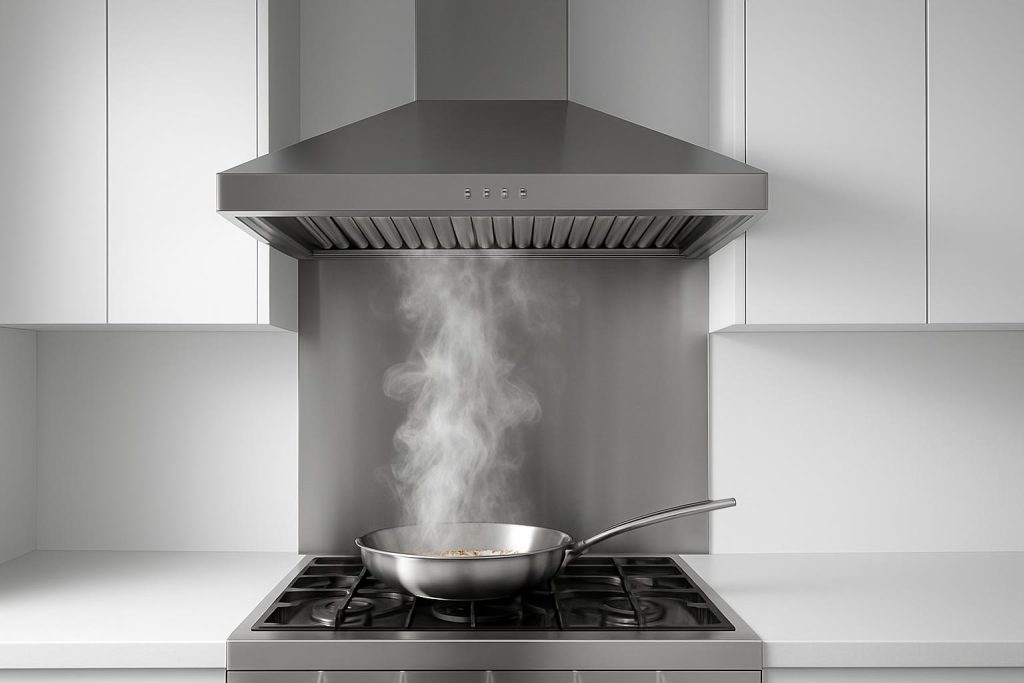
Heavy tadka, deep-frying, and long simmers create dense smoke and sticky grease. If your hood cannot pull fast and capture well, the film lands on cabinets, walls, and ceilings. The right range hood fixes this at the source. In 2026 the best picks for Indian cooking share a few traits: high CFM, wide capture area, baffle filters, and solid ducting. Below I break down what matters, then review four hoods that keep up with everyday Indian cooking without fuss.
What Matters Most For Indian Cooking Ventilation
Airflow that actually clears the pan
Look for 800 to 1000 CFM or more. For frequent deep-frying, high-heat searing, or heavy tempering, higher CFM clears smoke before it spreads. Lower numbers struggle with oil-heavy steam.
Capture area and hood depth
Airflow is not enough if the hood mouth is shallow. Aim for a hood at least as wide as your cooktop and 20 to 24 inches deep for wall mounts and under-cabinet units. Side-draft hoods solve capture with a close-in intake next to the pan, which can outperform bigger but shallower canopies in real kitchens.
Filters that can handle oil
Baffle filters are best for oily vapors from frying and tadka. They separate grease without clogging fast and are easy to clean. Mesh filters clog quickly under oil-heavy cooking and reduce performance.
Ducted beats recirculating
Ducted installation vents smoke and heat outdoors. Recirculating setups only push air through carbon filters and back into the room. For Indian cooking, go ducted if at all possible.
Duct size and layout
Large hoods need large ducts. Use 7 to 8 inch round duct for 850 to 1000 CFM and keep runs short with gentle elbows. Long runs and small ducts choke airflow and add noise.
Noise and real usability
Expect noise at max speed. The test is whether you can cook most tasks at mid speeds and only spike to max during intense sears. Good hoods let you step down once the pan stabilizes.
Simple cleaning and upkeep
Dishwasher-safe baffle filters save time. Wipe the interior weekly in heavy-use homes. Some premium hoods add self-cleaning features or filterless designs that collect grease in a tray.
The 4 Best Range Hoods For Indian Cooking In 2026
FOTILE EMS9018 1000 CFM Side-Draft Range Hood
Why it helps: The side-draft intake sits close to the pan and pulls smoke before it spreads. The 1000 CFM boost clears heavy oil vapor fast. This design tackles the classic problem of smoke escaping the front burners.
Key points: Side-draft capture, high CFM boost, large intake aperture, grease tray collection, sleek profile for tight kitchens.
Best for: Apartments and homes where a deep canopy is not possible; cooks who do daily tadka and frequent deep-frying; homes that need strong capture without a bulky hood.
Noise: Noticeable at max but mid-range is comfortable. Because capture is efficient, I often use a lower setting than I would with a standard canopy.
Real-world results: I think this is the easiest way to keep smoke out of the room during popping mustard seeds and chili tadka. Steam and spice vapor get pulled sideways immediately. The kitchen stays clearer, and cabinets near the stove pick up less sticky film over time.
Installation notes: Plan for a proper duct run matching the unit outlet. Keep the hood centerline aligned with the cooktop. Check mounting height per manual to maintain the side-draft effect. Use 7 to 8 inch duct if your route is longer or has bends.
Cleaning and upkeep: Wipe the intake panel weekly. Empty the grease tray regularly. No mesh to clog, which keeps suction consistent.
Potential downsides: Higher price than basic canopies. You need accurate mounting for optimal side capture. If you often use very tall stockpots on the rear burners, give the intake enough clearance.
Bottom line: For Indian cooking in compact spaces, side-draft capture with 1000 CFM boost is a strong match. It outperforms many deeper canopies in day-to-day frying and tempering.
IKTCH IKB02-30 900 CFM Wall Mount Range Hood
Why it helps: 900 CFM with stainless baffle filters offers strong pull for oil-heavy cooking. The wide canopy and good depth grab front-burner smoke before it rolls out.
Key points: 30 inch wall mount, 900 CFM, baffle filters, multiple speeds, bright LED lighting. Some versions include gesture control and a remote, which is convenient when hands are oily.
Best for: Standard 30 inch gas ranges; cooks who want pro-style suction without a pro price; families that fry weekly.
Noise: Mid speeds are fine for conversation. Max is loud but short bursts during searing are manageable. Because the duct path matters, use a large duct and smooth transitions to keep sound down.
Real-world results: I think this hood hits the value sweet spot. During deep-frying, it holds a steady updraft that prevents the hot oil smell from lingering in the living room. Tadka smoke does not set off alarms when I run it at level 4 to 5, and I use max only when I see a heavy plume.
Installation notes: Use at least a 7 inch round duct. Keep the mounting height within the recommended range so the front edge of the canopy sits over the front burners. Seal joints with foil tape for airtight flow.
Cleaning and upkeep: Drop the baffle filters and load them in the dishwasher every one to two weeks in heavy-use homes. Wipe the underside weekly to prevent oil film.
Potential downsides: Stainless can show smudges. At the highest setting, expect vibration if the wall anchors or chimney are not tightened well during install.
Bottom line: A strong 900 CFM wall mount with real baffle filters that holds up under frequent frying and tempering. Good performance per dollar.
Hauslane Chef Series UC-PS18 860 CFM Under Cabinet
Why it helps: Under-cabinet footprint with pro-level suction. 860 CFM and baffle filters deliver steady airflow over both front and rear burners while fitting a standard cabinet layout.
Key points: 30 inch or 36 inch options, six speeds, bright LED lights, dishwasher-safe baffles, rear or top venting. Controls are simple and reliable.
Best for: Kitchens that keep cabinets above the stove; renters or owners who want a serious upgrade without reworking upper cabinets.
Noise: Strong on high, but everyday cooking stays around mid speeds. Sound improves a lot with an 8 inch duct and short runs. If you hear whistling, check for a reducer or kink.
Real-world results: I think this is the best under-cabinet pick for consistent Indian home cooking. It handles day-to-day tadka at mid settings and keeps pace with weekend bhajias or pakoras. Odors clear faster because the canopy sits close to the cookware.
Installation notes: Align the outlet with your existing duct cutout to avoid tight bends. Protect the cabinet base with the included or a custom liner. Use a backdraft damper to stop cold air from entering when off.
Cleaning and upkeep: Filters remove fast and go into the dishwasher. Wipe the light lenses and inner seams monthly so buildup does not harden.
Potential downsides: Deeper pots on the rear burners can sit closer to the baffles, so keep the hood height correct. If your cabinet overhang is shallow, confirm the hood depth so it covers the front burners.
Bottom line: A capable, compact under-cabinet hood that hits the airflow, capture, and filter trifecta for oily cooking.
BV Range Hood 900 CFM Under Cabinet
Why it helps: 900 CFM with solid stainless baffle filters in a no-nonsense package. It delivers strong suction and easy cleaning without extra features you may not use.
Key points: 30 inch or 36 inch under-cabinet, three to six speeds depending on model, full-size baffle filters, sturdy build. Good fit for straightforward, high-power ducted installs.
Best for: Home cooks who want power and reliability on a budget; rental properties that need durable hardware for heavy use.
Noise: Typical for 900 CFM class. Low and medium are fine for simmering and sautéing. Max is loud but effective for deep-frying.
Real-world results: I think this is the workhorse pick. It moves air fast and clears the room after a big fry session. The grease collection in the baffles is predictable, and suction stays strong if you keep filters clean.
Installation notes: Use a rigid 7 to 8 inch round duct if possible. Avoid flex duct. Secure the unit to studs or a solid plywood backer. Check clearances under the cabinet to ensure the front edge reaches over the front burners.
Cleaning and upkeep: Pop the baffle filters out weekly in heavy-fry homes. Hot water, degreaser, and a soft brush or the dishwasher keep them clear. Wipe the interior edges monthly.
Potential downsides: Fewer premium features. Lighting is basic. The finish is durable but shows fingerprints if not wiped.
Bottom line: Strong airflow, robust baffles, fair price. A dependable under-cabinet hood for serious daily cooking.
How To Choose Between These Four
Kitchen layout first
Pick based on your space. If you have overhead cabinets you want to keep, under-cabinet models like Hauslane UC-PS18 or BV 900 CFM fit cleanly. If your stove sits against a wall with open space above, a wall mount like IKTCH IKB02-30 is simple. If you want maximum capture without a deep canopy, the FOTILE side-draft wins.
Cooking style and frequency
Daily tadka and weekly deep-frying call for 860 to 1000 CFM with baffle or filterless grease handling. For occasional heavy frying, 800 to 900 CFM is still safe and effective. If you simmer more than sear, you can usually run at mid speeds and cut noise.
Ducting reality
If your duct route is long or has multiple elbows, choose the higher CFM options and use an 8 inch round duct to reduce resistance. Good ducting can make a mid-price hood beat a more expensive unit with poor duct layout.
Noise tolerance
All high-CFM hoods get loud at top speed. The goal is to run at level 3 to 5 for most cooking and only boost for 30 to 90 seconds at ignition or during intense browning. Look for models with multiple speeds and responsive controls.
Installation Essentials For Strong Suction
Correct height
Mount within the maker’s range, often 24 to 30 inches above gas cooktops for canopies, and per spec for side-draft intakes. Too high reduces capture. Too low can be unsafe over high flames.
Right duct size
Use 7 to 8 inch round duct for 850 to 1000 CFM. Avoid reducers. Every step down adds noise and cuts airflow.
Short, smooth runs
Keep elbows to a minimum and use wide-radius bends. Use rigid metal duct, sealed with foil tape at seams. Support long runs to prevent vibration.
Sealed connections
Air leaks waste CFM. Seal every joint and the wall cap. Install a backdraft damper so air does not flow back when off.
Check local rules
Some places require make-up air for high-CFM hoods. If you feel strong negative pressure or doors slam when the hood runs, crack a window or plan a make-up air path.
Care And Cleaning For Heavy Oil Cooking
Weekly wipe-down
Use a degreaser on the canopy underside and around the intake. Oil film hardens fast near the stove.
Filter routine
Run baffle filters through the dishwasher every one to two weeks in heavy-use homes. For side-draft units, empty grease trays as directed and wipe channels.
Light maintenance
Keep LED lenses clear. Check the damper flap seasonally. Listen for new rattles that may signal loose screws in the chimney or mounting brackets.
My Shortlist Summary
Quick picks by scenario
Maximum capture in compact spaces: FOTILE EMS9018 1000 CFM side-draft.
Best value wall mount for heavy frying: IKTCH IKB02-30 900 CFM with baffle filters.
Best under-cabinet balance of power and size: Hauslane UC-PS18 860 CFM.
Budget workhorse under-cabinet: BV 900 CFM with stainless baffles.
Conclusion
Indian cooking needs fast capture, strong airflow, and filters built for oil. Choose a hood that matches your layout, run a large smooth duct, and keep filters clean. With these four picks, you get reliable ventilation that keeps smoke out of the living room and grease off your cabinets. The result is a kitchen that smells fresh even after a heavy tadka or a long fry session.
FAQ
Q: How much CFM do I need for Indian cooking
A: Aim for 800 to 1000 CFM or more, especially if you deep-fry, sear, and do heavy tadka often.
Q: Are baffle filters better for oily cooking
A: Yes, baffle filters handle oil vapor better than mesh, resist clogging, and are easy to clean.
Q: Is ducted ventilation necessary
A: Ducted is strongly recommended because it vents smoke and heat outdoors; recirculating only pushes air back into the room.
Q: What duct size should I use for a 900 to 1000 CFM hood
A: Use 7 to 8 inch round duct, keep runs short, and avoid reducers to maintain airflow and reduce noise.
Q: Which hood type is best for compact kitchens
A: Side-draft hoods like FOTILE EMS9018 capture smoke close to the pan and work well in tight spaces without a deep canopy.