
We are reader supported. When you purchase through links on our site, we may earn an affiliate commission. Also, as an Amazon affiliate, we earn from qualifying purchases.
Ducks need safe space, dry ground, clean water, and simple routines you can keep up every day. This guide shows beginner friendly builds that work in small yards or larger homesteads. You will see clear steps, material tips, and layout choices that prevent mud, smell, and predator risks. Keep reading to plan a secure, easy to clean duck enclosure you can build on a weekend.
Plan your space and safety basics
Space and layout
Plan space first so ducks stay calm and healthy. Overcrowding raises stress, smell, and mess. Start with the footprint you have, then plan the run, house, water zone, and a dry path for you to walk. Good layout keeps chores short and your shoes clean.
Give at least 10 square feet per duck in the run and 4 to 6 square feet per duck in the house.
Place the house on the high, well drained side. Put water on the low side or near a drain path. Keep a people door that opens inward and a clear aisle so you can push a bin or rake through fast. If you can, face doors away from prevailing wind.
Predator proofing essentials
Raccoons, foxes, dogs, hawks, and rats test every weak point. Chain link and chicken wire slow birds, not claws or teeth. Hardware cloth, tight doors, and a roof solve most risks. Think like a raccoon. If you can pry it with fingers, it is not safe.
Use half inch galvanized hardware cloth for walls and vents, and bury a 12 inch skirt around the perimeter.
Cover the top of the run with a solid roof or strong netting to stop hawks and climbing predators. Add two stage latches or carabiners so smart hands cannot flip them. Seal gaps larger than half an inch.
Ventilation and shade
Ducks push moisture into the air fast. Vents at the top keep air fresh and reduce ammonia. Shade drops heat stress and keeps birds active.
Provide shade cloth or a solid roof over part of the run, and keep cool water available at all times.
Lift vents under a roof overhang so rain stays out. In hot zones, plan 50 to 70 percent shade over the midday run.
Water and drainage
Water is fun for ducks and a mess for you unless you control it. Make one small place for wet play and keep the rest dry. This lowers mud and smell.
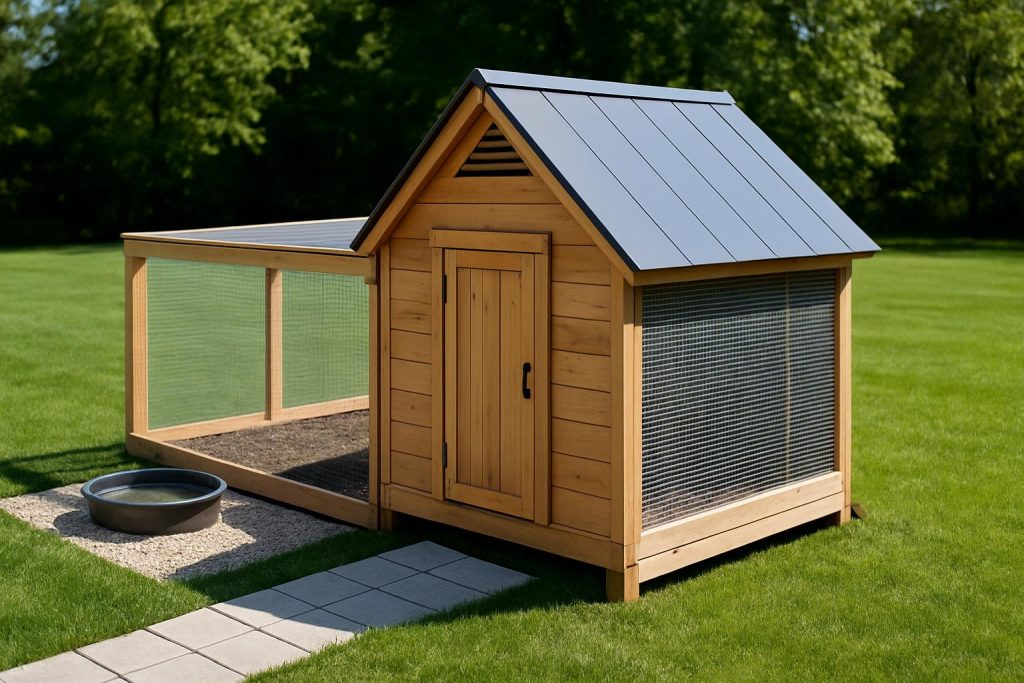
Set a dedicated splash zone with a drainable tub on pea gravel, and use deep litter with wood shavings in the house.
Use a sturdy tub you can tip and refill in seconds. A gravel pit under the tub drains well. Keep water at least 10 feet from the house to protect bedding.
Door design and night safety
Night is when most attacks happen. Lock birds inside a secure house every evening. Use a solid door with a frame that resists warping. A simple wooden ramp with cleats helps ducks walk in and out safely.
Fit a latch that needs two moves to open. Add a small pop door for ducks and a larger people door for chores. Check the sill for gaps and seal with a threshold strip.
Fast material checklist and saving tips
Core materials
– Half inch hardware cloth, 19 gauge or stronger for walls and vents
– One by three or two by three lumber for frames and doors
– Exterior screws, washers for attaching mesh, heavy duty staples for temporary holds
– Roofing panels, tarp, or shade cloth for cover
– Pavers or gravel for paths and splash zone
– Hinges, barrel bolts, and carabiners for secure latching
Saving tips
– Use pallets for walls or floor skids
– Use cattle panels for fast, strong hoops
– Convert a used dog kennel with added mesh and a roof
– Reuse deck boards for ramps and trim
– Set posts on deck blocks to avoid concrete and speed builds
Five DIY duck enclosure ideas with steps
Pallet A frame shelter with compact run
This fits two to four ducks and uses cheap or free pallets. It gives strong walls, a dry house, and a small attached run. Build it in a weekend with basic tools.
Size target 4 by 6 foot house with a 6 by 8 foot run. Place the long side facing morning sun. Add shade over the run for hot days.
Steps
– Sort six to eight same size pallets. Pick the flattest for floor skids
– Make an A frame by leaning two pallets into a peak and screwing to a ridge board
– Skin the roof with plywood or roofing panels, leaving a 2 inch ridge vent under a cap
– Close gable ends with lumber and a duck door on one side
– Floor the house with plywood on skids to lift it off ground 3 to 4 inches
– Add deep litter with wood shavings 3 to 4 inches deep
– Build a 6 by 8 foot run frame with two by threes and wrap in hardware cloth
– Roof the run with panels or heavy tarp under a slight pitch
– Set a splash zone 10 feet from the house on pea gravel
Maintenance
– Top up bedding weekly, full clean every one to two months
– Inspect pallet joints each season and add screws where needed
Cattle panel hoop run with sheltered house
This is fast, strong, and light. The arch sheds rain and snow with little framing. Add a small house at one end or inside the hoop.
Size target 8 by 12 feet for six ducks. Use three 16 foot cattle panels for the arch over a base frame.
Steps
– Build an 8 by 12 foot base from two by fours screwed into rectangles
– Bow three cattle panels across the width and fasten to the base with heavy fence staples and screws with washers
– Wrap the lower 3 feet on all sides with half inch hardware cloth
– Wrap the upper area with one by one inch welded wire for hawks, or continue hardware cloth if predators are heavy
– Frame end walls with a door on one end, solid panel windbreak on the other
– Add a solid roof panel strip 3 to 4 feet wide along one side for shade and rain cover
– Place a wooden house inside with top vents and a secure pop door
Upgrades
– Add ground anchors or screw in earth augers at corners
– Use clear greenhouse panels on the windward side for winter sun
Mobile duck tractor for lawn rotation
Rotating a small flock reduces mud and keeps grass healthy. A mobile tractor works for three to five ducks in mild weather. Lock birds in a solid house at night if predators are active.
Yes, make a light frame with welded wire, add wheels, and move it daily to fresh grass.
Size target 6 by 8 feet, under 30 inches tall to keep weight low. Add a small sheltered corner and a skirt you can fold out at rest stops.
Steps
– Build a 6 by 8 foot rectangle from one by three lumber with diagonal corner braces
– Add verticals 24 to 28 inches tall and a sloped roof frame
– Cover sides and roof with one by one inch welded wire, then add hardware cloth 24 inches up from the bottom
– Mount lawn mower wheels on one end and a carry handle on the other
– Install a lightweight door with two latches
– Zip tie a tarp over one third of the roof for shade and rain
Use
– Move daily to fresh grass so droppings spread and smells stay low
– Offer a separate lockable house at night if needed
Dog kennel conversion with roof and liner mesh
A used 10 by 10 dog kennel is a fast base. Chain link stops ducks but not predators, so add a mesh liner, roof, and skirt. This suits six to eight ducks with a house inside.
Steps
– Set kennel panels on pavers for a level, clean base
– Line the inside up to 3 feet high with half inch hardware cloth and secure every 6 inches
– Add a 12 inch hardware cloth skirt around the outside, pinned with landscape staples and covered with soil or gravel
– Roof the kennel with metal or polycarbonate panels on a simple timber ridge
– Place a wooden house with vents and a solid door in a back corner
– Create a splash zone near the gate for fast drain and refill
Extras
– Hang shade cloth on the sunny side
– Add a people door closer with a spring so it never stays open by mistake
Modular panel pen for renters
If you rent or plan to move, build panels you can carry and re bolt. Make 4 by 6 foot framed panels wrapped in mesh. Bolt them into any shape and add a roof and house. This also lets you expand fast.
Steps
– Build six to ten panels from one by threes, add a mid rail, and wrap in hardware cloth
– Bolt panels together at corners with carriage bolts and wing nuts
– Add a simple ridge beam and roof panels
– Drop in a prefab shed or small house with vents
– Lay a path of pavers inside for clean access after rain
Smart features that make daily care easier
Doors and latches that never fail
Fit barrel bolts top and bottom on duck and people doors. Add a carabiner to each bolt. Set a door sweep on the bottom edge to seal gaps. Use exterior grade hinges with long screws into solid framing.
Feed and water placement
Keep feed under a roof on a patio stone so it stays dry. Place water in the splash zone only. Use a bucket or tub you can dump in one move. Keep 3 feet of dry ground around the house door.
Nesting and sleeping
Ducks do not need roosts. Provide low nest boxes or simple corners with straw. One box per two to three ducks is enough. Keep nest areas dry, dim, and away from the splash zone.
Cleaning plan and deep litter
Good builds make cleaning fast. Bedding soaks moisture and controls odor. Outdoor areas dry fast with gravel and pavers.
Set a dedicated splash zone with a drainable tub on pea gravel, and use deep litter with wood shavings in the house.
Rake top bedding weekly and add fresh. Remove caked spots. Full clean when the base gets wet or smelly. Hose the splash zone and let it drain. Keep a yard waste bin for bedding so disposal stays easy.
Seasonal upgrades
Summer heat plan
Heat slows ducks and can cause stress. Shade, airflow, and cool water are your simple tools. Mist lightly if your climate is very dry, but keep the house interior dry.
Provide shade cloth or a solid roof over part of the run, and keep cool water available at all times.
Rain and mud control
Rain turns dirt to muck around doors and tubs. Gravel paths, pavers, and a raised threshold solve this. Add a shallow French drain beside the splash zone to move water away. Keep grass cover by rotating access if you can.
Winter setup
Cold air is fine if ducks are dry and out of the wind. Venting matters more in winter because moisture builds fast. Dry bedding keeps feet warm and reduces frostbite risk.
Block wind with clear panels, add extra dry bedding, and keep ventilation high and humidity low.
Do not seal the house tight. Leave top vents open under a roof overhang so warm, wet air escapes. Clear snow from the roof before big storms if panels are flat. Add grit and straw paths outside so ducks can walk without slipping.
Common mistakes to avoid
– Building too small and packing birds in tight
– Using chicken wire alone on walls or vents
– Letting water tubs overflow near the house
– Skipping a roof so hawks and raccoons have easy access
– Forgetting a dig proof skirt and secure latches
– Closing vents in winter and trapping moisture
– Placing feed near the splash zone and making paste you have to scrape
Quick build timelines
– Pallet A frame with small run one to two days
– Cattle panel hoop 6 to 8 hours with two people
– Mobile tractor 4 to 6 hours with pre cut lumber
– Dog kennel conversion one day including roof
– Modular panel pen weekend for eight to ten panels
Conclusion
A good duck enclosure is secure, dry, simple to clean, and easy for you to use every day. Start with the right space, lock down predators, and control water with a splash zone and drainage. Choose a build that fits your tools and time. Pallets, cattle panels, kennels, and modular frames all work well when you add hardware cloth, a roof, and solid latches. Keep airflow high, shade the run, and plan seasonal tweaks before you need them. Build once with these basics and your ducks stay safe, clean, and calm with chores that fit real life.
FAQ
Q: How much space do ducks need in a run and in a house
A: Give at least 10 square feet per duck in the run and 4 to 6 square feet per duck in the house.
Q: What mesh should I use to predator proof a duck enclosure
A: Use half inch galvanized hardware cloth for walls and vents, and bury a 12 inch skirt around the perimeter.
Q: How do I keep the duck area dry and clean
A: Set a dedicated splash zone with a drainable tub on pea gravel, and use deep litter with wood shavings in the house.
Q: Can I build a mobile duck tractor
A: Yes, make a light frame with welded wire, add wheels, and move it daily to fresh grass.
Q: How do I set up for winter
A: Block wind with clear panels, add extra dry bedding, and keep ventilation high and humidity low.