
We are reader supported. When you purchase through links on our site, we may earn an affiliate commission. Also, as an Amazon affiliate, we earn from qualifying purchases.
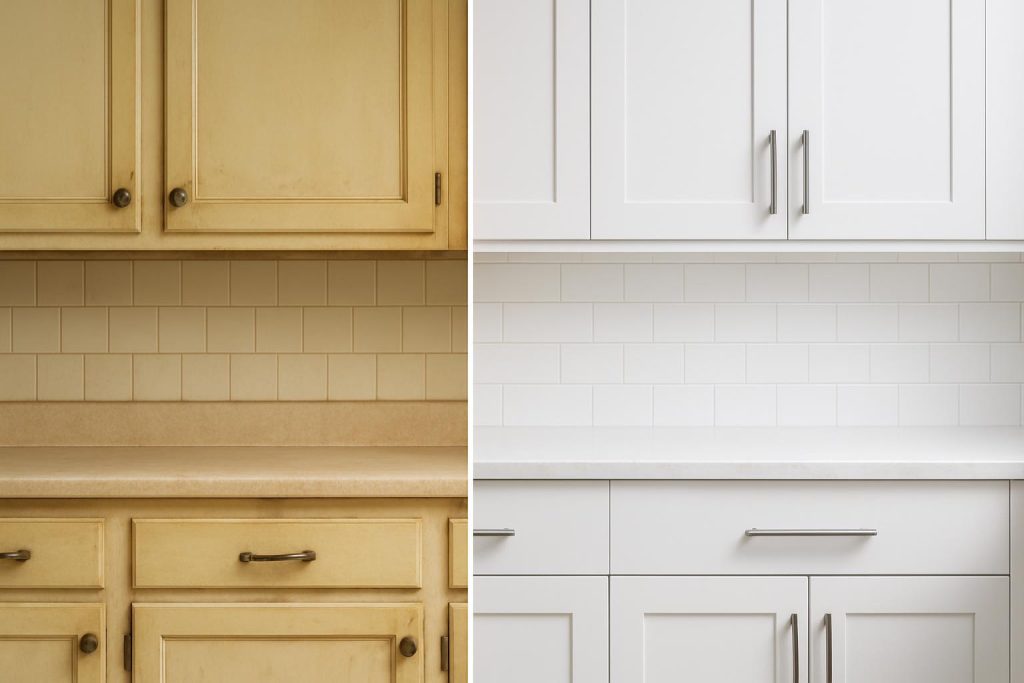
Kitchen cabinet makeovers deliver a big visual change without the cost of a full remodel. You can repaint, reface, or upgrade doors and hardware in days, not months. This guide gives you a clear path from before to after, with steps, tools, timelines, and common pitfalls to avoid. Follow the process and get a durable, pro looking result even if you are a beginner.
Introduction
Cabinet doors sit at eye level and set the tone for the whole kitchen. A smart makeover can modernize color, hide wear, add function, and make cleaning easier. Start with a plan. Choose the right approach for your boxes and budget. Prepare well. Apply finishes the right way. Upgrade hardware and interior fittings for daily ease. The after will look new and feel better to use.
Why a Cabinet Makeover Beats Full Replacement
Cost and Time Savings
Repainting or refacing often costs a fraction of new cabinetry. Most homeowners can complete a paint makeover in 5 to 10 days of part time work including drying time. Refacing with new doors and veneer usually takes 3 to 5 days after materials arrive. You avoid plumbing and electrical changes, so the kitchen stays usable.
Less Disruption and Waste
Keep your layout and boxes if they are sturdy. This reduces debris and shortens downtime. You also keep counters and backsplash intact, which lowers risk and surprise costs.
When Replacement Is Smarter
Replace cabinets if boxes are sagging, water damaged, moldy, soft, or poorly sized for appliances. Replace if you want a new layout or added walls and islands. Heavy structural fixes mean a makeover is not the right tool.
Plan Your After With Clear Goals
Assess the Current Cabinets
Check box material and condition. Note door style, rail widths, and any warping. Open and close every hinge and drawer. Look for grease buildup near handles and the stove. Decide if existing doors are worth saving or if you prefer new doors for a cleaner style.
Choose the Right Approach
Painting gives the biggest change for the least cost. Refinishing with stain works if wood is in good shape and you want a natural look. Refacing adds a new veneer on face frames with new doors and drawer fronts, best when the box is solid but the style is dated. Door swap only is a flexible middle ground. Trim and glass inserts can modernize raised panels and lighten uppers.
Color Strategy That Ages Well
Light neutrals make small kitchens feel larger and brighter. Soft white, warm cream, pale gray, or greige work with many counters. Dark lowers with light uppers add contrast without feeling heavy. If counters and backsplash have strong pattern, keep cabinet color calm. Test large samples near appliances and under lighting, both day and night.
Tools and Materials Checklist
Core Tools
Painter tape, screwdrivers, drill or driver, sanding block and sanding sponge, orbital sander for flat doors, 120 and 180 to 220 grit sandpaper, tack cloth, vacuum with brush, degreaser, clean buckets and rags, high quality synthetic brushes, 4 inch foam or microfiber rollers with trays, sawhorses with boards, label system for doors and hardware, respirator and gloves.
Coatings and Consumables
Bonding primer for laminates and slick finishes. Stain blocking primer for knots or bleed through. Cabinet grade enamel or urethane acrylic paint in satin or semi gloss. Wood filler for dings. Paintable caulk for gaps. If staining, use wood conditioner for softwoods, oil or water based stain, and a durable topcoat such as waterborne polyurethane or conversion varnish alternative designed for DIY.
Safety and Workspace Setup
Work in a clean, dry area with good light. Put down rosin paper or drop cloths. Ventilate and use a respirator when sanding or using solvents. Keep pets and dust away from drying parts. Set up drying racks to avoid handling wet surfaces.
Before Steps That Make the After Look Professional
Remove and Label Everything
Take off doors and drawer fronts. Bag and label hinges and screws by location. Number each door behind the hinge area and match the number on the cabinet box. Remove shelves you plan to paint.
Deep Clean and Degrease
Grease is the number one cause of paint failure. Wash all surfaces with a strong degreaser or TSP substitute. For heavy buildup, scrub and rinse twice. Wipe with clean water to remove residue. Let dry fully.
Sand for Tooth and Smoothness
Scuff sand all surfaces. Use 120 grit to remove gloss and nibs, then 180 to 220 grit for a uniform scratch. Sand profiles with a sponge to avoid flattening edges. Vacuum dust, wipe with a damp cloth, then a tack cloth.
Fill, Caulk, and Spot Prime
Fill dents, old hardware holes, and chipped veneer with wood filler. Let it cure, then sand flush. Caulk gaps at face frame joints and crown. Spot prime repairs to seal and level absorption.
Prime and Paint for a Durable Finish
Pick the Right Primer
Use a bonding primer on factory finishes, thermofoil, or melamine. Use a stain blocking primer on woods prone to bleed, such as oak, cherry, or pine, or when switching from dark stain to light paint. One to two coats usually cover. Allow full dry time as listed by the manufacturer.
Brush and Roll Technique
Do boxes first. Brush edges and corners. Roll broad areas with a 4 inch foam or microfiber roller. Lay off gently in one direction to reduce tracks. For doors, do backs first. Light coats reduce drips. Sand lightly with 220 grit between coats to knock down dust. Wipe clean before the next coat. Two primer coats and two paint coats create a tough shell for most projects.
Spraying Basics for a Factory Look
If you own or rent a sprayer, practice on scrap first. Thin only if the product label allows. Strain paint before loading. Spray doors flat for fewer runs. Keep a wet edge and overlap each pass by half. Maintain consistent distance and speed. Let coats cure as directed.
Staining or Clear Finishing Instead of Paint
When Stain Makes Sense
Choose stain if wood grain is even and you want warmth and depth. Avoid stain if veneer is thin or patched, or if you need to hide mismatched species.
Application Steps for Stain and Topcoat
Strip or sand to bare wood. Use wood conditioner on softwoods to reduce blotching. Apply stain evenly and wipe off the excess the same direction as the grain. Let dry fully. Apply two to three coats of a clear topcoat, sanding lightly between coats for smoothness.
Refacing and New Doors for a Bigger Style Shift
Veneer Application on Face Frames
Clean and sand frames. Dry fit veneer strips. Peel and stick or use contact cement as recommended by the supplier. Roll with a veneer roller. Trim edges with a sharp knife and sand lightly. Prime or seal edges before finishing.
Measuring and Ordering New Doors
Measure each opening. Decide on overlay size and hinge type. Choose a door style that fits your goal such as shaker, slab, or simple bevel. Order unfinished or factory finished. If finishing yourself, follow the same prep, prime, and paint steps as above.
Hardware, Hinges, and Functional Upgrades
Pulls and Knobs That Fit Your Hand
Pick hardware that matches your finish style and feels solid. Use a drilling template for consistent placement. For knobs, center vertically on the rail of doors. For pulls on drawers, center on width or follow top third placement for tall fronts. Always test on scrap before drilling the whole set.
Soft Close Hinges and Better Slides
Upgrade to soft close concealed hinges for a smoother close. Replace sticky slides with full extension soft close slides. Check alignment and adjust hinges after hanging doors to get even reveals.
Interior Organizers That Improve Daily Use
Add pull out trash, tray dividers, spice pull outs, or lazy susans. These upgrades raise daily satisfaction and make the after feel like a full remodel.
Lighting, Backsplash, and Styling the After
Under Cabinet and Toe Kick Lighting
LED strip lights under uppers add task light and show off the new finish. Toe kick lighting adds a modern note and improves safety for night use.
Coordinate With Backsplash and Counters
If you keep existing counters and tile, let those textures guide cabinet color and hardware finish. If you plan to change them next, choose a cabinet color that plays well with both current and future materials.
Open Shelves and Glass Doors
Replace a few upper doors with glass or remove doors for open shelves if you want a lighter top line. Paint the interior the same color as the exterior for a calm look or a shade lighter for depth.
Realistic Timelines and Budgets
Small Galley Paint Refresh
Scope includes degrease, sand, prime twice, paint twice, and new pulls. Expect 4 to 6 days with drying time if you work afternoons and evenings. Cost is low to moderate depending on paint brand and hardware.
Mid Size Reface With New Doors
Scope includes new shaker doors, veneer on frames, primer and paint, new hinges and pulls. Expect 3 to 5 installation days after doors arrive. Cost is moderate to high but still lower than full replacement.
Large Kitchen Mix Approach
Scope includes paint lowers dark, uppers light, new crown, glass inserts on two doors, soft close hardware, and a few pull outs. Expect 7 to 10 days. Cost is moderate with high visual impact.
Common Mistakes and How to Fix Them
Peeling or Chipping Paint
Cause is poor cleaning or missing bonding primer. Fix by sanding back to a stable edge, cleaning, spot priming with a bonding or stain blocking primer, then repainting thin coats.
Visible Wood Grain or Tannin Bleed
Grain telegraphing through paint needs a high build primer and more sanding between coats. Tannin bleed needs stain blocking primer. Apply another coat of primer, let dry long enough, then continue with finish coats.
Dust and Nibs in the Finish
Dust comes from dirty air and over handling. Fix by letting the coat cure, sanding lightly with 320 grit, wiping clean, and recoating in a dust controlled space. Use a tack cloth before each coat.
Maintenance To Keep the After Fresh
Cleaning Routine That Protects
Wipe spills fast. Clean monthly with a mild dish soap and warm water, not harsh chemicals. Dry right away. Add felt pads under frequently used items that contact doors or frames.
Touch Ups and Care
Save some paint for touch ups. For small chips, feather sand, dab primer, and touch with a small brush. Tighten loose handles and adjust hinges seasonally if doors shift.
Before and After Documentation Tips
Photos, Samples, and Labels
Take wide and close photos before you start. Shoot the same angles after to showcase the change. Keep a board with your sanding grits, primer, and paint used, plus a small labeled sample for future matching.
Conclusion
A strong cabinet makeover is the result of planning, prep, and methodical finishing. Clean and sand thoroughly. Prime with the right product. Apply thin, even coats. Upgrade hardware and add the interior features you use daily. With steady steps, your after will look crisp, resist wear, and elevate the whole kitchen without a full gut remodel.
FAQ
Q: What is the fastest way to update kitchen cabinets without replacing them?
A: Painting with proper degreasing, sanding, and bonding primer is the fastest path. Swap hardware the same day for a bigger change.
Q: How do I prep greasy cabinets before painting?
A: Wash with a strong degreaser or TSP substitute, rinse with clean water, let dry, then sand to remove gloss. Repeat cleaning if buildup is heavy.
Q: Should I brush, roll, or spray cabinet paint?
A: Brush edges, roll broad areas with a 4 inch foam or microfiber roller, and spray doors if you have the setup and practice. All methods work if you apply thin coats and sand lightly between coats.
Q: When is refacing better than repainting?
A: Choose refacing when boxes are solid but the door style is dated or damaged. New doors and veneer on frames deliver a larger style shift than paint alone.
Q: How long does a typical cabinet makeover take?
A: A paint refresh takes about 5 to 10 days of part time work including dry time. Refacing with new doors typically takes 3 to 5 days after materials arrive.