
We are reader supported. When you purchase through links on our site, we may earn an affiliate commission. Also, as an Amazon affiliate, we earn from qualifying purchases.
Violet sea salt brings color, scent, and texture to everyday routines. It can be culinary or cosmetic. The right choice depends on the label. With a few simple methods, you can use it for bathing, body care, light cleaning, odor control, and even finishing dishes. This guide shows clear steps, safety notes, and easy organizing tips so beginners can start right away.
What Violet Sea Salt Is
Two common types
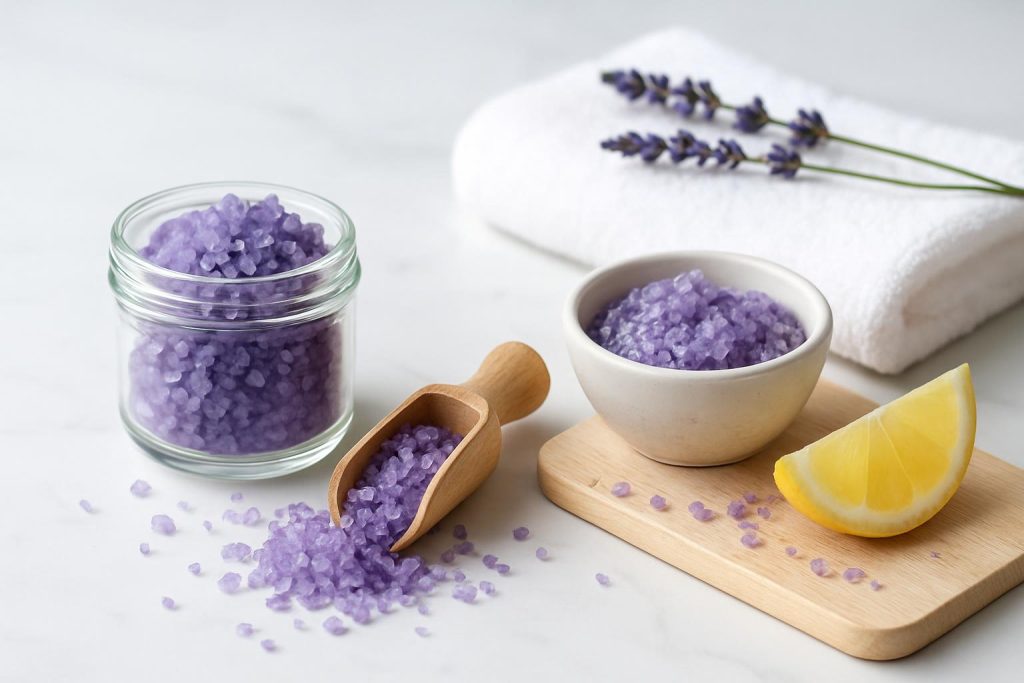
There are two main versions. Culinary violet sea salt is food grade and designed for finishing food or rimming drinks. Bath or body violet sea salt is cosmetic grade and designed for skin care, soaking, and home fragrance. Some products get their purple tone from minerals or botanicals. Others use colorants. This matters for staining and for where you use it.
How to read labels
Check for food grade versus cosmetic grade on the package. If you see fragrance, cosmetic colorants, or mica, do not eat it. If you see edible botanicals or wine infusion and no cosmetic additives, it is likely for food. When in doubt, treat it as non-edible.
Color transfer warning
Violet salts can transfer color to porous materials. Test on a small hidden area before you use it on fabric, grout, unsealed wood, or light stone. If transfer occurs, switch to plain white sea salt for that task.
Core Benefits at Home
Why it is useful
Violet sea salt adds gentle exfoliation for skin, a clean mineral feel in baths and foot soaks, and light odor control in small spaces. The scent can make routines feel calm and intentional. The grains also give grip for scrubbing cookware and sinks when used correctly.
Quick safety basics
Do a patch test before skin use. Test surfaces for colorfastness. Avoid salt scrubs on delicate coatings and natural stone. Do not mix salt with bleach or acidic cleaners in closed spaces. Keep all salts away from pets and children.
Bathroom and Body Uses
Relaxing bath soak
Add violet sea salt to warm bath water to soften the feel of the water and add a light aroma. Start with 1 cup for a standard tub. Stir the water by hand to dissolve grains. Soak for 15 to 20 minutes. Rinse your skin with clean water afterward if you prefer less residue. Wipe the tub with a damp cloth after draining to prevent color rings. If staining appears in tests, use a bath caddy tray to avoid direct contact with porous tub surfaces.
Foot soak after a long day
Use 3 tablespoons of violet sea salt in a basin of warm water. Soak feet for 10 to 15 minutes. This helps loosen dry skin and reduce foot odor. Dry feet well. Follow with a light moisturizer. This method is suitable before a quick at-home pedicure.
Body and hand scrub
Make a simple scrub for rough areas like elbows, knees, and heels. Mix 2 tablespoons violet sea salt with 1 tablespoon carrier oil such as sweet almond or fractionated coconut. On damp skin, massage in small circles for up to one minute per area. Rinse well and pat dry. For hands after gardening or greasy tasks, mix violet sea salt with a little dish soap and a few drops of oil. Scrub palms and fingertips gently, then rinse thoroughly.
Shower steam bowl
If you prefer not to soak, create a shower steam effect. Place 2 tablespoons violet sea salt in a heat-safe bowl on the shower floor away from direct water flow. The steam releases scent while the salt stays mostly dry. Discard after three showers or if it gets wet. This is a low-mess way to enjoy the aroma.
Laundry and Closet Uses
Drawer and closet sachets
Make simple odor-control sachets. Fill small cotton bags with 3 tablespoons violet sea salt. Place in drawers, shoe boxes, or a closet shelf. Replace monthly or when the scent fades. If your salt has strong colorants, wrap the bag in a second layer of plain fabric to prevent transfer onto light textiles.
Pre-soak for gym clothes odors
To reduce odor before washing, pre-soak synthetic gym clothes in cool water with 2 tablespoons violet sea salt for 20 minutes. Test on a small inside hem for color transfer first. Rinse and then wash as usual. If any tint appears in the soak test, switch to plain white sea salt or baking soda for this task.
Rinse cycle enhancer
Salt can help limit minor buildup on towels and can improve freshness. For a full load, add 1 to 2 tablespoons violet sea salt directly into the drum before starting the cycle. Do not use if you have noticed color transfer in tests. Check your machine manual if you have a high efficiency washer. For white fabrics or uncertain dyes, choose plain white sea salt instead.
Kitchen and Cleaning Uses
Sink and pan scrub
Violet sea salt can add gentle abrasion on metal sinks and stainless pans. Sprinkle 1 tablespoon onto a damp surface. Add a few drops of dish soap. Scrub with a soft sponge in small circles. Rinse well. Do not use on nonstick coatings, enameled cookware with fine finishes, or natural stone. If your violet salt contains colorants, test first. If the test leaves tint, use plain salt for cleaning and keep violet salt for baths or scent.
Garbage disposal deodorizer
Freeze white vinegar in an ice cube tray. Drop 6 cubes into the disposal while running cold water and the motor. Turn off the motor. Sprinkle 1 tablespoon violet sea salt into the drain, wait one minute, then run cold water again for 10 seconds. The cubes scrub the impeller and the salt adds extra friction and scent. Do not mix with bleach. If any tint lingers on a light plastic flange, wipe with dish soap and rinse.
Fridge or pantry odor jar
For a small odor absorber, fill a jar halfway with a 1 to 1 mix of violet sea salt and baking soda. Cover the jar mouth with breathable fabric and a rubber band. Place it on a shelf. Replace monthly. Keep the mixture contained so colored grains do not contact porous shelves or bins.
Small Space Dehumidifier
Salt jar for damp corners
Salt can help draw a little moisture from the air in very small spaces. Fill a shallow ceramic dish with 1 cup violet sea salt. Place it in a damp cupboard or near a window ledge out of direct sun. Stir weekly. Replace when clumped hard. Set the dish on a tray to catch any condensation. If you see color transfer on the tray, switch to plain salt for this task.
Culinary Uses for Edible Violet Sea Salt
Finishing sprinkle
Use edible violet sea salt as a finishing touch on simple dishes. Sprinkle a pinch on soft scrambled eggs, sliced tomatoes, buttered toast, or goat cheese. The mineral punch lifts flavor. Start with less than one eighth teaspoon per serving and adjust to taste.
Cocktail rim
For a drink rim, run a citrus wedge around the glass edge. Dip lightly into a shallow plate of violet sea salt. Shake off extra. This adds color and a subtle saline note. Ideal for citrus and floral-forward mocktails or cocktails. Keep the rim light to avoid overpowering the drink.
Compound butter
Mash 4 tablespoons soft unsalted butter with one half teaspoon violet sea salt. Add a small pinch of crushed edible dried petals if you like. Chill in a log and slice onto steamed vegetables or grilled corn. This gives fast flavor with controlled salinity.
Important grade note
Only use culinary violet sea salt for food. Do not cook with cosmetic-grade salt that contains fragrance, mica, or non-edible dyes. Store food salt away from bath supplies to avoid mix-ups.
Storage, Labeling, and Organization
Clear labels
Label each container with grade, scent or infusion, and date opened. Example labels include culinary violet salt and bath violet salt. Keep a small sticker on the lid and a larger label on the jar body for quick checks.
Best containers
Use airtight glass jars with a wide mouth. Add a food-safe silica gel packet to culinary salt or a general desiccant packet to bath salt to reduce clumping. Store in a cool, dry cupboard away from steam. Keep bath salt outside the shower splash zone.
Batch prep and gifting
Portion bath salt into smaller jars for one to two week use. This keeps the main stock sealed. For gifts, include a small card with how to use, any surface test notes, and a reminder not to eat cosmetic-grade salt. Tie the sachets well to avoid spills in drawers.
Troubleshooting and Avoiding Mistakes
Prevent staining
Test first on fabrics and light surfaces. If staining appears, switch to plain salt for cleaning and laundry. Use violet salt only in contained ways like jars, sachets, or bathwater in glazed tubs.
Allergies and scent sensitivity
If you have sensitive skin or are sensitive to fragrance, do a patch test on the inner forearm. Rinse off after 24 hours if any redness appears. For baths, start with half the usual amount and increase only if you tolerate it well. Unscented violet mineral salts exist, and these are better for sensitive users.
Septic and plumbing notes
Normal small amounts of salt used in baths and cleaning are usually fine for household drains. Do not pour large amounts of undissolved salt into drains. Always run water while using salt in a garbage disposal. Do not mix salt with strong chemicals.
Pet safety
Store salts out of reach. Do not let pets lick or ingest salts or sachets. Keep scented jars closed or covered with breathable fabric. Clean any spills promptly to avoid paw contact.
When to choose plain salt
Pick plain white sea salt for tasks where color matters. These tasks include soaking white laundry, scrubbing light grout, or cleaning pale porous stone. Use violet sea salt when the effect is contained or aesthetic, such as baths, sachets, and finishing food when edible.
Cost-Saving DIY Violet Sea Salt
Bath-grade blend
Combine 1 cup medium-grain sea salt with 3 to 5 drops skin-safe violet fragrance or essential oil. Optional, add 1 teaspoon dried violet petals. If you want a deeper tone, add a tiny pinch of skin-safe mineral colorant and mix thoroughly. Spread on a tray to air dry for 2 hours before bottling. Label as cosmetic use only. Store airtight. Use within six months for best scent.
Edible-grade blend
For edible salt, use only food-grade ingredients. Mix 1 cup flaky sea salt with 1 tablespoon finely chopped edible dried petals. Do not use fragrance oils or mica. Store airtight. Use as a finishing salt, not for cooking in liquids, to keep texture. Label clearly as culinary.
Gifting note
Always include a use label and grade on any gifted jar. Keep culinary and bath jars in different colors or different lid styles to avoid confusion. Add a short instruction card for bath amounts and test notes.
Simple Routines To Try Today
Five-minute starter plan
Make a foot soak with 3 tablespoons violet sea salt in warm water tonight. While soaking, fill one cotton sachet for a drawer. Tomorrow, test a pea-sized pinch on a hidden corner of your sink before trying a salt scrub. Over the weekend, label your jars and set one odor-control jar in the pantry.
Weekly refresh routine
Use a violet bath soak once a week. Rotate sachets monthly. Refresh the fridge or pantry odor jar every four weeks. Keep a small jar near the laundry area for occasional pre-soaks after gym days. Record any staining in a note so you know which textiles need plain salt only.
Conclusion
Violet sea salt is a flexible tool for home care and simple self-care. Choose the right grade for the job. Test for colorfastness when needed. Keep use contained and labeled. Start with small amounts, build routines you enjoy, and switch to plain salt for tasks where color is risky. With a few careful steps, you get beauty, function, and scent without clutter or confusion.
FAQ
Q: What is violet sea salt?
A: Violet sea salt is either a culinary finishing salt or a cosmetic bath salt that has a purple tone from minerals, botanicals, or colorants, and it is used for bathing, body care, light cleaning, odor control, and finishing dishes when edible grade.
Q: Can I use violet sea salt for both bathing and cooking?
A: Only if the label says it is food grade, since cosmetic-grade violet sea salt with fragrance, mica, or non-edible dyes should not be eaten, and food salt should be stored away from bath supplies to avoid mix-ups.
Q: Will violet sea salt stain surfaces or fabrics?
A: Violet salts can transfer color to porous materials, so test on a small hidden area before use and switch to plain white sea salt for fabrics, grout, unsealed wood, or light stone if any tint appears.
Q: How do I store violet sea salt to prevent clumping?
A: Store it in airtight glass jars in a cool, dry cupboard with a desiccant packet, keep bath salt outside the shower splash zone, and label each container with grade, scent or infusion, and date opened.
Q: How much violet sea salt should I use in a bath soak?
A: Start with 1 cup for a standard tub, stir to dissolve, soak for 15 to 20 minutes, and wipe the tub after draining to prevent color rings.