
We are reader supported. When you purchase through links on our site, we may earn an affiliate commission. Also, as an Amazon affiliate, we earn from qualifying purchases.
Can you steam clean rubber gym floors. The short answer is that it is usually not recommended. Steam can work on some solid vulcanized rubber in limited, careful ways, but the risks often outweigh the benefits. This guide explains when steam might be acceptable, when it is not, and the safer cleaning methods that keep rubber floors looking good and lasting longer.
What rubber gym floors are made of
Most rubber gym floors use recycled SBR rubber with EPDM color flecks, formed into rolls or interlocking tiles. Many are vulcanized, which makes the rubber dense and durable. Some floors are factory sealed with a protective finish. Others are unsealed and more porous. Home gyms also include EVA foam tiles that look like rubber but are softer and heat sensitive. Foam tiles are not rubber and should not be steam cleaned.
Installation matters. Glue down rolls use adhesives under the surface. Interlocking tiles float on the subfloor. Seams, edges, and transitions are common. All these details affect how a floor reacts to heat and moisture from steam.
Why steam cleaning sounds appealing
People like steam because it uses heat and minimal chemicals. It loosens grime and can reduce germs. It seems fast. On hard, nonporous surfaces, steam can be effective. On rubber, especially glued installations or unsealed tiles, there are tradeoffs you need to understand before you try it.
The risks of steam on rubber floors
Heat softens rubber and topcoats
High heat can soften rubber and break down factory finishes or added sealers. This can leave the surface dull, tacky, or wavy. Repeated heat can age the material faster and shorten its life.
Adhesive failure and seam lift
On glue down rolls or tiles, heat and moisture can weaken adhesive bonds. You may see bubbles, seam lift, or edges that will not lay flat again. Repair can be costly.
Moisture forced under tiles
Steam can drive moisture through seams into the subfloor. Trapped moisture under floating tiles can lead to odors and staining. Drying under the tiles is slow.
Color change, haze, and residue
Steam can pull plasticizers or pigments to the surface. You may see a chalky haze or uneven color. Once topcoats are damaged, floors collect soil faster and look dirty even after cleaning.
Warranty and indoor air quality
Some manufacturers warn against steam and may void a warranty if you use it. Heat can also increase rubber odor for a time, which is uncomfortable in a small home gym.
When steam can be used with care
There are limited cases where light steam use can be acceptable. The floor should be solid vulcanized rubber in good condition, fully cured, and free of waxes or dressings. Seams should be tight. Interlocking tiles should be snug with no gaps. Glue down floors remain higher risk because of adhesive sensitivity.
Always read the manufacturer care guide first. If the guide prohibits steam, do not use it. If the guide is silent, do a small test in a hidden area. If you see softening, dullness, lifting edges, or color change during or after the test, stop.
Safe steam protocol for cautious users
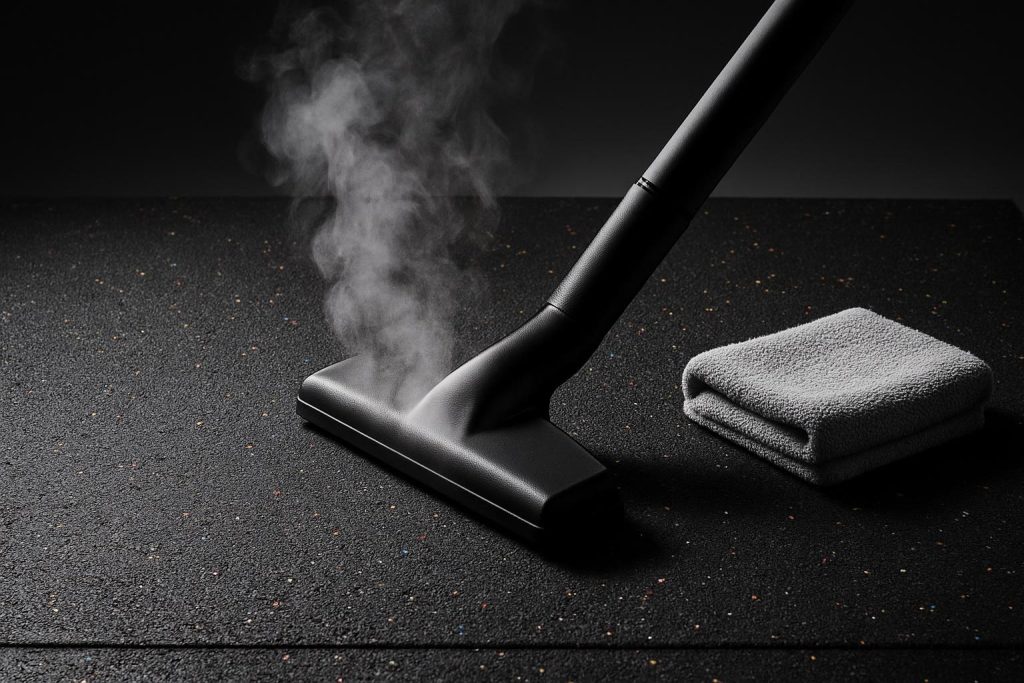
Use the lowest steam output and a clean microfiber bonnet on the head. Pre vacuum or dry sweep first. Pre clean with a neutral pH rubber safe cleaner so you are not using steam to push soil into pores. Keep the tool moving with light pressure, and avoid holding heat in one spot. Stay off seams, edges, and transitions. Make very quick passes. Immediately wipe each section with a dry microfiber towel. Use fans to speed drying. Recheck the test area a day later for dullness or lifting. If any issue shows, discontinue steam.
Better everyday method than steam
The most reliable approach is routine maintenance with a neutral cleaner, good tools, and fast drying. This protects the material and keeps traction high.
Step 1: Remove dry soil
Use a soft broom, dust mop, or vacuum with a hard floor setting. Get grit, chalk, and hair up before wet work. Dirt is abrasive and will scratch finishes when you mop.
Step 2: Clean with a neutral pH solution
Mix a rubber safe, neutral pH cleaner per label. Do not use vinegar, bleach, citrus, pine oil, solvent based degreasers, or high alkaline products. These can etch, dry out, or stain rubber and can harm adhesives.
Step 3: Mop or scrub gently
Use a damp microfiber mop. Wring well. Work in small sections. For heavy soil, use a soft brush or a white non abrasive pad with light pressure. Let the solution sit briefly to loosen grime, but do not flood the floor.
Step 4: Rinse and dry
Rinse with clean water to remove cleaner residue. Wipe dry with a towel or run fans. Quick drying prevents water from moving into seams and keeps the surface streak free.
Step 5: Disinfect the right way
If you need disinfection, use a disinfectant that is approved by its label for floors and is compatible with rubber. Neutral pH quaternary disinfectants are often acceptable when the manufacturer allows it. Accelerated hydrogen peroxide at low concentration is another option commonly listed as safe for many resilient floors. Apply, allow the labeled contact time, then rinse and dry. Avoid phenolic products and chlorine bleach on rubber.
Deep cleaning without damage
For monthly or as needed deep cleaning, use a neutral cleaner and a soft bristle deck brush or a gentle floor machine pad. Agitate lightly to lift embedded soil. Pick up solution with a wet vacuum or towels. Rinse well. Use fans or a dehumidifier to speed drying, especially in basements or enclosed rooms.
If you have an autoscrubber, fit it with a soft brush and run it on low pressure with neutral cleaner. Avoid aggressive pads. Over scrubbing reduces texture and traction.
Spot treatment for stains and odors
Sweat film and chalk
Sweat salts and gym chalk form a gray film. Use warm neutral cleaner, allow short dwell, then wipe with a microfiber mop. Rinse. Repeat if needed rather than scrubbing hard.
Scuffs and black marks
Rub with a towel dampened with neutral cleaner. For stubborn marks, use a small amount of isopropyl alcohol on a cloth and wipe gently. Rinse the spot after. Test first in a hidden area.
Rust from weights or racks
Lift the source and clean the stain with neutral cleaner and a soft white pad. Do not use acids. Dry the area and keep metal feet on protective caps or mats to prevent repeat stains.
Odors
Odor usually comes from residue. Clean, rinse, and dry thoroughly. Increase ventilation. Avoid vinegar or perfumed cleaners that can react with rubber or leave sticky films.
Maintenance schedule you can follow
After each workout
Dry sweep or vacuum. Spot mop sweat zones and chalk areas with neutral cleaner. Wipe spills right away. Leave a fan running for a short time.
Weekly
Full damp mop with neutral cleaner, then rinse. Wipe baseboards and door thresholds where grit collects.
Monthly
Deep clean with light agitation. Move equipment that you can lift safely and clean under it. Inspect seams and edges.
Quarterly
Detail clean corners and transitions. Check for curled edges, gaps, or adhesive issues. Address problems early before they spread.
Setup and environment matters
Keep a door mat at the entry to catch grit. Use rubber safe mats under racks and benches to protect high wear spots. Control humidity with a fan or dehumidifier, especially in basements. Do not store wet towels or shoes on the floor. Place cardio equipment on trays that catch sweat and drips.
Steam mop vs professional steam unit
Consumer steam mops aim constant heat at the same small area and are often used with pressure. This increases the chance of damage. Professional units with adjustable output and larger heads are easier to control, but the same material risks remain. If the floor is glued, has seams, or shows any wear, skip steam.
How to decide for your floor
Check the product guide from your floor brand. Identify your installation type and whether a sealer is present. Consider room conditions, especially humidity and ventilation. If you cannot confirm material and installation details, do not use steam. Use the neutral cleaner method and you will still get a hygienic result when you rinse and dry well.
Common mistakes to avoid
Do not leave standing water on seams. Do not use acid cleaners like vinegar. Do not use bleach, citrus, pine oil, or solvent based degreasers. Do not scrub with aggressive pads. Do not park wet kettlebells, plates, or shoes on the floor. Do not try to fix curls or bubbles with heat.
Conclusion
Steam cleaning rubber gym floors is rarely the best choice. It can soften rubber, damage finishes, weaken adhesives, and drive moisture under tiles. In limited cases on solid vulcanized rubber with tight seams, light and controlled steam use may be possible, but only after a successful test and with fast drying. For most home gyms, a simple routine wins. Remove dry soil, clean with a neutral pH rubber safe solution, rinse, disinfect with a compatible product when needed, and dry quickly. This approach protects the floor, keeps traction high, and maintains a fresh space for your workouts.
FAQ
Q: Is steam cleaning safe for rubber gym floors
A: It is usually not recommended. Only consider light, careful use on solid vulcanized rubber in good condition with tight seams, and avoid glued seams and edges. The risks include heat softening, adhesive failure, moisture under tiles, discoloration, and increased odor. Always check the manufacturer guide first.
Q: What is the best way to clean rubber gym floors without steam
A: Remove dry soil, mop with a neutral pH rubber safe cleaner, rinse with clean water, and dry with fans. For disinfection, use a manufacturer approved neutral pH disinfectant such as a quaternary disinfectant or low concentration accelerated hydrogen peroxide, then rinse and dry. Avoid bleach, vinegar, citrus, solvents, and high alkaline products.
Q: Can I disinfect rubber floors without chemicals using steam
A: Steam can reduce germs, but on rubber the risks often outweigh the benefits. Use a disinfectant that is compatible with rubber, allow the labeled contact time, then rinse and dry.
Q: Will steam damage glued down rubber rolls
A: Yes, heat and moisture can weaken adhesives and cause bubbles or seam lift. Avoid steam on glued installations.
Q: How often should I clean and deep clean a home rubber gym floor
A: After each workout, dry clean and spot mop. Weekly, damp mop and rinse. Monthly, deep clean with light agitation. Quarterly, detail edges and inspect for issues.