
We are reader supported. When you purchase through links on our site, we may earn an affiliate commission. Also, as an Amazon affiliate, we earn from qualifying purchases.
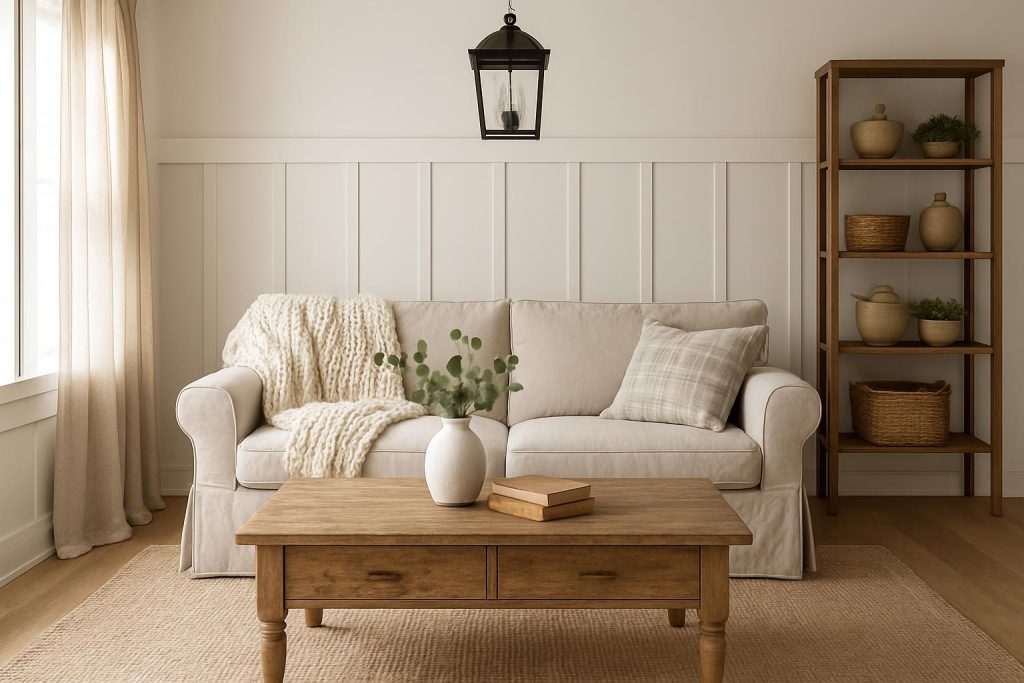
Cozy farmhouse style is warm, inviting, and easy to live with. It blends natural materials, relaxed textiles, and timeworn finishes into a space that looks good and feels comfortable every day. Use these ideas to build a rustic living room step by step. Start with a simple base, add functional furniture, layer textures, and finish with lighting and storage that work hard.
Each idea below is practical, beginner friendly, and designed to help you move from planning to action without overwhelm. You will see where to start, what to buy, what to DIY, and how to keep the look cohesive over time.
Start With The Foundation
1. Set a neutral base palette
Choose warm whites, creamy neutrals, or soft grays for the walls. Keep the ceiling a crisp light tone to lift the room. Use three core hues across the space: one main wall color, one wood tone, and one accent metal. This simple base prevents visual noise and lets texture do the talking.
2. Add simple architectural texture
Shiplap, board and batten, or a beam detail adds quiet structure. Install on one wall or the ceiling to avoid clutter. Use a semi matte finish to soften shadows. If you rent, try peel and stick panels or narrow molding strips painted to match the wall for a similar effect.
3. Choose wood or wood look flooring
Wide plank oak, pine, or quality vinyl plank creates instant farmhouse warmth. Medium to warm stains hide dust better than very dark tones. If you have tile or existing floors, add texture with large area rugs to visually unify the seating zone.
4. Ground the room with a natural fiber rug
Pick a jute or sisal rug to anchor the layout. Size matters. An 8 by 10 fits most small to medium living rooms and should sit at least under the front legs of major seating. This first rug adds scale and a tactile base you can layer over later.
5. Create a focal wall
Farmhouse rooms feel calm when the eye knows where to land. Center your layout on a fireplace, a media console with a simple mantel shelf, or a large art piece. Keep the focal wall uncluttered. One large element beats many small items.
Choose Furniture That Invites Rest
6. Use a deep slipcovered sofa
A linen or cotton slipcover gives a relaxed look and easy care. Choose a depth that supports lounging and a color in the warm white to greige range. Washable covers are practical for families and pets. Keep legs simple and wood toned to tie in with other pieces.
7. Mix in vintage or distressed wood
Balance the soft sofa with aged wood side tables or a console. Look for solid frames at thrift shops, then sand and seal with a matte water based topcoat. Avoid heavy faux distressing. One or two genuine worn surfaces are enough to suggest history.
8. Choose a large coffee table with hidden storage
A trunk or drawer table controls clutter while adding rustic weight. Aim for a length about two thirds of the sofa and a height similar to the seat cushion. Rounded corners are family friendly. Add felt pads to protect the rug and floors.
9. Add classic accent chairs
Wingback, spindle, or leather club chairs bring structure and balance. Mix one upholstered chair and one leather or wood framed chair for variety. Keep fabrics neutral or softly patterned so pillows and throws can rotate seasonally without clashing.
10. Bring in open shelves or a hutch
Display pottery, woven baskets, and a few books on open shelving. Closed lower cabinets hide games, remotes, and chargers. Keep shelves lightly styled with space around objects so the room breathes.
Layer Textures And Textiles
11. Pile on chunky knits and woven throws
Texture equals warmth. Add one chunky knit, one lighter cotton, and one patterned throw. Drape them over the sofa arm, across a chair back, or folded in a basket. Limit the palette to your base colors to avoid a busy look.
12. Mix pillows with intention
Choose 20 by 20 inch pillows for sofas and 18 by 18 for chairs. Combine a large plaid, a medium floral, and a small stripe in shared tones. Repeat at least one pattern twice so the mix feels unified. Use zip covers with down alternative inserts for comfort and easy washing.
13. Hang simple linen drapery or bamboo shades
Linen panels add softness without shine. Mount rods 4 to 6 inches above the frame and 6 to 10 inches wider than the window to make openings look larger. If you prefer hard treatments, choose bamboo or woven wood shades for organic texture.
14. Layer a soft patterned rug over jute
Place a vintage style or low pile patterned rug on top of the natural fiber base. This adds comfort and a timeworn look. Keep colors muted and patterns faded. Secure layers with a thin rug pad or carpet tape at corners to prevent shifting.
15. Add a touch of leather
Leather adds warmth and patina. A small ottoman, a strap detail on a mirror, or one accent chair is enough. Mid tone browns blend well with most wood finishes. Condition leather annually to keep it supple.
Build A Warm Color And Material Mix
16. Use warm whites and earthy tones
Base the room on warm whites, creamy neutrals, and soft grays. Add earthy tones of beige, taupe, and muted greens in textiles and decor. Keep any bold color small and repeated in two to three places so it feels intentional.
17. Add matte black for contrast
Matte black hardware, frames, or a metal lamp grounds the palette. Limit black to small accents so the room stays soft. Repeat it in at least two spots for balance, such as a chandelier finish and a picture frame.
18. Bring in stone, brick, and pottery
Natural materials add rustic credibility. A stone tile hearth, a thin brick surround, or a few hand thrown pottery pieces introduce heft and texture. Keep edges simple and grout lines clean for a refined farmhouse look.
19. Use aged brass and antique finishes
Warm metals bridge wood and textiles. Choose aged brass lamps, a patina tray, or a vintage style mirror. Avoid high gloss metallics. Brushed, antiqued, or oil rubbed finishes feel more at home in a rustic space.
20. Add greenery and botanicals
Place a potted olive tree, eucalyptus stems, or simple branches in a ceramic vase. Greenery softens hard lines and adds life. Use one larger plant rather than many small ones to keep surfaces open.
Shape The Light And Mood
21. Layer your lighting
Use a ceiling fixture for ambient light, table and floor lamps for task light, and sconces or small accent lights for depth. Choose warm bulbs at 2700 K to 3000 K. Install dimmers so you can shift from daytime brightness to evening calm.
22. Choose lanterns or farmhouse chandeliers
Lantern pendants and wood iron chandeliers fit the style without overpowering the room. Hang the fixture centered over the coffee table or main seating area. Keep scale proportional so sight lines stay open.
23. Add candles for evening comfort
Cluster candles on a tray on the coffee table or mantel. Use flameless candles with timers for safety and convenience. A single grouping is enough. Avoid scattering small candles around the room.
24. Bounce light with a well placed mirror
Hang a mirror opposite a window to reflect natural light and expand the space. Choose a wood or aged metal frame. Keep adjacent decor minimal so the mirror can do its job without visual clutter.
Keep It Practical And Organized
25. Hide clutter with baskets and closed storage
Use lidded baskets for toys, throws, and spare pillows. A media console or cabinet handles devices and games. Place a tray on the coffee table to corral remotes and coasters. With kids and pets, choose washable slipcovers and performance or indoor outdoor rugs to simplify cleanup.
Pulling It All Together
Start with the big moves. Paint the walls in a warm neutral. Anchor the room with a natural fiber rug. Choose a deep slipcovered sofa and a sturdy wood coffee table with storage. Then layer texture through pillows, throws, and window treatments. Add aged metals, one or two vintage wood pieces, and simple greenery. Finish with layered lighting on dimmers and a mirror to amplify daylight.
Work in stages if budget is tight. Each layer improves comfort and cohesion even before the room is complete. Keep to a tight palette, repeat materials, and let storage handle the everyday mess. The result is a cozy farmhouse living room that looks timeless, feels welcoming, and works for real life.
FAQ
Q: What colors work best for a cozy farmhouse living room
A: Warm whites, creamy neutrals, soft grays, and earthy tones like beige, taupe, and muted greens create the base. Add small hits of matte black and aged brass for contrast, and keep wood tones medium to warm for balance.
Q: How can I get the farmhouse look on a budget
A: Start with paint and textiles since they change the mood fastest. Choose a neutral wall color, use a large jute rug, layer vintage style pillows and throws, source baskets for storage, and shop secondhand for wood furniture you can sand and seal.
Q: What lighting makes a rustic room feel warm
A: Use layered lighting with warm bulbs at 2700 K to 3000 K. Combine an overhead fixture with table lamps, floor lamps, and sconces or string lights. Add candles or flameless options for evening ambience and dimmers to adjust brightness.
Q: How do I mix patterns without visual clutter
A: Keep to one color story, vary the scale, and repeat each pattern at least twice. For example, combine a large plaid, a medium floral, and a small stripe in similar tones, then echo one pattern on a throw or drapery panel.
Q: How do I keep the space tidy with kids and pets
A: Use washable slipcovers, indoor outdoor or performance rugs, and baskets with lids for toys. Choose a coffee table with drawers or a trunk for quick cleanups, and store extras in a closed cabinet or media console.