
We are reader supported. When you purchase through links on our site, we may earn an affiliate commission. Also, as an Amazon affiliate, we earn from qualifying purchases.
Defrosting a freezer does not need a full day or a huge mess. With a few safe tricks, you can melt heavy frost in under an hour and get your freezer back to full performance. This guide shows exactly what to do, what to avoid, and how to keep frost from coming back. Follow the steps in order, combine the fast methods that fit your space, and finish with a dry, clean interior that stays frost free longer.
Why a fast defrost matters
Thick frost wastes energy and steals storage space. Ice blankets the evaporator walls and traps cold where it does not help your food. The compressor then runs longer, and the temperature can fluctuate. When you remove frost fast and safely, you lower power use, gain room, and protect food quality.
Defrost when frost is about 6 millimeters or one quarter inch thick, when baskets stick, or when the door seal touches ice. Waiting longer makes the job slower and messier.
Before you start: safety and prep
What you need
Clean bath towels or microfiber towels. A few bowls or pots that can hold hot water. A plastic or silicone scraper. A room fan or a hair dryer if you plan to use airflow or gentle heat. A cooler with ice packs for food. Mild dish soap, baking soda, and a soft sponge for cleaning. A dry cloth for final wipe down.
Power down and empty the freezer
Unplug the freezer. If it is a fridge freezer, switch off the freezer control. Move food to a cooler with ice packs. Group items close together to hold the cold longer and drape a towel over the cooler to reduce warm air movement. Discard anything that is not safe to refreeze.
Protect the floor
Lay towels at the base of the freezer to catch meltwater. If your freezer has a drain at the bottom, position a shallow pan to collect water. Keep electrical cords and outlets away from any water path.
Remove shelves and drawers
Take out bins, shelves, and ice trays. If parts are stuck in ice, wait until the first steam round loosens them, then remove. Never force frozen parts or you may crack plastic or bend rails.
Fast defrost methods that are safe
Method 1: steam boost with hot water bowls
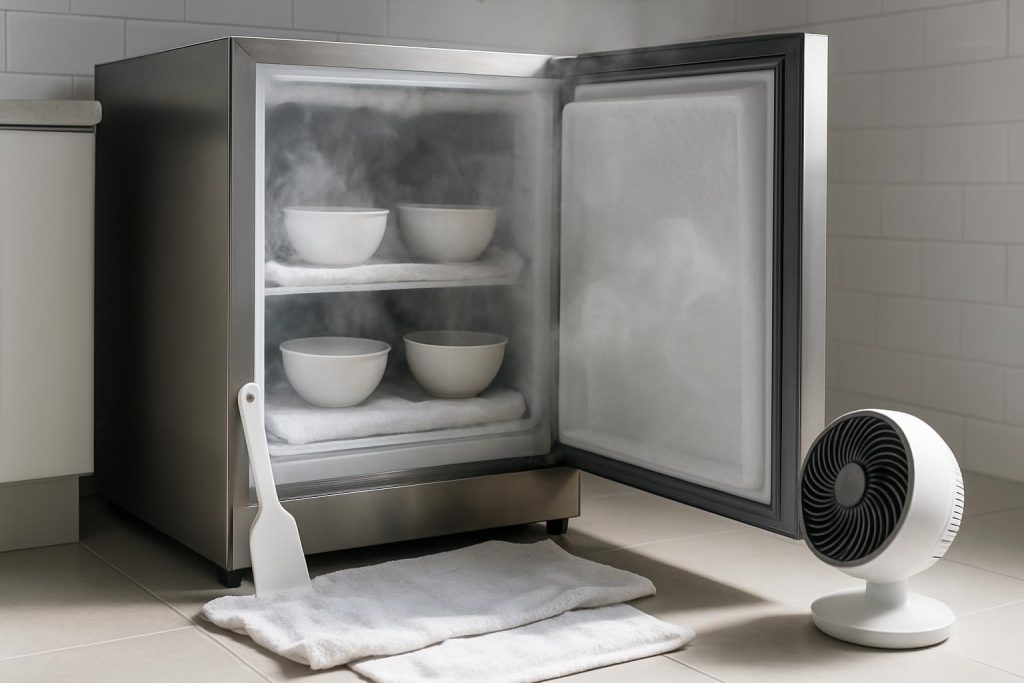
Boil water, pour it into heat safe bowls, and place the bowls on thick towels or trays inside the empty freezer. Close the door to trap steam. After 10 minutes, open the door, remove the bowls, scrape softened ice with a plastic scraper, and replace with fresh hot water. Repeat until ice is gone. For chest freezers, place bowls on an inverted pan to lift them closer to side walls. For uprights, use one bowl per shelf level. This method is fast, even, and gentle on surfaces.
Method 2: room fan airflow melt
Place a fan outside the freezer door pointing in. Use room temperature or slightly warm air. Air movement speeds up melting without adding moisture that can refreeze on edges. Combine a fan with hot water bowls for the fastest results. Keep the fan motor and cord well away from any water drip.
Method 3: hair dryer on low with distance
You can use a hair dryer on low heat and low fan as a spot tool. Hold it 8 to 12 inches away. Keep the air moving and do not focus on one spot for long. Keep the cord and outlet dry. Stop if you smell hot plastic or if any panel becomes too warm to touch. Do not use a heat gun. A hair dryer speeds edge release so you can lift large ice slabs with a plastic scraper.
Method 4: warm towel compress
Soak a towel in hot water, wring it out, and press it against thick ice for 30 to 60 seconds. Ice will soften and release from the wall. Move the towel along the seam where ice meets the liner, then lift with a plastic scraper. Refresh the towel in hot water as it cools. This is effective on stubborn corners and around fixed parts you cannot remove.
Method 5: warm spray for thin frost
Fill a spray bottle with warm water. Lightly mist thin frost layers and scrape as they soften. Wipe away meltwater so it does not refreeze on edges. This is best for maintenance defrosts before frost gets thick.
What not to do
Do not use knives, screwdrivers, metal spatulas, or any sharp tools. They can puncture the liner or a hidden refrigerant channel and destroy the freezer. Do not pour boiling water directly onto plastic panels or glass shelves. The thermal shock can crack parts. Do not use a heat gun or space heater. They overheat surfaces and pose a fire risk. Do not use salt, chemical deicers, or strong solvents. They can corrode metal, damage gaskets, and leave unsafe residues.
Step by step workflow for a 30 to 60 minute defrost
Unplug the unit and empty it into a cooler. Lay towels on the floor and place a shallow pan at the drain if present. Remove shelves and drawers that are free. Place two to four bowls of hot water inside on towels or trays. Close the door and let steam work for 10 minutes.
Open the door and scrape softened ice with a plastic scraper. Aim to lift large sections from the wall rather than shaving the surface. Move ice into a bucket or sink. Replace with fresh hot water bowls and close the door again for another 10 minutes.
Set a fan to blow into the open door during scraping rounds. This keeps humid air moving out and speeds melting. Alternate between steam time with the door closed and airflow time with the door open. Use a warm towel compress on thick ridges and around fixed rails.
For stubborn spots, apply a hair dryer on low from a safe distance for 20 to 30 seconds, then scrape. Keep the nozzle moving and never aim into a pooled water area. Work from the top down so meltwater does not run over areas you have already dried.
Sop up meltwater with towels as you go. Wring towels into a bucket to keep the floor dry. Remove any remaining loose frost with a warm spray and wipe dry. When no ice remains, you are ready to clean.
Clean, dry, and restart
Clean without residue
Mix warm water with a few drops of mild dish soap or a spoon of baking soda. Wipe all interior walls, the door liner, and gasket folds with a soft sponge. This removes food film that can trap moisture. Rinse with a clean damp cloth to remove any soap.
Dry completely
Wipe every surface dry with a clean towel. Pay attention to seams, shelf supports, and gasket folds. Leave the door open for 10 to 20 minutes so remaining moisture can evaporate. A dry interior resists frost because there is less water to freeze.
Power on and restock
Plug the freezer back in and set the temperature to 0 F or minus 18 C. Wait until it reaches the set temperature, usually 30 to 60 minutes. Restock food in organized groups so cold items help cool the space evenly. Do not block air vents. Place frequently used items near the front to reduce door open time.
Prevent frost from coming back
Check door gasket and alignment
Inspect the door seal for cracks, gaps, or crumbs. Clean it with warm soapy water and dry it fully. Close the door on a strip of paper at several spots. If the paper slides out easily, the seal may be weak or the door may be misaligned. Level the unit so the door closes firmly. Replace a worn gasket to stop warm air leaks that create frost.
Control moisture and loading habits
Cool hot foods in the fridge before freezing. Pack items in airtight bags or containers and squeeze out air. Wipe frost or ice from food packages before storing. Limit door opens and keep them short. On humid days, plan your grabs before opening the door. Store ice packs and extra frozen water bottles to stabilize temperature and reduce moisture swings.
Smart temperature and maintenance
Keep the setpoint near 0 F or minus 18 C. Colder than needed can pull in more humid air during door opens and grow frost faster. Vacuum dust from rear coils or the toe grille every few months to improve efficiency. Defrost again as soon as frost reaches about 6 millimeters or one quarter inch. Fast, regular defrosts are easier and save more energy than waiting.
Troubleshooting slow defrost or recurring frost
If ice returns quickly, check the door gasket for leaks and clean it. Make sure items are not pushing against the door from inside. Confirm the unit is level so the door seals evenly. If defrost water pools inside, check the bottom drain for a clog and clean it gently with warm water. If ice seems to grow from one inner panel, avoid scraping that area hard and rely on steam and towels. If you live in a very humid climate, combine a fan with steam to move moist air out during defrost.
Time estimates and method picks
Light frost under 3 millimeters can clear in 15 to 25 minutes with a warm spray and a room fan. Moderate frost around 6 millimeters clears in 30 to 45 minutes using hot water bowls plus scraping. Heavy frost thicker than one centimeter takes 45 to 75 minutes and benefits from all methods combined. Plan one or two hot water cycles, steady airflow, and careful scraping to lift large sheets quickly.
Simple organizing gains after defrost
Use the reset to improve access. Group proteins, vegetables, and ready meals in separate bins. Label shelves or bins so you open the door less. Keep a running list on the door front and update it when you add or remove items. Store flat items like frozen bags upright in file order to reduce digging time and door open time.
Conclusion
A fast defrost is simple when you use safe heat, steady airflow, and smart scraping. Unplug, steam with hot water, move air with a fan, spot soften with a hair dryer on low, and compress with warm towels. Clean, dry, and restart to 0 F or minus 18 C before restocking. Keep frost from returning by sealing the door, cooling foods first, packing airtight, and scheduling a short defrost at the first sign of buildup. Follow this workflow and you will reclaim space, save energy, and keep food in better condition with less effort.
FAQ
Q: What is the fastest safe way to defrost a freezer
A: Combine bowls of hot water for steam, a room fan for airflow, and gentle plastic scraping. Close the door during steam rounds, swap bowls every 10 minutes, and keep cords and outlets away from water.
Q: Can I use a hair dryer to defrost a freezer
A: Yes, on low heat and low fan, held at least 8 to 12 inches from surfaces. Keep the cord and outlet dry, move constantly, and stop if plastic smells hot.
Q: What should I never use to chip ice
A: Do not use knives, screwdrivers, metal spatulas, or heat guns.
Q: How long before I can restock after defrosting
A: After drying, power on, wait until the freezer reaches 0 F or minus 18 C, usually 30 to 60 minutes, then load food.
Q: How do I prevent frost from coming back
A: Keep the door seals tight, cool foods before freezing, pack items in airtight bags, limit door opens, and set the temperature near 0 F or minus 18 C. Schedule a quick defrost when frost is 0.25 inch or 6 millimeters thick.