
We are reader supported. When you purchase through links on our site, we may earn an affiliate commission. Also, as an Amazon affiliate, we earn from qualifying purchases.
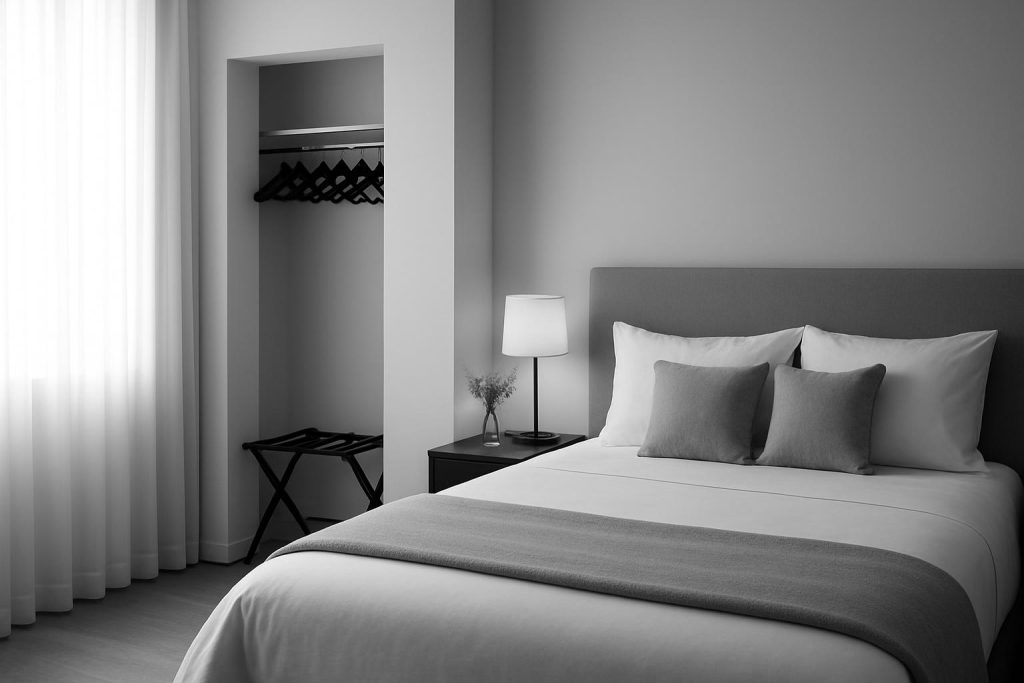
A welcoming guest bedroom is simple, calm, and practical. Focus on comfort, cleanliness, and clear organization. Small details matter more than big spending. Follow this guide to plan, set up, and style a guest room that helps visitors feel at home from the first minute.
Plan the Space With Purpose
Measure and Map the Layout
Start with clear measurements of the room. Note door swings, window placements, and outlets. Identify a logical bed wall that allows space to walk on both sides. Keep a clear path from door to bed to bathroom so guests can move safely at night.
Place the bed first, then add a nightstand within easy reach on at least one side. If space allows, add a second nightstand. Reserve a spot for a luggage stand or bench at the foot of the bed or along an open wall. Leave one open surface for guests to place daily items like keys and glasses.
Choose a Calming Color Scheme
Choose soft, neutral colors that calm the room. Light colors expand small spaces and reflect more light. Bring in texture through bedding, a throw, or a rug. Keep patterns simple to avoid visual clutter. Add one or two accent colors to keep it cohesive.
Build the Bed for Real Comfort
Pick a Supportive Mattress
Guests have different sleep preferences, so aim for a balanced feel. A medium to medium firm mattress suits most people. If your mattress is older or too firm, add a quality mattress topper to improve comfort without replacing everything.
Use Pillows by Type and Quantity
Offer two sleeping pillows per person. Add one softer and one firmer option if you can. Include one or two decorative pillows only if they add comfort and are easy to move. Provide a spare pillow in the closet or dresser so guests can adjust.
Layer Bedding for All Seasons
Use a breathable sheet set. Add a light quilt or coverlet for a neat base layer. Keep a medium weight duvet or blanket at the foot of the bed. Store an extra blanket in the closet for cold nights. In warm months, remove heavy layers and keep a fan available.
Get Lighting Right
Layer Ambient, Task, and Night Lighting
Install a ceiling light for general brightness. Add bedside lamps for reading with warm bulbs. If surface space is tight, use wall mounted sconces or clip on lamps. Include a small night light or motion light for safe trips at night.
Make Switches and Outlets Easy
Ensure guests can control a light from the bed. Use lamps with simple switches. Place a power strip or an outlet extender near the nightstand so phones and tablets can charge without moving furniture.
Set Up a Practical Nightstand
Keep the surface clear and useful. Add a small tray for keys and glasses. Provide tissues, a carafe or bottled water, and a simple alarm clock if you have one. Add a notepad and pen for quick notes. Keep it uncluttered so guests can use the space their way.
Make Storage Simple and Visible
Prepare the Closet
Clear at least half the closet for guests. Add 10 to 12 matching hangers including a few with clips. Provide a few empty shelves or a cubby for folded items. Include a lint roller and a fabric brush.
Add a Dresser or Luggage Stand
If space allows, offer two or three empty drawers. If not, use a foldable luggage rack or a sturdy bench so guests are not living out of a suitcase on the floor. Place a small tray or bowl on top of a dresser for jewelry and wallet.
Use Hooks and a Hamper
Install two or three wall hooks or an over the door rack for bags and coats. Add a small hamper or laundry bag so worn clothes do not end up on the chair. Clear systems reduce mess and make checkout easy.
Sort Tech and House Basics
Provide Easy Charging
Place a surge protected power strip beside the bed with both AC outlets and USB ports if possible. Add a labeled universal cable or at least a USB C and Lightning cable. Avoid cords running across walkways.
Share Wi Fi and House Info
Print a small card with network name and password. Add your address, emergency contacts, and any house notes like quiet hours or thermostat rules. Place it on the nightstand or desk so guests do not need to ask.
Control Temperature and Air
Offer Temperature Options
Layer bedding so guests can add or remove warmth without asking. Keep a lightweight throw and a warmer blanket accessible. If your home gets hot, add a quiet fan. If it gets cold, add a small, safe space heater with auto shutoff and clear use instructions.
Manage Light and Airflow
Use blackout curtains or a dual curtain and shade setup to block morning light. Confirm windows open and close easily. Clean or replace the HVAC filter on schedule to keep air fresh. A small air purifier helps if guests have sensitivities.
Support Privacy and Quiet
Use Solid Window Treatments
Choose light blocking shades or lined curtains. Seal light gaps with wraparound rods if needed. Privacy film on lower window panes helps in street facing rooms.
Reduce Noise Where Possible
Add felt pads under furniture and a thick rug to absorb sound. Provide a simple white noise option via a small machine or a card suggesting a phone app. Place a door draft stopper if hallway noise is an issue.
Elevate Cleanliness
Clean Deep Before Guests Arrive
Wash all bedding including pillow protectors. Dust headboard, nightstands, lamps, blinds, and baseboards. Vacuum or mop floors including under the bed. Wipe switches, remotes, drawer pulls, and door handles. Empty trash and line with a fresh bag.
Prep Fresh Linens and Towels
Place two bath towels, one hand towel, and one washcloth per guest in plain view. Add an extra set if the stay is longer than three nights. Provide a spare set of sheets in the closet in a labeled bin or on a shelf.
Be Allergy Aware
Use fragrance free detergent and avoid strong room sprays. Choose washable pillow and mattress protectors. Skip potpourri and heavy diffusers. If you use a candle, place an unlit one for scent reference and keep matches away unless you plan to supervise.
Add Personal Touches Without Clutter
Share Local Help
Provide a short printed guide with nearby coffee, grocery, pharmacy, and a few dining options. Note hours or special days if relevant. Keep it to one page to avoid overwhelm.
Keep Decor Simple
Hang one or two calm art pieces. Use a neutral rug that is soft underfoot. Add a single plant that is low maintenance or a small vase with fresh greenery on arrival day if you can refresh it.
Offer a Small Welcome
Place two bottles of water and a light snack like nuts or crackers. Add a small basket with basic toiletries such as toothpaste, a spare toothbrush, cotton pads, and travel size shampoo and body wash.
Make a Small Guest Room Work All Year
Pick Flexible Furniture
Consider a daybed with a trundle or a Murphy bed if the room doubles as an office. Choose a desk that folds away or a wall mounted drop leaf table. Use nesting stools as nightstands that can stack when not in use.
Define Storage Zones
Label one shelf or bin as Guest Linens and another as Guest Toiletries. Keep them in the closet for fast setup. Use clear bins so you can see stock levels at a glance.
Maintain Daily Function
When no one is visiting, return extra pillows and blankets to the labeled bins. Keep the nightstand surface clear so it functions as an office side table. Do a five minute reset weekly so the room is always guest ready within a day.
Focus on Safety and Accessibility
Keep Pathways Clear
Leave at least 24 inches of walking clearance around the bed where possible. Coil and secure cords behind furniture. Use a slim night light to guide the way without glare.
Stabilize and Secure
Anchor dressers and tall shelves to the wall. Use non slip rug pads under all rugs. Check that the bed frame does not wobble and tighten screws before every visit.
Consider Different Needs
Place the heaviest extra blanket on a lower shelf so it is easy to reach. Avoid strong scents. If stairs are involved, place a small basket at the top for guests to collect items instead of carrying many things up and down.
One Day Setup Plan
Morning Tasks
Wash and dry all bedding and towels. Dust and wipe surfaces. Vacuum floors and under furniture. Check bulbs and replace any that are dim or out. Set the room to a comfortable temperature.
Afternoon Tasks
Make the bed with layers guests can adjust. Stock the nightstand with tissues, water, a notepad, and a pen. Place the Wi Fi card and house info on the desk or nightstand. Set out towels and extra toiletries. Add a power strip with cables.
Final Check
Test every light and outlet. Open and close the windows and curtains. Confirm there is a clear path from door to bed. Place a luggage rack and a few spare hangers. Do a last five minute tidy to remove visual clutter.
Conclusion
A great guest bedroom is thoughtful, simple, and organized. Start with a comfortable bed and clear lighting. Add storage that is easy to use. Share essentials like charging, Wi Fi, and local tips. Keep it clean, scent light, and temperature flexible. With a clear plan and a few dependable systems, your visitors will feel at home every time.
FAQ
Q: What should I put on the guest nightstand
A: Keep the surface clear and useful. Add a small tray for keys and glasses. Provide tissues, a carafe or bottled water, and a simple alarm clock if you have one. Add a notepad and pen for quick notes. Keep it uncluttered so guests can use the space their way.
Q: How do I keep the room comfortable for different temperatures
A: Layer bedding so guests can add or remove warmth without asking. Keep a lightweight throw and a warmer blanket accessible. If your home gets hot, add a quiet fan. If it gets cold, add a small, safe space heater with auto shutoff and clear use instructions.
Q: How can I make a small guest room work for everyday use
A: Consider a daybed with a trundle or a Murphy bed if the room doubles as an office. Choose a desk that folds away or a wall mounted drop leaf table. Use nesting stools as nightstands that can stack when not in use.
Q: What do I need to clean before guests arrive
A: Wash all bedding including pillow protectors. Dust headboard, nightstands, lamps, blinds, and baseboards. Vacuum or mop floors including under the bed. Wipe switches, remotes, drawer pulls, and door handles. Empty trash and line with a fresh bag.
Q: What is the best way to handle charging and Wi Fi information
A: Place a surge protected power strip beside the bed with both AC outlets and USB ports if possible. Add a labeled universal cable or at least a USB C and Lightning cable. Print a small card with network name and password and place it on the nightstand or desk.