
We are reader supported. When you purchase through links on our site, we may earn an affiliate commission. Also, as an Amazon affiliate, we earn from qualifying purchases.
Centerpieces set the tone for every meal. The right size, texture, and color turn a plain table into a welcoming spot. You do not need a florist or a big budget. You need a simple framework you can adjust by season and style. This guide shows you what to use, how to scale it, and how to maintain it so your table looks fresh all year.
Core Rules That Make Any Centerpiece Work
Measure for scale and flow
Start with table width. On a 36 to 40 inch wide table, the centerpiece should stay within the middle third. Leave at least one place setting depth clear on each side. Keep the footprint compact so dishes still fit.
Match length to table shape. For long tables, repeat smaller elements down the center instead of one huge piece. For round tables, use a single grouped arrangement that looks complete from every angle.
Use a solid base
A base keeps items tidy and easy to move. Use a tray, a low board, a lazy Susan, or a narrow runner. For a 36 to 40 inch wide table, a 12 to 16 inch tray works well. For a round table 42 to 48 inches across, choose a 16 to 20 inch round tray. Make sure the base is stable and has a finish that wipes clean.
Work in odd numbers
Place items in groups of three or five. One main piece and two supporting pieces create balance. Vary heights slightly for interest, but keep the group readable as one unit.
Manage height and sightlines
Keep the main elements under 30 cm when people are seated. This protects eye contact across the table. If you use one tall element, keep the stem slim and place it so the line of sight stays open. Avoid wide, bushy tops that block faces.
Add light the safe way
Candles add warmth, but keep flames clear of foliage and fabrics. Use unscented candles during meals to avoid clashing with food. Place any flame at least 10 cm from greenery and never leave it unattended. LED candles are safe and low maintenance.
Keep it moveable
Build your centerpiece on a base that lifts in one motion. When you need space for serving dishes, you can move it to a sideboard fast without taking pieces apart.
Seasonal Framework You Can Reuse All Year
Spring refresh
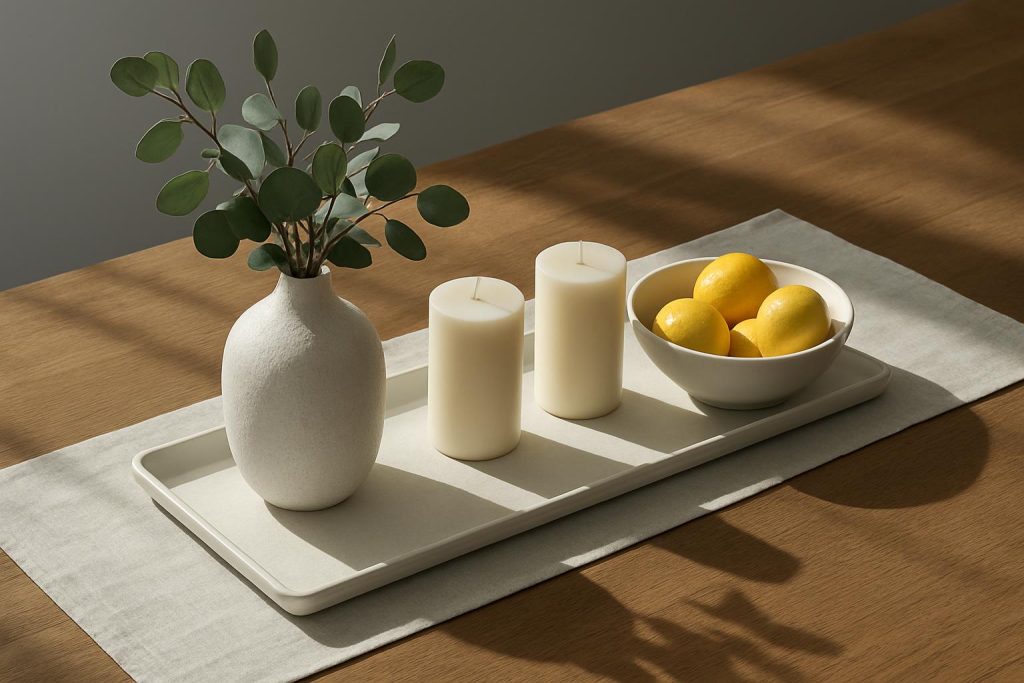
Use light wood, white ceramics, and soft greens. Choose tulips, hyacinths, or fresh herbs. Add a linen runner in pale gray or sage. Keep glass vases simple to show stems. A white bowl with bright lemons or limes adds clean color and lasts longer than flowers.
Summer airy
Keep it low and breezy. Use a woven tray, clear glass, and a few bold leaves like monstera or ferns. Add a pitcher with a few stems and a small bowl of seasonal fruit. For outdoor dining, add LED candles in hurricanes to block the wind.
Fall harvest warmth
Switch to warmer textures like wood boards and stoneware. Choose muted tones like rust, olive, and cream. Add small gourds, apples, or mini pumpkins on a tray. Pair with dried stems like wheat or eucalyptus in a short vase. Use unscented pillar candles in amber or cream for a steady glow.
Winter calm and festive
Focus on contrast and shine. Use a dark runner with metallic accents or matte black candleholders. Add evergreens, pinecones, and a low bowl of ornaments in a tight palette. Keep the look calm with two to three colors repeated across the pieces.
Holiday quick swaps
Do not rebuild the base each time. Swap stems, ribbon, and small accents. For a festive night, clip in a few berry sprigs and add two slim taper candles. For a casual brunch, replace candles with a stack of small plates or a bread basket on the same tray.
Styles for Every Home Without Overspending
Minimal and modern
Use a single low bowl or a narrow rectangular vase with one type of stem. Keep the color palette tight, like white and green or black and natural wood. Limit to three pieces total. Use matte finishes to avoid glare.
Rustic and organic
Layer a raw wood board with a stone vase and mixed greenery. Add a ceramic jug and a small woven basket with napkins. Keep shapes simple and repeat natural textures for a calm look.
Classic and timeless
Use a white table runner, a footed bowl, and two matching candlesticks. Fill the bowl with citrus, hydrangeas, or polished apples. This setup works in most rooms and takes minutes to reset after a meal.
Glam but practical
Use a mirrored or lacquer tray, a metallic vase, and glass hurricanes. Limit the palette to two neutrals plus one accent color. Keep surfaces clean and fingerprints free by wiping with a microfiber cloth after setting the table.
Fit by Table Shape and Size
Rectangle or oval tables
Use a runner to define the center line. Build a long cluster with three stations along the runner. Each station can be a small group of one vase and one candle. Keep spacing even so serving dishes can land between stations.
Round tables
Use a single tray or lazy Susan so guests can reach everything. A round tray 16 to 20 inches keeps a neat boundary. Build height in the center and step down at the edges. Make sure the arrangement looks good from all angles.
Square tables
Center a square or round tray sized to leave clear corners for plates. A trio formula works well: one main piece and two supporting pieces rotated slightly to soften the grid.
For long tables and large groups
Repeat smaller low groups instead of one large arrangement. Place a group every two to three place settings. This keeps sightlines open and lets you remove one group if you need more space.
Fresh, Dried, or Faux
Fresh flowers and greens
Fresh stems bring life but need care. Cut stems at an angle, remove leaves below the water line, and change water every two days. Use a low, wide vase with a grid of floral tape to hold stems in place. Choose unscented blooms for dining.
Dried and preserved
Dried stems like pampas, lunaria, and wheat are low care. Dust weekly with a soft brush or a hair dryer on cool. Keep away from open flame. Mix dried with fresh greens for a balanced look that lasts.
Faux stems done right
Choose flexible wired stems with realistic color variation. Bend stems to natural arcs. Mix two or three types only. Dust monthly. Pair faux with real fruit or a live potted herb for a natural touch.
DIY Ideas You Can Finish in 15 Minutes
Tray cluster with layers
Place a 12 to 16 inch tray at center. Add a low vase with greens as the main piece. Add a small stack of napkins and a candle in a hurricane. Adjust spacing so nothing touches the edge of the tray. This looks tidy and moves in one lift.
Runner and trio formula
Lay a linen runner. Place a central low vessel. Add two smaller items to form a trio. Keep the heights stepped from low to medium. Use odd numbers like three or five if you expand the group for a longer table.
Produce bowl centerpiece
Fill a wide bowl with one type of produce. Lemons, limes, green apples, or pears look clean and last. Add two small bud vases on each side with single stems. Replace fruit as needed and reuse old pieces for cooking or baking.
Books as a riser
Stack two hardcover books with clean covers. Place a small vase on top. Add a candle and a small dish for matches. This adds height without buying a new riser. Make sure the stack is stable and the bottom cover will not mark the table.
Color, Texture, and Scent Strategy
Build a palette
Pick one neutral base, one main color, and one accent. Repeat them across the pieces for a calm look. Use the same metal tone across candleholders and vases if you choose metal at all.
Texture mix
Combine smooth, woven, and matte textures. For example, pair a linen runner, a smooth ceramic vase, and a woven tray. This keeps interest without using many colors.
Scent control near food
Use unscented candles during meals. Keep strong floral scents off the table. If you want scent, place a light diffuser on a nearby console, not on the dining table.
Maintenance, Cleaning, and Storage
Daily and weekly care
After each meal, check for crumbs on runners and trays. Wipe hard surfaces with a damp microfiber cloth. For glass, use a lint free cloth to avoid streaks. Wash vases with warm soapy water and rinse well to prevent buildup.
Storing seasonal pieces
Group by season in clear bins, wrap fragile pieces, and label by color or room. Store faux stems flat or upright in a tall bin to protect shape. Keep candles in a cool, shaded spot to prevent warping.
Candle and fire safety
Keep flames at least 10 cm from any foliage or fabric. Use stable holders with wide bases. Trim wicks to about 5 mm before lighting. Never leave a flame unattended. Extinguish fully before moving a candle.
Quick reset before guests
Remove dust with a microfiber cloth. Check water levels in vases. Realign the trio so the heights step down neatly. Center the base on the table. Replace any wilted stems or swap in fruit if you are short on time.
Common Mistakes to Avoid
Oversized arrangements
Large pieces look impressive but often block faces and plates. Keep height modest and footprint narrow. If in doubt, remove one piece and step back to check balance.
Wobbly vessels
Top heavy vases tip easily. Choose wide bases and test stability with water before placing on the table. Add museum gel under slippery pieces if needed.
Too many scents
Multiple scented candles or strong flowers compete with food. Keep the centerpiece unscented during meals. Move scented items to a sideboard.
Ignoring practicalities
A centerpiece is part of a working table. Leave space for serving dishes, salt and pepper, and water pitchers. Use a moveable base so you can clear the center fast.
Conclusion
A good centerpiece is simple, stable, and easy to adjust. Use a base, keep height guest friendly, and repeat a limited palette. Shift textures and small accents with the seasons instead of rebuilding from scratch. With these rules, your dining table stays seasonal and chic with very little time or cost.
FAQ
Q: How tall should a dining table centerpiece be so guests can talk easily?
A: Keep the main elements under 30 cm when people are seated. If you use a tall piece, keep the stem slim and place it so the line of sight stays open.
Q: What is a simple formula to build a centerpiece fast?
A: Use a runner, add a central low vessel, then add two smaller items to form a trio. Keep the heights stepped from low to medium. Use odd numbers like three or five.
Q: Which tray size works for most tables?
A: For a 36 to 40 inch wide table, a 12 to 16 inch tray works well. For a round table 42 to 48 inches across, use a 16 to 20 inch round tray.
Q: Are scented candles okay on the dining table?
A: Use unscented candles during meals to avoid clashing with food. Keep any flame at least 10 cm from foliage and never leave it unattended.
Q: How do I store seasonal centerpiece items?
A: Group by season in clear bins, wrap fragile pieces, and label by color or room. Store faux stems flat or upright in a tall bin to protect shape.