
We are reader supported. When you purchase through links on our site, we may earn an affiliate commission. Also, as an Amazon affiliate, we earn from qualifying purchases.
Neutral boho bedrooms feel calm, welcoming, and easy to live in. The look is built on soft neutrals, natural textures, and relaxed layers. It is cozy without clutter. It is airy without feeling empty. You can create it step by step with simple choices that work for any space and budget.
What Is a Neutral Boho Bedroom
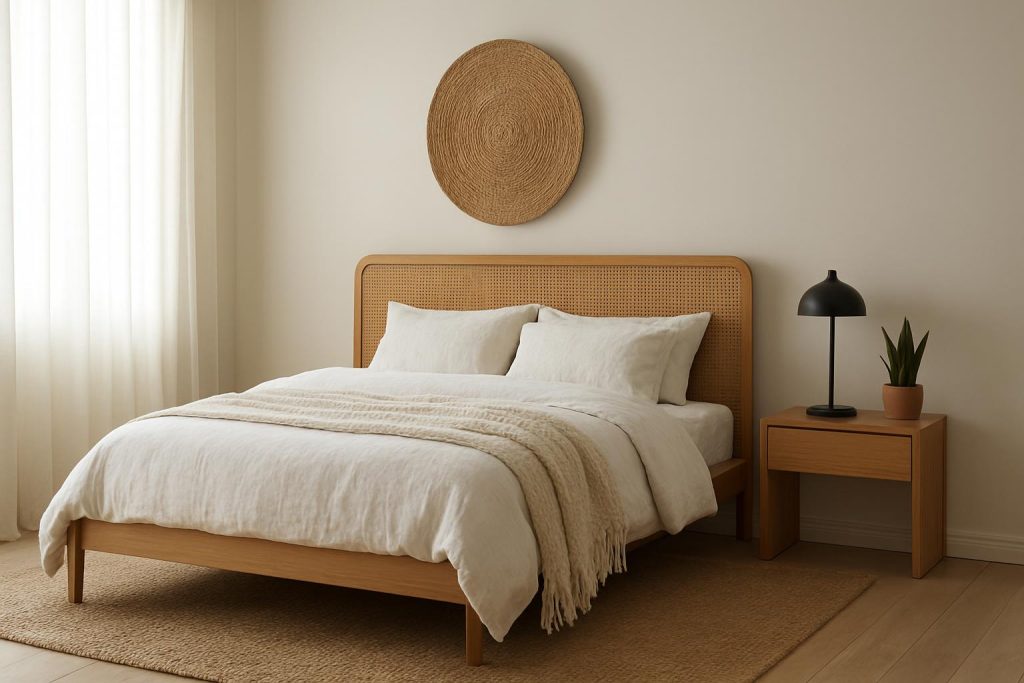
A neutral boho bedroom blends a soft color palette with organic materials and handmade details. The base is warm whites, creams, beiges, greige, and taupe. Texture does the heavy lifting. Think linen, cotton, wool, jute, rattan, cane, and light wood. Lines are relaxed. Decor is thoughtful and not crowded. Plants and woven pieces add life. Black accents show up in small doses to ground the room. The mood is cozy, airy, and relaxed.
Core Principles
Keep the palette soft and grounded
Build your base with warm whites and light neutrals. Layer in mid-tone woods and soft textiles. Add small dark notes for contrast. Avoid bright, high-chroma color. This keeps the room calm.
Lead with texture, not loud color
Use nubby linen, chunky knits, smooth ceramics, boucle, rattan, and jute. Let texture create depth. Patterns stay subtle. Focus on stripes, tone-on-tone motifs, and quiet geometrics.
Aim for balance and breathing room
Do not crowd every surface. Leave negative space so the eye can rest. Choose fewer, larger pieces instead of many small ones.
Use natural, sustainable materials
Prefer solid wood, natural fibers, stone, and clay. These materials age well and add warmth. They also support a healthy indoor space.
Step-by-Step Plan to Build Your Room
Start with walls and floors
Paint walls a warm white or soft beige. Avoid stark blue-white that feels cold. Test swatches on different walls and view them day and night. A matte or eggshell finish softens the look. Limewash adds quiet movement if you want a handmade feel.
Keep floors light and natural. If you have dark floors, add a large neutral rug to brighten the room. Jute, wool, or a wool blend works well and adds texture.
Choose the bed and headboard
Pick a low or mid-profile bed to keep the room open. A light oak or ash frame, a soft upholstered headboard in linen, or a rattan or cane headboard fits the style. Avoid heavy, glossy finishes. Keep hardware simple.
Layer bedding
Use breathable sheets in cotton percale or linen. Add a lightweight quilt or coverlet for daily use. Top with a duvet for extra warmth. Keep the base in white, ivory, or oat. Mix textures with a simple rule of three. One smooth layer, one nubby layer, one woven or knit layer. Add two to three pillows beyond your sleeping pillows. Use subtle stripes or tone-on-tone stitching to add interest without noise.
Add nightstands and storage
Choose nightstands in wood, rattan, or cane. Keep lines simple. Aim for one drawer and an open shelf or basket below. Use seagrass or rope baskets to hold books and chargers. For dressers and cabinets, light to mid-tone wood feels natural and calm.
Plan layered lighting
Use at least three light sources. A soft overhead light, bedside lamps or sconces, and a floor or table lamp. Choose warm bulbs at 2700 to 3000 K. Add dimmers so you can adjust the mood. If you have bright natural light, use linen or cotton sheers to filter it while keeping the room airy.
Choose rugs and textiles
Anchor the bed with a large rug. Place about two thirds of the bed on it. Leave a border of floor showing around the rug so the room breathes. Jute gives a strong base. Wool adds softness underfoot. If you layer rugs, keep the top one smaller and softer.
For windows, use linen panels in a neutral tone. Hang them high and wide so the window looks larger and the room feels taller. If you need blackout, add a simple roller shade behind the sheers.
Curate art and decor
Choose a few larger pieces instead of many small ones. Try tone-on-tone abstracts, simple line drawings, or neutral photography. Hang woven wall art or a single oversized basket for texture. Add handmade ceramics, wood bowls, or matte candles. Use odd numbers when grouping decor. Keep surfaces mostly clear.
Bring in greenery
Plants add life and improve air. Choose easy options like snake plant or pothos. Use matte stone or terra-cotta planters. Place one medium plant near the window and one small plant on a dresser or nightstand. Keep leaves dust free so they can thrive.
Color Guide: Neutrals That Work
Warm whites
Look for whites with a touch of cream or gray. This avoids a sterile feel. Use warm white on walls, trim, and bedding for a unified base.
Greige and taupe
Greige mixes gray and beige. Taupe brings a soft brown note. Use these on rugs, throws, and upholstered headboards. They add depth while staying calm.
Accents in black and charcoal
Use black or charcoal in small amounts to ground the palette. Try a thin metal lamp, a picture frame, or curtain rings. Keep the touch light so the room stays airy.
Soft color accents
If you want a hint of color, keep it soft. Sage, muted clay, and sand work well. Use them in small textiles or art. Keep color under 10 percent of the room so the look stays neutral.
Texture Play: Mix With Intention
Smooth plus nubby plus woven
Every zone should mix three textures. Smooth ceramics or lacquered trays, nubby linen or boucle, and woven jute or rattan. This layering creates visual depth without loud color.
Wood tones that harmonize
Limit wood tones to two or three. Light oak, ash, or maple pair well with one darker accent like walnut. Repeat each tone at least twice so the mix looks planned.
Metals for subtle contrast
Use brushed brass, aged bronze, or blackened steel. Keep finishes matte or satin. Small doses in lamps, hardware, and frames are enough.
Edit tassels and fringe
Tassels and fringe add boho flair. Use them sparingly so the room reads clean. One fringed throw or one pillow with tassels is plenty.
Layout and Flow for Calm
Place the bed with intention
Center the bed on the main wall if possible. Leave walking paths on both sides. Aim for at least 60 cm clearance around the bed for easy movement.
Create negative space
Do not fill every corner. Leave one corner open or with a single chair and a small table. Clear floor space makes the room feel larger and lighter.
Get nightstand height right
Top of the nightstand should be level with or slightly below the top of your mattress. This makes reaching for a glass or book comfortable and safe.
Hide cables and control clutter
Use cord covers or cable clips to route wires behind furniture. Store remotes, chargers, and small items in lidded boxes or baskets. Keep only current reads and a carafe on the nightstand.
Budget-Friendly Tips
Prioritize big-impact items
Invest in a good mattress and a sturdy bed. Choose a large neutral rug to anchor the room. Add layered lighting. These pieces set the tone and last.
Shop secondhand and vintage
Look for solid wood dressers, cane chairs, or rattan benches. Refinish or oil wood to refresh it. Replace knobs with simple matte metal or wood pulls.
Try simple DIY projects
Paint a limewash feature wall for depth. Frame neutral fabric or a linen remnant as large-scale art. Swap dated knobs on dressers and nightstands. Use iron-on tape to hem curtains for a custom length.
Switch small textiles seasonally
Rotate pillow covers and throws to refresh the look without a full makeover. Keep a small library of neutral covers in different textures.
Cleaning and Care
Dust control
Use a microfiber cloth weekly on headboards, lamps, and decor. Dust ceiling fans and vents monthly. Vacuum rugs and under the bed to prevent buildup.
Textile care schedule
Wash sheets weekly. Wash duvet cover and pillow covers every two to four weeks. Air out quilts and throws in sunlight to freshen between washes. Follow fabric care labels to maintain texture and color.
Rug maintenance
Vacuum rugs weekly on low suction. Rotate them every three to six months to even wear. Take jute rugs outside for a shake to release grit.
Plant care routine
Check soil moisture weekly. Water when the top 2 to 3 cm are dry for most easy plants. Wipe leaves with a damp cloth to remove dust. Remove dead leaves to keep a tidy look.
Air quality and scent
Open windows daily if weather allows. Sprinkle baking soda on mattresses and rugs before vacuuming to reduce odors. Use a subtle essential oil diffuser if you like, and keep it minimal.
Common Mistakes to Avoid
Relying on bright color instead of texture. The result feels busy, not calm.
Using too many small knick-knacks. This creates visual noise and makes cleaning harder.
Choosing crisp, cool whites everywhere. The room can feel stark and cold.
Overloading patterns. Limit pattern to a few subtle pieces so texture leads.
Picking heavy, dark furniture across the board. Mix light wood and airy silhouettes to keep flow.
Ignoring lighting layers. A single overhead light flattens the space. Add lamps and dimmers.
Mixing too many wood tones. Cap it at two or three and repeat them.
Quick Checklist
Walls in warm white or soft beige. Floors anchored by a large neutral rug.
Bed in light wood, rattan, or upholstered linen. Low to mid profile.
Bedding in white or oat. Layer smooth, nubby, and woven textures.
Nightstands with closed storage and a basket. Simple shapes.
Lighting at 2700 to 3000 K. Overhead, bedside, and a floor or table lamp. Dimmers added.
Textiles in linen, cotton, wool, and jute. Curtains in light linen.
Decor that is few and larger. Handmade ceramics, woven art, matte frames.
Greenery in matte stone or terra-cotta pots. Easy-care plants.
Cables hidden. Surfaces mostly clear. Baskets for small items.
Conclusion
A neutral boho bedroom is simple to create when you focus on a soft palette, natural materials, and layered texture. Start with warm walls and a grounding rug. Choose a relaxed bed and breathable bedding. Add gentle lighting. Curate a few handmade pieces and live plants. Keep surfaces clear and maintain a steady care routine. The result is a space that feels cozy, airy, and relaxed every day.
FAQ
Q: What colors define a neutral boho bedroom
A: Warm whites, creams, beiges, greige, and taupe, with small touches of black or charcoal and optional soft accents like sage or muted clay kept under 10 percent.
Q: How can I make a neutral boho bedroom on a budget
A: Prioritize a good mattress and bed, a large neutral rug, and layered lighting; shop secondhand for wood and rattan; try simple DIYs like a limewash feature wall, framing neutral fabric as art, swapping knobs, and using iron-on tape to hem curtains; rotate pillows and throws seasonally.
Q: What textures work best in this style
A: Linen, cotton, wool, jute, rattan, cane, light oak, with small metal accents like brushed brass or blackened steel; mix smooth, nubby, and woven surfaces in every zone.
Q: What lighting temperature should I use
A: Use warm bulbs at 2700 to 3000 K and add dimmers to keep the room soft and relaxed.
Q: How do I keep it from looking cluttered
A: Use fewer larger decor pieces, leave negative space, hide cables, contain small items in lidded boxes or baskets, and keep surfaces mostly clear.