
We are reader supported. When you purchase through links on our site, we may earn an affiliate commission. Also, as an Amazon affiliate, we earn from qualifying purchases.
Built-in shelves turn empty walls into hard-working storage and clean display. When planned well, they look seamless, boost home value, and cut clutter. This guide walks you through location ideas, design choices, installation basics, and styling principles. You will learn how to balance open display with hidden storage, how to build for strength, and how to create a finish that fits your home. Read step by step. Each section adds a new layer so you can plan with clarity and avoid common mistakes.
Introduction
Good built-ins start with a clear purpose. Decide what you need to store and what you want to show. Then match those needs to the right wall, the right depth, and the right mix of shelves, doors, and drawers. Focus on structure first, style second. This approach gives you shelves that stay tidy and still feel inviting. Whether you hire a carpenter or do a DIY build, the same rules apply. Plan, measure, support, and finish with care.
Plan With Purpose
Define What You Store and What You Display
Make a simple inventory. List books, media gear, baskets, linens, dinnerware, kid items, or decor. Note sizes and weights. Heavy books and records need deeper, stronger shelves. Small decor thrives on shallow shelves. Hidden mess wants doors or drawers. Sentimental or seasonal items may live up high. Daily use items belong at chest to eye level. This clarity shapes every design choice that follows.
Measure and Map the Wall
Measure total width, floor to ceiling height, baseboard and crown sizes, outlet and vent locations, and any door swing clearance. Take multiple depth measurements along the wall, since walls are rarely straight. Sketch a scale plan. Mark studs. If the wall hosts media gear, mark cable paths. If near a heat source or moisture, account for safe clearances and ventilation. A precise map prevents late surprises.
Depth, Height, and Spacing Basics
Shallow shelves around 8 to 10 inches suit decor, glassware, and small books. Medium depth around 10 to 12 inches fits most books and baskets. Deeper shelves around 14 to 16 inches handle large books, appliances, and bins. Keep adjustable shelf spacing in the 10 to 14 inch range for flexibility. Leave breathing room above tall items rather than a tight fit. Plan a stable base cabinet height between 28 and 36 inches if you need closed storage under open shelves.
Smart Locations for Built-Ins
Living Room and Fireplace Walls
Flank a fireplace with symmetrical built-ins to anchor the room. Use closed base cabinets for media gear and board games, with adjustable open shelves above for books and decor. Include cable grommets at the back for a clean setup. If your fireplace wall is uneven, scribe panels for a tight fit. Choose heat tolerant finishes and keep combustible materials at safe distances. A simple face frame and consistent shelf thickness keep the look calm.
Around Windows and Window Seats
Wrap shelves around a window to create a reading zone. If you add a window seat, make a deep base for blanket storage with a lift top or drawers. Keep shelves shallow near the window to let light travel. Use a durable paint finish to handle sun exposure. Add a narrow top rail under the window head trim for a finished frame. Low shelves near a window work well for plants if you plan for easy watering and wipeable surfaces.
Entryway and Hallway Niches
Turn a narrow wall into a landing zone. Use shallow shelves or cubbies for keys, mail, and hats. Keep the lowest shelf clear of shoes to protect surfaces from dirt. Add a tall closed cabinet if you need broom or vacuum storage without taking closet space. In tight halls, choose minimal depth and soft edges to protect passersby. Mount sturdy wall cleats into studs to hold weight without sagging.
Kitchen and Pantry Walls
Open shelves near the kitchen can hold everyday plates and glasses if you prefer quick access and easy cleaning. In a pantry, use full height built-ins with a mix of fixed and adjustable shelves. Deep lower shelves suit appliances and bulk goods. Mid level shelves carry clear bins and labeled baskets. Upper shelves store light, infrequent items. A washable paint or sealed wood finish helps with splashes and grease.
Bedroom and Closets
Built-ins in bedrooms reduce furniture needs. Combine hanging sections with shelves and drawers to create a full wardrobe wall. Use shallow nightstand niches with power access for devices. Keep seasonal items up high and daily items at easy reach. In kids rooms, plan deeper base cubbies for toys with open bins and thinner upper shelves for books. Choose rounded front edges and durable finishes for safety and longevity.
Bathroom and Laundry
Recessed niches between studs offer tidy storage without crowding tight rooms. Use moisture resistant materials and caulk seams. In a laundry, place closed cabinets for detergents and open shelves for baskets and towels. Leave airflow paths around appliances and add a counter above front loaders for folding. Choose hardware that resists corrosion and cleanable paint that stands up to humidity.
Under Stairs and Awkward Alcoves
Under stair spaces are perfect for built-ins. Step the shelf heights to match the slope or use doors with angled tops for a clean face. Deep lower sections can hide bulky items. Shallow upper sections can showcase decor. In alcoves, build to the full width and scribe side panels to the wall. Keep toe kicks consistent with other trim for a built-in look.
Home Office and Study Wall
A full wall of shelves turns a spare room into a study. Use a base of file drawers and cabinets, then stack adjustable shelves above. Plan cord routes, a charging station, and a printer bay with ventilation. Add a continuous counter for working space. If video calls are common, style the shelves with calm colors and limited visual noise. Soft lighting helps the background look warm without glare.
Design Choices That Work
Mix Open Shelves, Doors, and Drawers
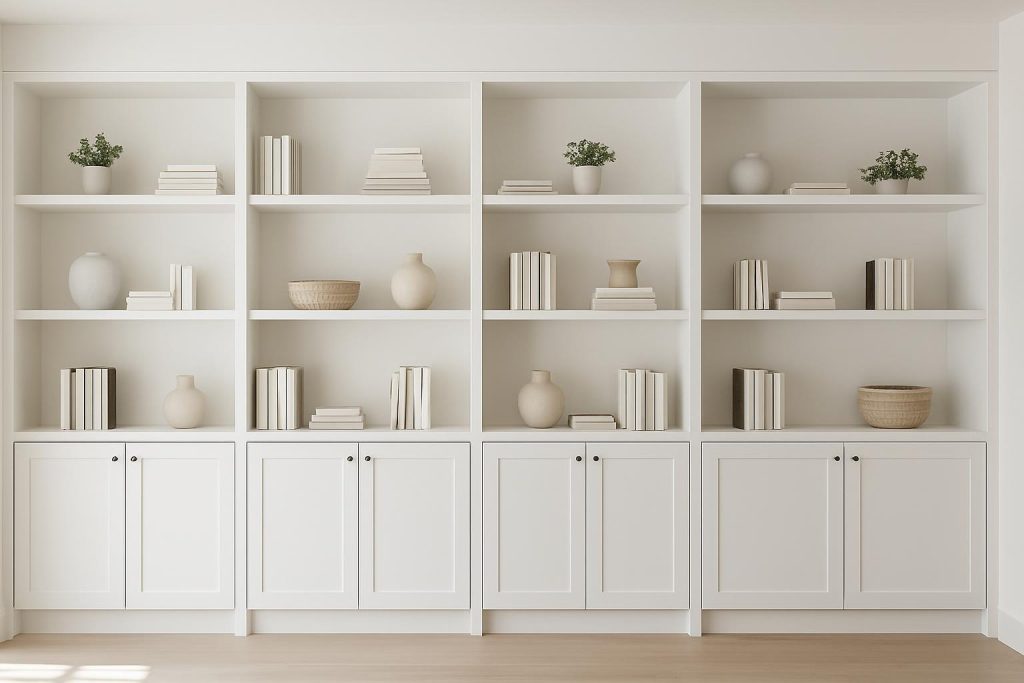
Open shelves keep items visible and invite daily use. Doors hide bulk and visual noise. Drawers control small items and keep counters clear. A balanced design often places doors and drawers at the base and open shelves above. This layout anchors the wall, reduces dust on rarely moved items, and keeps decor at eye level.
Adjustable vs Fixed Shelves
Adjustable shelves increase flexibility. Use metal pins or strong concealed supports spaced at consistent intervals. Fixed shelves add rigidity and stop the case from racking. Combine both. Fix every third shelf and the top. Make the rest adjustable. This structure supports weight and adapts to changing needs.
Materials and Finishes
Plywood with a hardwood face frame balances strength and cost. MDF paints smoothly and is stable, but edges need sealing and it dislikes moisture. Solid wood is durable and repairable but costs more and moves with humidity. For painted built-ins, choose a hard-wearing enamel. For stained wood, use a clear coat that resists yellowing. Match or complement room trim for a cohesive look.
Back Panels and Color Strategy
A back panel finishes the look and boosts rigidity. Painted backs blend the case into the wall. A darker back adds depth and makes decor stand out. Color match the shelves and face frame if you want a quiet look. Contrast the back panel if you want display items to pop. Keep the interior consistent to avoid visual clutter.
Trim, Face Frames, and Toe Kicks
Face frames hide plywood edges and add a classic look. Use a simple profile to suit modern rooms or a detailed one for traditional spaces. Align face frame stiles with shelf divisions. Add crown molding to meet the ceiling if you want a full height effect. Keep a recessed toe kick at the base to prevent scuffs and give the unit a furniture feel.
Lighting for Impact and Ease
Integrate lighting to lift both storage and display. LED strips under shelves highlight objects and reduce shadows. Puck lights in upper sections create pools of light that guide the eye. Choose warm or neutral color temperature to match the room. Hide wires in channels and use a smart switch or a small low voltage driver in a base cabinet. Add diffusers to avoid hotspots.
Cable Management and Ventilation
Plan cable paths before you build. Drill grommet holes behind closed sections. Route cables vertically through chase spaces, not across adjustable shelf holes. If you house media gear or a printer, cut vent slots in the back or use a perforated panel. Leave gaps behind doors for airflow. Quiet function keeps the unit looking clean and working well.
Build or Buy
True Built-In, Semi-Custom, and DIY Hacks
A true built-in is built to the wall, scribed to contours, and secured to studs. Semi-custom units use modular cabinets and shelves with filler pieces to close gaps. DIY hacks can start with flat pack cabinets or bookcases, then add face frames, trim, and paint for a built-in look. Choose based on budget, time, and skill. All three paths can deliver a seamless result if you plan the finish details.
Budget Tips That Stretch
Use paint grade plywood for cases and invest in solid face frames for durability. Keep shelf spans shorter to allow thinner materials without sagging. Standardize shelf thickness and use consistent spacing to save cutting time. Paint everything after installation for a uniform color. Use stock crown and base moldings for a finished edge. Add lighting later if the budget is tight but prewire for it now.
Installation Essentials
Find Studs and Support Weight
Fasten cases and cleats into studs, not just drywall. Use long screws through the face frame or the cabinet back into the stud at multiple heights. For floating shelves, anchor a strong wall cleat first and slide the hollow shelf over it. Mind load limits. Heavy books and equipment need dense supports and closer brackets. Glue and screw shelf joints to prevent creep over time.
Scribing to Uneven Walls and Floors
Walls and floors are rarely straight. Use scribe strips at the sides and top to close gaps. Set cases slightly shy of the ceiling, then add a scribed crown. Shim the base to level, then add a scribed toe kick to hide shims. Take your time here. Clean seams make the difference between a box on a wall and a true built-in.
Safety and Moisture Considerations
Keep shelves clear of heater vents and avoid covering return air grills. In bathrooms and laundry rooms, seal edges and choose moisture resistant materials. In kids rooms, anchor tall units to studs at the top rail. Round front edges reduce bumps. Use soft close hardware to protect little fingers and preserve the finish.
Finishing and Paint Process
Sand all edges smooth and break sharp corners. Caulk small gaps at trim joints. Prime with a stain blocking primer. Sand between coats for a glassy finish on painted units. For stained wood, raise the grain with a damp cloth, sand, then apply stain and seal with a durable topcoat. Paint doors and shelves laid flat to avoid drips. Let finishes cure fully before loading shelves.
Style and Maintain With Intention
Styling for Display
Start with function, then add layers. Group items by theme or color. Mix vertical books with horizontal stacks to vary height. Place heavier visual items low and lighter ones high. Leave negative space so each item can breathe. Repeat materials like wood, glass, or ceramic to create rhythm. Step back and edit until the wall feels balanced.
Containers, Labels, and Hidden Helpers
Use baskets or bins on lower shelves to hide small items. Clear containers work well in kitchens and pantries. Opaque bins suit living rooms and bedrooms where you want a calm face. Add simple labels to keep systems easy for everyone in the home. Drawer inserts in base cabinets tame cords, tools, and craft supplies.
Rotation and Routine Care
Rotate decor seasonally to keep the display fresh and to dust less at one time. Wipe shelves with a soft cloth weekly in high traffic rooms. Deep clean and reorganize every few months. Check shelf pins and screws once or twice a year and tighten if needed. Small upkeep prevents sag, wobble, and clutter creep.
Common Mistakes to Avoid
Skipping a clear purpose leads to mismatched depth and wasted space. Oversizing depth creates dark, hard to reach shelves. Long spans without support sag over time. Forgetting cable and vent planning traps you later. Inconsistent trim makes the unit look tacked on instead of integrated. Rushing paint or stain causes drips and a rough feel. Avoid these by planning carefully, supporting weight properly, and finishing with patience.
Conclusion
Built-in shelves succeed when design serves daily life. Start with what you store and what you show. Choose the right location, depth, and a smart mix of open and closed sections. Build for strength with studs, cleats, and sensible spans. Finish cleanly with trim, lighting, and a durable coating. Style with restraint, label where needed, and maintain on a simple routine. Follow this path and your built-ins will stay organized, look cohesive, and work for years.
FAQ
Q: What shelf depths work best for most homes
A: Use 8 to 10 inches for decor and small books, 10 to 12 inches for most books and baskets, and 14 to 16 inches for large books and appliances.
Q: How can I balance open display with hidden storage
A: Place doors and drawers in the base for bulk and visual noise, and keep open shelves above for books and decor.
Q: What is the best way to prevent shelves from sagging
A: Shorten shelf spans, use sturdy materials, combine fixed and adjustable shelves, and anchor cases into studs.
Q: How do I make built-ins look seamless on uneven walls
A: Scribe side panels, crown, and toe kicks to the wall and ceiling, and level the base with shims before finishing.
Q: What lighting works well inside built-ins
A: Use LED strips under shelves for even light, add puck lights for highlights, and hide wiring with channels and a low voltage driver.