
We are reader supported. When you purchase through links on our site, we may earn an affiliate commission. Also, as an Amazon affiliate, we earn from qualifying purchases.
Small apartments can feel open, calm, and efficient when every choice has a purpose. This guide shows you how to plan your layout, choose the right furniture, build storage, and keep everything tidy without stress. You will see fast wins you can do today and bigger upgrades you can plan for later. Start with a clear plan, then layer smart storage, flexible furniture, and simple routines. Small space living becomes easy when each item earns its spot and every zone supports your day.
Plan First, Buy Second
Measure and Map the Space
Measure each wall, window, door swing, and any radiator or pillar. Note ceiling height. Draw a quick floor plan on paper or use a phone app. Add outlets and light switches. Mark where natural light enters. Keep a photo of your plan on your phone so you always shop with facts, not guesses.
Prioritize Daily Activities
List what you do at home each day. Sleep, work, cook, relax, exercise, host a friend, store hobbies. Rank them. Your layout choices must support the top three first. If work is daily, a stable desk matters more than a giant coffee table. If you host twice a month, use flexible pieces that expand when needed and shrink when not in use.
Protect Pathways and Clearances
Plan 60 to 75 cm of walking space through main paths. Leave 5 to 10 cm behind sofas and beds so you can clean. Keep doors and drawers free to open. If a piece blocks movement, pick a slimmer option. Good flow makes a room feel bigger than new decor ever will.
Declutter With Purpose
Edit by Category, Not by Room
Pull each category together, then edit. Clothes, books, paperwork, kitchen tools, bedding, hobby gear. Keep what you use and love. Set a one in one out rule for future buys. Fewer items make faster cleaning and clearer choices.
Reduce Packaging and Visual Noise
Decant pantry and bath items into clear bins. Remove duplicate chargers, cables, and manuals. Keep one backup, not five. Use matching containers to calm shelves. A tidy visual field makes a room feel larger.
Rotate Seasonally
Store off season clothes and decor in vacuum bags or sealed bins. Label clearly. Place them under the bed, on a high shelf, or above cabinets. Keep only current season items at hand. Rotation protects space and energy.
Choose Multifunctional Furniture
Sleep Smart
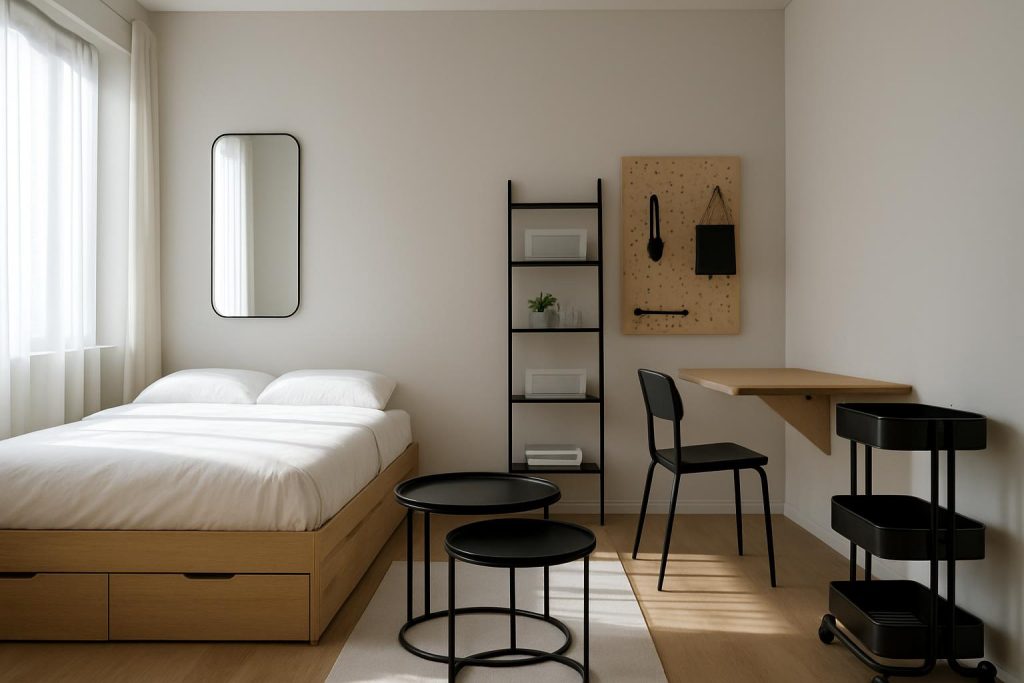
Pick a platform bed with drawers or space for under bed bins. If ceilings are high, consider a loft bed to free a desk zone. A wall bed or quality sofa bed turns a studio into a one room home with clear day and night modes.
Dining and Work in One
Use a drop leaf table that opens for guests and folds flat daily. A wall mounted desk or a slim console can serve as a laptop station and a dining sideboard. Prioritize depth under 50 cm for small rooms.
Living Room Flexibility
Choose nesting tables for quick extra surfaces. Pick ottomans with storage that double as seating. A narrow console behind a sofa adds hidden storage and a place for lamps without taking floor space.
Rolling and Folding Pieces
Use a rolling cart for bar, coffee, or office supplies. It moves where needed and parks out of the way. Folding chairs hang on a wall or behind a door. Mobility keeps a small space responsive to your day.
Use Vertical and Hidden Spaces
Walls That Work
Install shelves up high to draw the eye upward. Use rail systems, pegboards, and hooks for tools, utensils, hats, and bags. Store tallest items at the ends to reduce visual clutter. Keep often used items at shoulder height.
Doors and Corners
Use over door racks for shoes, cleaning tools, or pantry packets. Add corner shelves to capture dead zones. Slim ladder shelves lean with little footprint and hold a lot.
Under and Above Furniture
Use low rolling bins under the bed and sofa. Bed risers add extra centimeters for deeper storage. Place labeled bins above kitchen cabinets and wardrobes for seldom used items. Hidden zones are your storage budget.
Create Clear Zones
Define Without Walls
Use rugs to mark living, dining, and sleeping areas. Place a floor lamp to anchor a reading corner. Use an open shelf as a gentle divider while keeping light flow. Zones help your brain know where items belong.
Align and Simplify
Line up furniture edges with walls or main lines. Keep gaps even. Mirror shapes across a room for balance. A tidy layout makes a small space feel intentional, not cramped.
Contain the Small Stuff
Place a tray on the coffee table for remotes and candles. Use baskets by the sofa for throws and magazines. Park a rolling cart near the dining table to hold placemats and napkins. When everything has a home, surfaces stay clear.
Light, Color, and Materials
Choose a Calm Palette
Use a light base for walls, large rugs, and big furniture. Add 20 percent medium or dark accents to ground the space. Keep finishes consistent across rooms to reduce visual breaks.
Make Windows Work Hard
Hang curtains high and wide to expose glass. Use sheer panels for day privacy without blocking light. Keep window sills clear so light spreads deeper into the room.
Mirrors and Glass
Place a large mirror across from a window to bounce light. Use a glass coffee table or open base furniture to reduce visual weight. Reflective surfaces help a room feel airy.
Layer Your Lighting
Combine ambient light from a ceiling fixture, task lamps for reading and cooking, and accent lighting for shelves or art. Choose warm white bulbs for living and bedroom, and neutral white for kitchen and desk. Good lighting extends the usable zones of a small home.
Kitchen Strategies
Vertical Tools and Clear Counters
Mount a rail for utensils and pans. Add a magnetic strip for knives. Use a pegboard for flexible hooks and shelves. Keep only daily appliances on the counter. Store the rest on a cart or high shelf.
Use Every Cabinet Inch
Add shelf risers to double space. Place turntables in corners for oils and condiments. Use pull out baskets for snacks. Add a tension rod under the sink to hang spray bottles. Label zones so items return to the same spot.
Pare Down and Portion
Keep one full set of cookware and one backup of key tools. Use stackable containers for dry goods. Group by use, like coffee station or baking zone, so tasks go faster in tight quarters.
Bathroom Strategies
Build Up, Not Out
Install over toilet shelving for towels and paper goods. Use suction or adhesive caddies in the shower. A narrow rolling cart can fit between sink and wall.
Use the Back of the Door
Hang hooks for robes and towels. Add a slim rack for hair tools. Keep floor clear to make cleaning fast.
Control Small Items
Use drawer dividers for makeup and grooming tools. Add a small magnetic strip inside a cabinet for tweezers and nail clippers. Keep duplicates to a minimum.
Manage Moisture
Choose quick dry textiles and a fast drying bath mat. Squeegee shower walls to prevent buildup. Good airflow keeps a small bath fresh.
Entryway and Closet
Create a Landing Zone
Place a wall hook rail for coats and bags. Add a tray for keys and wallet. Keep a small bin for mail. A clear entry sets the tone for the whole home.
Shoes and Coats
Use a vertical shoe rack or a low bench with cubbies. Switch to slim hangers to gain rod space. Rotate off season outerwear to a sealed bin.
Upgrade Closet Capacity
Add a second rod for shirts and skirts. Use cascading hooks for scarves and belts. Place labeled boxes on the top shelf for less used items. Consistent containers make fast mornings.
Bedroom Optimization
Max Under Bed Storage
Use lidded low bins or drawers with wheels. Store off season clothes, spare linens, and luggage. Label both the front and top so you can find items without opening every bin.
Smarter Bedside
Use a wall mounted shelf or a narrow cart as a nightstand. Clip on lamps free surface space. Keep only nightly essentials within reach.
Streamline the Wardrobe
Build a capsule of pieces that mix easily. Fold items to stand upright in drawers so you see all at once. Donate extras. Fewer choices mean faster mornings and less laundry pileup.
Living Room and Balcony
Seating That Adapts
Use a compact sofa with raised legs to show more floor. Keep a pair of light accent chairs you can move. Store two floor cushions for guests.
Media Control
Wall mount the TV to free a cabinet for storage. Use a cable channel to hide wires. Keep remotes, chargers, and game gear in one labeled box.
Make the Balcony Useful
Choose a foldable table and stacking chairs. Use railing planters to save floor space. Store a small outdoor box for cushions and tools. A tiny balcony can extend your living room.
Workspace in Small Homes
Define and Pack Away
Pick a consistent work spot, even if it is a fold down desk. Use a portable caddy for laptop, charger, and notebook. At day end, pack everything so the room returns to home mode.
Control Cables and Paper
Use clips to route cords down table legs. Keep one small paper inbox and a weekly review time. Scan key documents to the cloud. Less paper means less clutter.
Set a Clean Background
Keep the wall behind your desk simple. A plant and a shelf are enough. A tidy background reduces stress and looks professional on calls.
Renter Friendly Upgrades
Stick and Go Solutions
Use removable wallpaper or film to add pattern. Mount hooks and small shelves with adhesive where allowed. Choose peel and stick lights for closets and dark corners.
No Drill Storage
Use tension rods inside cabinets and closets. Add freestanding shelves that fit wall to wall. Use over door organizers for instant capacity.
Plug In Lighting
Install plug in sconces beside the bed or sofa. Run cords neatly along baseboards. Better lighting improves every room task.
Cleaning and Maintenance
Daily Ten Minute Reset
Make the bed, clear surfaces, and return items to homes. Run a quick dish cycle or hand wash. Put laundry in a bin with a lid. A short reset prevents weekend overwhelm.
Weekly Routine
Pick one laundry day. Clean the bathroom sink, toilet, and shower. Vacuum or sweep all floors and mop high traffic areas. Dust shelves and electronics. Consistency beats marathons.
Monthly Deep Tasks
Wipe baseboards, door frames, and switches. Clean inside the fridge and oven. Wash pillow protectors and shower liner. Rotate the mattress if needed. Small homes stay fresh with steady care.
Tools That Earn Space
Keep a cordless vacuum or a compact stick mop, a set of microfiber cloths, a spray bottle with an all purpose cleaner, and a small caddy. Tools should be easy to grab and easy to store.
Budget and Shopping Smart
Measure Twice, Return Less
Check width, depth, height, and doorways. Tape outlines on the floor to test size. Confirm return policies before ordering large items.
Buy Storage Last
Declutter first, then plan zones, then add containers that fit exact shelves and drawers. Buying storage early often leads to waste.
Secondhand and Simple Hacks
Look for solid frames you can paint. Add shelf risers and bins before buying extra cabinets. Many small improvements beat one giant purchase.
Hosting in Small Spaces
Plan Guests, Menu, and Surfaces
Decide the guest count that fits well. Choose a menu you can prep ahead. Pull out nesting tables and clear the console for drinks. Borrow folding chairs if needed.
Set a Stash and Cleanup Flow
Before guests arrive, move non essentials to a bedroom bin. After they leave, run a ten minute reset. A simple plan keeps hosting low stress.
Safety, Comfort, and Air
Keep Exits Clear
Do not block doors or windows with storage. Mount a small fire extinguisher in the kitchen. Test smoke and CO alarms as required.
Better Air, Better Sleep
Open windows when weather allows. Use a small air purifier if dust or pollen is high. Add a few low maintenance plants. Clean filters on schedule.
Reduce Noise and Improve Privacy
Use rugs, curtains, and soft textiles to absorb sound. Add door sweeps and weather stripping to reduce hallway noise. Place a bookshelf against shared walls for extra mass.
Conclusion
A small apartment works when you plan the layout, reduce clutter, choose multifunctional furniture, build vertical storage, and keep simple routines. Protect pathways, keep surfaces clear, and set zones that match your day. Use light colors, strong lighting, and consistent containers to calm the space. Start with one room and one habit. Each small win adds up. The goal is not more stuff but more function and ease in the space you have.
FAQ
How do I plan a small apartment layout before buying furniture?
Measure walls, doors, windows, and outlets, draw a quick floor plan, note light sources, protect 60 to 75 cm pathways, and rank your top daily activities so the layout supports them first.
What furniture works best for small spaces?
Choose multifunctional pieces like a platform bed with drawers, a drop leaf table, nesting tables, ottomans with storage, a wall mounted desk, and rolling or folding items you can move easily.
How can I increase storage without drilling?
Use over door racks, adhesive hooks and caddies, tension rods inside cabinets, freestanding shelves, under bed bins, and labeled boxes above cabinets and wardrobes.
How do I make a small room feel larger and brighter?
Use a light color base with limited dark accents, hang curtains high and wide, place a mirror across from a window, choose glass or open base furniture, and layer ambient, task, and accent lighting.
What is a simple weekly cleaning routine for small apartments?
Do one laundry day, clean bathroom surfaces, vacuum or sweep and mop high traffic areas, dust shelves and electronics, and keep a daily ten minute reset for surfaces and dishes.