
We are reader supported. When you purchase through links on our site, we may earn an affiliate commission. Also, as an Amazon affiliate, we earn from qualifying purchases.
Dorm life gives you a small box to call home. The goal is to make it stylish, calm, and easy to keep tidy. Start with a plan. Then layer storage, color, and lighting. The result is a room that looks good and works hard every day.
Set Your Style Foundation
Pick a tight color palette
Choose two neutrals and one accent color. Neutrals keep the room calm. The accent adds energy. Use the accent on pillows, art, and small decor. Keep large items like bedding and rugs neutral so the space feels bigger.
Repeat textures for a unified look
Pick two textures and repeat them. Examples include soft knit, woven baskets, matte metal, or light wood. Repeating textures ties the room together without clutter.
Use patterns with restraint
Limit bold patterns to one area, like a duvet or rug. Keep other fabrics solid. This stops visual noise and makes cleaning and styling easier.
Plan the Layout Before You Move Anything
Measure and map zones
Measure the room, the bed size, the desk, and the closet. Sketch a simple floor plan. Mark zones for sleep, study, storage, and socialize. Give each zone a clear purpose so items have a home.
Protect traffic paths
Leave at least 36 inches for walkways. Do not block the door, closet, or windows. Keep the path from bed to door clear for safety and speed on busy mornings.
Place bulky items first
Set the bed and desk first. Then add a rug under the front legs of the bed or desk area to define the zone. Fill in with storage that fits the remaining space.
Maximize the Bed Area
Go vertical with height
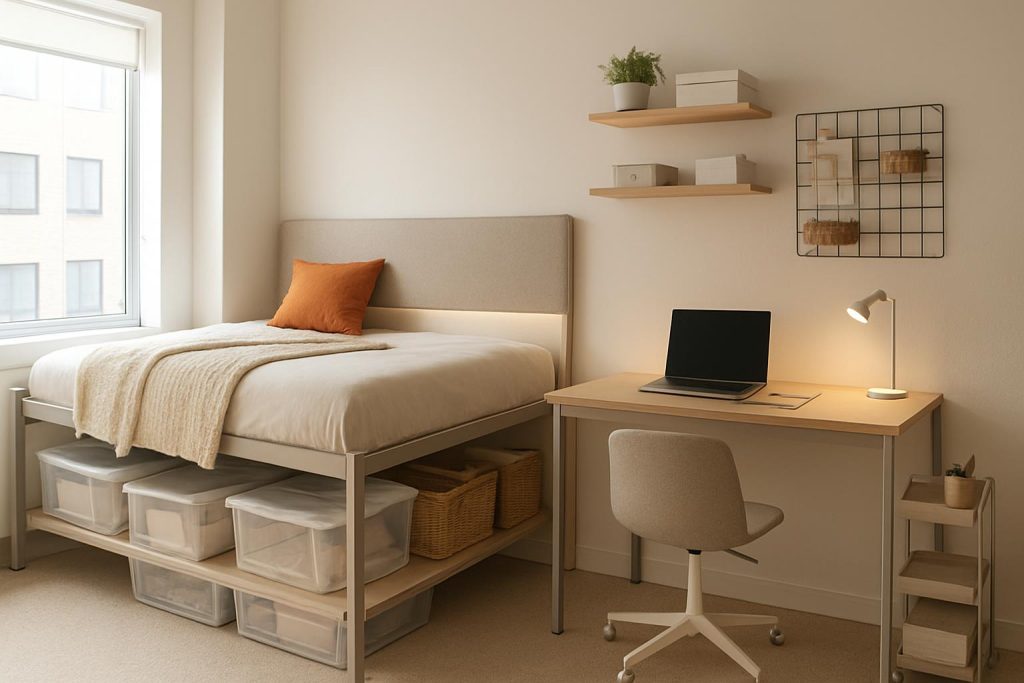
Use bed risers or a loft to free space underneath. Higher beds create storage for bins, a mini dresser, or a rolling shoe drawer. Confirm allowed heights with housing rules.
Create a soft landing zone
Add a medium rug next to the bed to warm the look and cut dust tracked onto sheets. Stick to low pile for easy vacuuming and fewer allergens.
Add a headboard effect
Use a fabric wall panel, peel and stick wallpaper, or a large pillow to suggest a headboard. This frames the bed without drilling.
Keep night items within reach
Clip on a bedside caddy for glasses, phone, and a small notebook. Add a small clamp lamp for reading. This reduces the need for a bulky nightstand.
Under Bed Storage That Works
Mix clear bins and open crates
Use clear lidded bins for seldom used items like seasonal clothing and backup toiletries. Use open crates for daily items like snacks and gym gear. Labels speed up retrieval and return.
Add a slim rolling drawer
Slide in a rolling drawer or tray for shoes and small accessories. This keeps floors clear and dust down. Pull it out in one motion to clean.
Compress bulky textiles
Use vacuum bags for extra blankets and off season jackets. Store them flat at the back so the front area stays free for daily access.
Closet Optimization
Upgrade hangers and cascading space
Use slim velvet or wood hangers to fit more without slipping. Add cascading hooks to stack several items downward. Group by type and color for fast dressing.
Divide shelves
Add shelf dividers to stop clothing from toppling. Roll workout clothes and tees to save space and keep stacks neat.
Use the door
Hang an over the door organizer for shoes, scarves, or accessories. Choose clear pockets so you see items at a glance.
Vertical Storage Without Drilling
Adhesive hooks and rails
Use removable adhesive hooks for bags, hats, and keys. Create a small rail with adhesive clips for sunglasses or masks. Always follow weight limits.
Pegboard alternative
Use a lightweight grid panel that hangs from removable hooks. Clip on baskets for mail, chargers, and notes. This organizes a wall without holes.
Floating look shelves
Use freestanding stackable cubes to mimic shelves. Place them against a wall for a clean look that you can change as needs shift.
Desk Setup For Focus
Raise the screen and clear the surface
Use a monitor or laptop riser to set the top of the screen at eye level. Slide a keyboard and notebook underneath. Keep only daily tools on the surface: laptop, pen cup, planner, and a lamp.
Tame cables
Stick a cable channel under the desk. Add clips at the edge to park chargers. Label both ends. This prevents tangles and saves time each day.
Roll away overflow
Park a 3 tier rolling cart beside or under the desk. Use it for textbooks, printer paper, and art supplies. Roll it out when you study, roll it back when you host friends.
Divide small items
Use shallow trays inside drawers for stationery, flash drives, and sticky notes. Assign one tray per category. Clutter drops when every item has a precise slot.
Lighting That Warms and Works
Layer light sources
Use three layers. Task light at the desk for reading. Ambient light like a small floor or table lamp for the room. Accent light like adhesive LED strips or puck lights to highlight shelves.
Mount with removable methods
Use clips, clamps, or removable adhesive for lights. Place strips under shelves or around a headboard panel. Keep cords tidy with adhesive clips.
Choose warm bulbs
Pick warm white bulbs for a calm feel. Use brighter task bulbs only where you study. Balance brightness so the room feels inviting at night.
Soft Goods That Do More
Layer bedding for quick care
Use a duvet with a removable cover for fast laundry. Add one throw that matches your accent color. Keep an extra pillowcase ready for swaps between laundry days.
Double duty pillows and poufs
Use a pouf or small ottoman with storage for seating and hidden space. Use floor cushions for guests that stack flat when not needed.
Entry and Drop Zone
Set a landing strip
Place a small mat, a wall hook, and a narrow tray near the door. Keys, ID, and earbuds live here. The habit of placing items here saves minutes each morning.
Use a slim shoe rack
Two tier racks hold daily shoes and keep dirt off the floor. Wipe the mat weekly to cut dust.
Kitchenette and Snack Station
Turn the fridge into a station
Use a tray or mat on top of the mini fridge for mugs and a kettle. Add a small bin for tea, coffee, and snacks. This creates a tidy prep zone.
Use vertical caddies
Stackable caddies hold utensils, napkins, and dish soap. A foldable drying mat slides into a drawer after use to keep counters clear.
Bathroom and Laundry
Grab and go caddy
Use a hard sided shower caddy for toiletries. Store it on a shelf or under the bed. Pack travel minis for gym days to keep weight down.
Hooks beat bars
Use over the door hooks for towels and robes. Assign each person a color to avoid mixups. Hooks dry towels faster in tight spaces.
Smarter hampers
Pick a hamper with two sections for lights and darks. Add a mesh bag for delicates. Keep detergent pods in a labeled bin near the door so laundry day is fast.
Decor That Organizes
Wall grid or cork board
Pin schedules, task lists, and photos on one board. Use small clips for cables and keys. This keeps surfaces clean while adding personality.
Photo display with clips
String a removable line with clips. Mix photos with class reminders. Swap items without leaving marks.
Coordinate With Your Roommate
Agree on shared items
Decide on shared items like a rug, mirror, or cart. Pick a common color palette so the room feels cohesive even with different styles.
Assign zones
Label shared shelves and the fridge. Use equal space and clear rules for restocking. Fewer overlaps mean less clutter.
Set weekly tasks
Make a simple cleaning rotation. Examples include trash, wipe surfaces, and vacuum. Keep the plan visible on a board.
Routine That Keeps Clutter Down
Do a 10 minute reset
Each night, return items to bins, wipe the desk and nightstand, and empty trash if full. Prep clothes and your backpack for the next day. Small daily actions prevent big messes.
Weekly power clean
Dust, vacuum, change sheets, and wash towels once a week. Refill toiletries and snacks. Check labels and toss empty packaging.
Adhesives and No Drill Solutions
Choose the right adhesive
Use removable strips for light frames and hooks. Use heavy duty removable hooks for bags. Clean the wall before sticking and wait the full cure time.
Test before full use
Hang an item for an hour and check hold. Add a second hook if needed. Remove slowly at the recommended angle to avoid damage.
Budget Friendly DIY
Upgrade boxes with fabric
Wrap old boxes with fabric or contact paper to match your palette. Label the front. These act as stylish bins on shelves.
Binder clip cable catchers
Clamp binder clips at the desk edge and thread cables through. This keeps chargers from falling and costs almost nothing.
Stack hangers with tabs
Use a can tab to hang one hanger from another. This creates a vertical cascade that saves closet space.
Tension rod for shoes
Place a short tension rod at the bottom of the closet for flats and sandals. No tools needed and it lifts shoes off the floor.
Seasonal Swap Strategy
Rotate with bins
Store off season items in labeled under bed bins. At the start of each term, swap items and push the off season bin to the back. This keeps only current items within reach.
Streamline during breaks
Before long breaks, sort and donate items you did not use. Pack heavy winter gear into vacuum bags. Travel lighter and return to a fresher room.
Personal Touch Without Clutter
Set a display limit
Pick one shelf or grid for decor and memories. When it is full, swap items rather than adding more. This keeps style high and surfaces open.
Use scent with care
Many dorms limit candles. Use a small diffuser or room spray if allowed. Store it in a labeled bin with cleaning supplies.
Small Space Hosting
Flexible seating
Keep two folding stools under the bed or behind the door. Pull them out for friends. Use a tray table for snacks and fold it flat when done.
Fast reset after guests
Return extra seating to storage, wipe surfaces, and run a quick vacuum. Ten minutes protects your daily routine.
Move In Smart
Pack by zone
Box items by the zones you planned. Open one box at a time to avoid chaos. Set up the bed, desk, and lighting first for instant function.
Edit as you unpack
As you place items, remove duplicates and extras. Keep one or two backups only for essentials. Less stuff means faster cleaning.
Conclusion
A cool dorm room blends style with smart organization. Start with a simple palette and clear zones. Use vertical and under bed storage to open the floor. Layer lighting for both focus and comfort. Set daily and weekly habits that keep clutter from returning. With a tight plan and a few clever upgrades, your room will look good, feel calm, and support your best work.
FAQ
Q: How do I plan my dorm layout before move in?
A: Measure the room, map zones for sleep, study, storage, and socialize, sketch traffic paths, and leave at least 36 inches for walkways.
Q: What under bed storage works best in a small dorm?
A: Use bed risers or a loft, mix clear lidded bins for seldom used items and open crates for daily items, label everything, and add a slim rolling drawer for shoes.
Q: How can I add lighting without drilling?
A: Layer a clip on desk lamp, adhesive LED strips or puck lights, and a small floor or table lamp with a warm bulb, all placed with removable adhesive or clamps.
Q: How do I keep my desk clear and productive?
A: Use a monitor or laptop riser, a cable channel with clips, a 3 tier rolling cart for overflow, shallow drawer trays for small items, and keep only daily tools on the surface.
Q: What is a simple daily cleaning routine for a dorm?
A: Do a 10 minute reset each night, return items to bins, wipe desk and nightstand, empty trash if full, and prep clothes and backpack for the next day.