
We are reader supported. When you purchase through links on our site, we may earn an affiliate commission. Also, as an Amazon affiliate, we earn from qualifying purchases.
Small living rooms can feel tight, but they can also be efficient, comfortable, and stylish with the right plan. Start with a clear layout, choose the right furniture, and use design tricks that open up the room. This guide walks you through each step with actionable ideas you can use today. Keep reading and apply one section at a time. You will see results fast.
Plan the layout first
Map your room
Measure the length, width, and ceiling height. Note door swings, windows, radiators, and outlets. Sketch a quick floor plan. Mark the main path from door to seating. A simple plan prevents crowding and saves money by guiding every choice.
Choose a focal point
Pick one priority: TV wall, window view, fireplace, or feature art. Arrange seating to face or flank that point. One clear focal point reduces visual noise and anchors the room.
Protect traffic flow
Keep clear walkways at least 24 to 30 inches wide. Avoid placing the sofa back directly against the entry path. If the room is long and narrow, float the sofa slightly off the wall with a slim console behind it to ease circulation.
Get scale and proportion right
Right size your seating
Choose a sofa that fits the wall without blocking paths. In most small rooms, a width of 60 to 72 inches works well. Pick tight back cushions or a single bench seat to avoid bulky lines. Slim arms and a lower profile lighten the look.
Pick slim profiles
Armless or slipper chairs take up less space than bulky club chairs. A compact loveseat plus one accent chair often seats more comfortably than an oversized sectional. Nesting tables and C tables slide where you need them and park away when not in use.
Show more floor
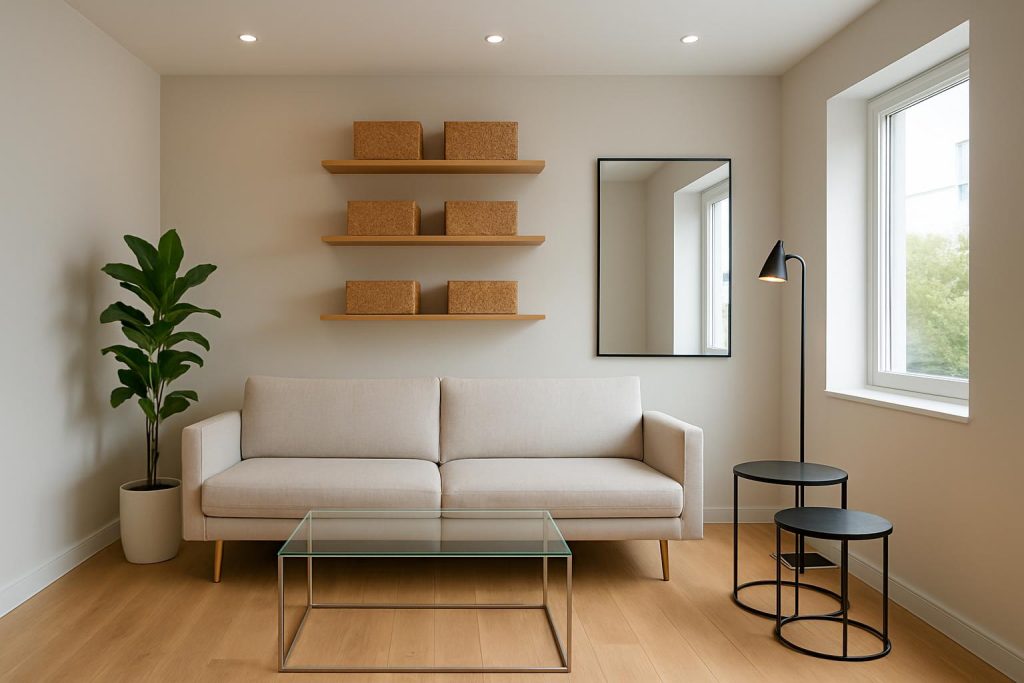
Furniture with raised legs, open bases, and glass or acrylic surfaces lets light pass through and makes the floor feel larger. A clear coffee table or a narrow console with open shelves gives function without heaviness.
Use multifunctional furniture
Ottomans and nesting tables
Swap a large coffee table for a storage ottoman that hides blankets, games, or gear. Add a tray for drinks. Keep a pair of nesting side tables to expand surface area when guests arrive.
Sofa bed or daybed
A compact sofa bed or a daybed serves seating by day and sleeping when needed. Choose a model with a simple box frame and raised legs to keep the room airy.
Drop leaf and folding pieces
A drop leaf console opens for extra dining or work space then folds flat. Folding stools store in a closet or hang on wall hooks for quick extra seating.
Build smart storage
Go vertical
Install shelves up to the ceiling to draw the eye up and pack in storage. Keep heavier items on lower shelves and lighter decor above. Use baskets or bins with simple labels for easy resets.
Float it off the floor
Floating cabinets and wall mounted media units free up floor area and simplify cleaning. A shallow depth cabinet under the TV hides devices and cords without crowding the room.
Hide in plain sight
Use an ottoman with lift top, a storage bench under a window, or under sofa bins for seasonal items. If open shelves feel busy, hang a simple curtain on a tension rod to conceal clutter fast.
Create visual space
Keep a light palette with low contrast
Use light to mid tones for walls, large furniture, and curtains. Keep colors within a close range so edges blend and the room reads larger. Add one deeper accent color in small doses for focus without chopping up the space.
Hang curtains high and wide
Mount curtain rods near the ceiling and extend them past the window frame. This makes windows look larger and lets in more light. Use the same wall color or a close match for curtains to reduce contrast.
Use mirrors with intent
Place a mirror across from a window or behind a light source to bounce light and open the view. Keep frames thin and match the wall or trim color to keep the mirror from feeling heavy.
Size the rug right
Pick the largest rug your room allows while keeping at least a few inches of floor around the edges. Aim for all front legs of seating on the rug. In many small rooms a 5 by 8 or 6 by 9 rug works. Choose a solid or subtle pattern in light or mid tones.
Layer lighting
Balance overhead, wall, and task light
Use at least three light sources. A ceiling fixture for general light. Wall or floor lamps for fill. Task lights for reading or work. Spread them around the room so no corner feels dark.
Use plug in solutions
Plug in sconces save floor space and place light at eye level. Clip on lamps attach to shelves or headboards. Hide cords with paintable cord covers or route them behind floating cabinets.
Set the mood with dimmers and the right bulbs
Install plug in or smart dimmers for flexible light levels. Choose warm white bulbs around 2700 to 3000 K for a cozy feel that flatters small spaces.
Try proven layout recipes
Narrow room
Place the sofa on the long wall. Use a narrow console or shelves on the opposite wall for balance. Float a small ottoman or slim coffee table in the middle. Mount the TV on the short wall or in a corner with a swivel mount to angle toward seating.
Square room
Anchor the room with a centered rug. Use a loveseat or compact sofa on one side and two light chairs opposite. Add nesting tables instead of one big table to keep paths open.
Open plan studio
Define the living zone with a rug and the back of a sofa. Use a low open shelf as a divider that holds books and baskets. Choose furniture that looks good from all sides. Mount the TV on a swivel so it serves both living and sleeping zones.
Declutter with simple habits
One in one out
Each time you bring in a new item, let go of one similar item. This prevents slow buildup and keeps storage balanced.
Ten minute daily reset
Set a timer each evening. Clear surfaces, fold throws, return remotes and chargers to one spot, and empty the waste bin. Small resets keep small rooms under control.
Tame cables
Use a cable box or zip sleeves to group wires. Mount a power strip under a console or behind the TV cabinet. Label chargers so they return to the same place.
Style with restraint
Choose fewer, larger pieces of art
Hang one sizable piece or a tight grid rather than many small frames. Keep frames thin and in one finish. Align the center of art at about 57 inches from the floor for a clean line through the room.
Edit decor groups
Style surfaces with sets of three to five items at most. Mix heights and textures but keep the color palette tight. Leave open space on shelves so the eye can rest.
Add plants with purpose
Use one taller floor plant to draw the eye up and one or two small plants on shelves. Choose light planters that match walls or floors for a calm look.
Budget friendly and DIY upgrades
Peel and stick and paint
Use peel and stick wallpaper on a single wall to add interest without bulk. Paint walls and trim in the same color to blur edges. Paint a vertical stripe or arch to frame art or a TV and fake architectural depth.
Simple floating shelf
Install a basic cleat on studs and slide a hollow shelf over it. Paint it the wall color for a custom look that blends in. Use it for a couple of books, a lamp, and a plant.
Renter friendly fixes
Use damage free hooks for art, lightweight shelves, and curtains. Add furniture risers to raise low sofas for better proportions and easier cleaning. Lay a rug pad to anchor lightweight rugs and prevent shifting in tight spaces.
Common mistakes to avoid
Do not push every piece against the wall. Floating a sofa a few inches can improve flow and make the room feel planned.
Do not buy a rug that is too small. A postage stamp rug makes the room feel cluttered and fragmented.
Do not overload with patterns and colors. Keep a tight palette and repeat materials to reduce visual noise.
Do not ignore lighting. One overhead light creates harsh shadows. Add at least two more light sources.
Do not block windows or door paths. Natural light and clear routes matter more than one extra chair.
Place the TV with care
Mount when possible
Wall mounting saves surface space and gives better sight lines. Use a swivel mount in small or awkward rooms so you can angle the screen toward seating as needed.
Set a comfortable height
Aim to center the screen about 42 to 48 inches from the floor depending on seating height. Keep a low media console under the TV to store devices and route cords cleanly.
Avoid glare and clutter
Do not place the TV directly opposite a bright window if you can avoid it. Use cord covers, cable sleeves, and a small basket for remotes and game controllers.
Rug and textile strategy
Unify with one large rug
Choose the largest rug that fits. Let at least the front legs of major pieces sit on it to anchor the layout. In many small rooms, 5 by 8 or 6 by 9 sizes work well.
Control pattern and texture
Use one statement textile and keep the rest quiet. Mix up to three textures such as linen, wool, and wood for depth without clutter. Stick to light or mid tone fabrics for the largest pieces.
A weekend mini makeover plan
Day 1 morning
Declutter surfaces, edit decor, and measure the room. Define the focal point. Plan traffic routes and sketch the layout.
Day 1 afternoon
Rearrange seating to suit the plan. Mount the TV or adjust its placement and height. Lay the largest rug that fits with front legs on the rug.
Day 2 morning
Install wall shelves or a floating cabinet. Hang curtains high and wide. Add a mirror opposite a window or lamp.
Day 2 afternoon
Place a storage ottoman and nesting tables. Add two more light sources with plug in solutions. Hide cords and label chargers. Do a final ten minute reset.
Conclusion
A small living room works best when every inch has a job and every choice supports flow, light, and calm. Start with layout and scale. Add multifunctional furniture and vertical storage. Use a light, low contrast palette, the right rug, and layered lighting. Keep habits simple so the room stays ready for real life. Apply one change this week and build from there. Consistent small moves transform small spaces.
FAQ
How do I choose the right sofa size for a small living room
In most small rooms, a sofa width of 60 to 72 inches works well. Pick tight back or bench seat cushions, slim arms, and raised legs to keep the profile light and to show more floor.
What color scheme makes a small living room look bigger
Use a light to mid tone palette with low contrast for walls, large furniture, and curtains. Keep colors close in tone and add only one deeper accent color in small doses to avoid chopping up the space.
Where should I put the TV in a small living room
Mount the TV on a wall or place it on a low media console and aim for the screen center at about 42 to 48 inches from the floor. Use a swivel mount in tight rooms and avoid placing the TV directly opposite a bright window.
How can I add storage without crowding the room
Go vertical with shelves to the ceiling, use floating cabinets, and add storage ottomans or under sofa bins. Hide busy shelves with a simple curtain if needed and keep heavier items low.
What is the best rug size for a small living room
Choose the largest rug that fits and place at least the front legs of seating on it. Common sizes that work are 5 by 8 or 6 by 9, in light or mid tones with a subtle pattern or solid color.