
We are reader supported. When you purchase through links on our site, we may earn an affiliate commission. Also, as an Amazon affiliate, we earn from qualifying purchases.
Outdoor spaces should work hard without draining your wallet. With a clear plan, a few smart materials, and simple habits, you can turn a plain patio into a place you use daily. This guide walks you through planning, low cost surfaces, seating, shade, lighting, privacy, plants, storage, cleaning, renter friendly moves, a weekend plan, and mistakes to avoid. Every step is beginner friendly and budget aware.
Introduction
Start with function. Then layer comfort, style, and care. Spend where it shows and save where it hides. Small wins add up fast. Aim for one weekend to see the first big change, then add details over time.
Plan First To Save Money Later
Set a clear goal and budget
Decide how you will use the patio. Dining, lounging, or both. Set a budget number you can keep. Split money across surface, seating, shade, lighting, and plants. Keep ten percent aside for extras like sand, screws, or brackets. This stops stalls mid project.
Measure and map zones
Measure length and width. Sketch the area on paper. Mark doors, walkways, and outlets. Plan a simple path for feet from door to seating. Keep at least 90 cm or 36 inches clear as a walkway.
Choose a low cost surface strategy
If your surface is sound, clean and refresh it. If you need to build new, choose a method that uses simple tools. Pea gravel, pavers on sand, or paint on existing concrete are the fastest budget options. Avoid complex cuts and wet concrete if you are new to DIY.
Fast, Affordable Patio Surfaces
Pea gravel patio steps
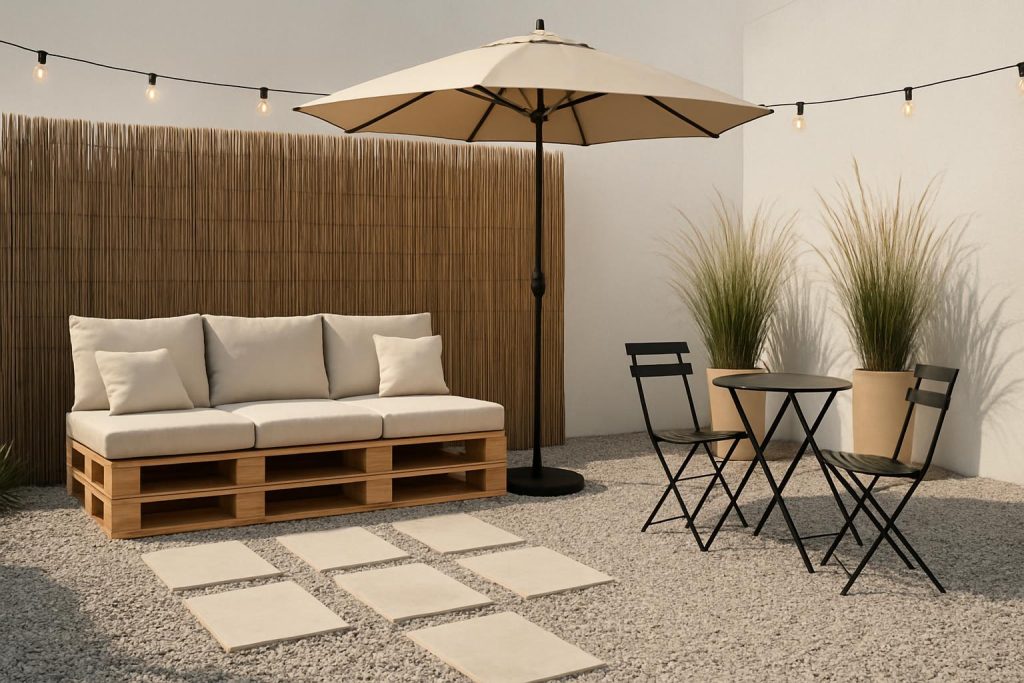
Pea gravel is low cost, quick, and forgiving. Mark the area with stakes. Remove grass and roots to a depth of 5 to 8 cm or 2 to 3 inches. Compact the soil with a hand tamper. Lay landscape fabric to block weeds. Add edging like metal, plastic, or bricks to hold the gravel. Pour pea gravel and rake it level to 5 to 7 cm or 2 to 3 inches. Compact lightly and top up to account for settling. Add a solid base pad under chair and table legs using large pavers so feet do not sink.
Pavers on sand method
Pavers on sand give a firm surface without pouring concrete. Excavate 8 to 10 cm or 3 to 4 inches. Compact soil. Add 5 cm or 2 inches of compactable base like crushed stone, then 2 to 3 cm or about 1 inch of coarse sand. Screed the sand level with a straight board. Place pavers in a simple pattern to reduce cuts. Tap each with a rubber mallet. Add edge restraint to lock it in. Sweep sand or polymeric sand into joints and mist with water. Work in small sections to keep sand flat.
Painted concrete refresh
If you have a concrete slab, paint can change it fast. Clean well. Degrease, rinse, and let it dry. Patch cracks with concrete patch. Apply a concrete bonding primer. Use porch and floor paint rated for exterior. Two thin coats beat one thick coat. Add a stenciled rug area for a zone look. Seal with a clear exterior sealer if the product needs it. Choose light colors to reduce heat.
Seating That Looks Custom On A Budget
Build a pallet sofa or bench
Use heat treated pallets only. Sand all surfaces to remove splinters. Stack two pallets for seat height. Add a third upright as a back if you want support. Secure stacks with exterior screws and L brackets. Add plywood on top for a smooth cushion base. Add casters if you want mobility. Finish with outdoor cushions and pillows. Choose covers that unzip for washing.
Use folding and stackable pieces
Folding chairs and slim bistro tables save space and money. They store fast when not in use. Look for powder coated metal or acacia wood for outdoor durability. Add clip on seat pads for comfort.
Mix thrifted and new
Search local listings for solid frames. Refinish with exterior paint. Replace only the cushions with new outdoor foam and covers. This stretches your budget while keeping a fresh look.
Shade And Comfort Without Big Builds
Umbrellas and pop up shade
A freestanding umbrella with a weighted base is the fastest fix. Place it to block midday sun. A pop up canopy works for parties and stores flat. Choose vented tops for airflow.
Affordable shade sails
If you can anchor to existing posts or freestanding supports, a shade sail is low cost per square meter. Use proper angle for water runoff. Tension it firmly to avoid flapping. If you rent, attach to freestanding poles set in heavy planters. Fill planters with gravel and sand to add weight. Check local wind conditions and take sails down in storms.
Textiles for softness
Outdoor rugs define zones and cool bare feet. Choose polypropylene or recycled plastic for easy cleaning. Add outdoor curtains on tension rods between freestanding posts to block late sun and add privacy.
Lighting That Costs Pennies To Run
Solar string and path lights
Solar lights avoid wiring and electric bills. Choose warm white for a calm mood. Clip string lights to fencing or use freestanding poles set in planters. Space path lights evenly to avoid glare. Place the solar panel in full sun for charge.
Battery lanterns and candles
Rechargeable lanterns add layered light where you sit. Use unscented candles in windproof holders for short meals. Keep flames away from textiles and dry plants. Never leave open flame unattended.
Smart control without wiring
If you have an outlet, a smart outdoor plug with a timer turns lights on at dusk. This saves battery checks and avoids wasted power.
Privacy And Wind Blocks
Lattice and reed panels
Attach vinyl lattice to freestanding posts set in planters for a renter friendly screen. Add zip ties for easy removal. Reed fencing is a low cost roll solution. It softens views fast. Back it with wire if your area is windy.
Living screens
Use tall planters with bamboo, grasses, or upright juniper to block sight lines. Group planters in rows. Keep plant bases mulched to reduce watering. Add wheels under heavy planters for easy moves.
Plants With High Impact And Low Care
Container strategy for beginners
Pick one tall plant, a few medium fillers, and trailing plants to spill over the edge. Combine colors that repeat across planters for a pulled together look. Use quality potting mix with slow release fertilizer. Water deeply, then let the top few centimeters dry before watering again.
Edibles and herbs
Rosemary, thyme, mint in a pot, and chives grow well in containers. Place herbs near the door for quick access while cooking. Use a sunny spot for tomatoes and peppers. Stake early for tidy growth.
Drought friendly picks
Look for sedum, lavender, yarrow, and ornamental grasses. These handle heat with less water once established. Mulch soil to reduce evaporation and weeds.
Storage And Organization That Protects Your Investment
Weatherproof storage
A deck box stores cushions and keeps them dry. Choose one with a gasketed lid to block rain. Add silica gel packs inside to fight moisture. Store lanterns, clips, and tools in labeled bins inside the box.
Wall space and hooks
Use outdoor rated hooks on a fence or freestanding rack for tools. Hang a coil hose neatly to avoid kinks. Keep a small caddy ready with brush, soap, and cloths for quick cleanups.
Cleaning And Care That Extend Life
Weekly quick clean
Five minutes keeps grime away. Sweep or blow debris. Wipe tables and armrests with a damp cloth. Shake out rugs. Empty standing water from saucers to keep bugs away.
Deep clean without a pressure washer
Mix warm water with a few drops of dish soap. Scrub surfaces with a stiff brush. Rinse well. For mildew on hard surfaces, use oxygen bleach mixed per label and scrub. For grease, make a paste of baking soda and water. Apply, wait ten minutes, then scrub and rinse. For pavers, sweep sand back into joints after cleaning. For wood, use a soft brush and follow the grain to avoid scratches.
Seasonal checks
In spring, check for loose pavers, sagging shade hardware, and frayed cords. In fall, wash and fully dry cushions before storage. Oil wood furniture if the finish calls for it. Bring in solar panels for a day to recharge if winter is long and dark.
Renter Friendly Upgrades
No drill fixes
Use freestanding umbrella bases, planters with posts, and adhesive outdoor clips. Choose rugs to cover stains. Add interlocking deck tiles that lift back up when you move. Use portable fire safe heaters only if your lease and local rules allow them.
Protect surfaces
Place furniture pads under legs. Use trays under planters to stop rust rings and mineral stains. Test any cleaner in a hidden spot first.
Sample Weekend Plan And Budget
Day one tasks
Morning. Clear the area and sweep. If building a pea gravel patio, mark and dig the outline. Add fabric and edging. Afternoon. Pour and level gravel. Assemble pallet seating and sand surfaces. Evening. Place an outdoor rug and set up a folding table.
Day two tasks
Morning. Install solar string lights and path lights. Set up a freestanding umbrella. Plant two large planters for color and privacy. Afternoon. Paint or seal a small accent piece like a side table. Deep clean any remaining surfaces. Evening. Stage cushions and lanterns. Enjoy the new space.
Sample cost ranges
Pea gravel and edging can fit into a low three figure budget depending on size. Pallet seating can be nearly free if sourced locally, with cushion costs as the main spend. Solar lights are usually modest per set. A basic umbrella with base is mid range. Two large planters with budget friendly plants can stay in the low to mid range. Adjust quantities to stay under your number.
Common Mistakes To Avoid
Overcrowding
Too much furniture makes the patio hard to use. Start with fewer pieces. Add only what you need after a week of use.
Ignoring drainage
Standing water ruins materials and invites pests. Slope the surface away from the house. Keep at least a small drop across each meter. Do not block existing drains with rugs or planters.
Skipping edge restraint
Gravel and pavers need edges to stay put. Add edging on day one. It costs less than fixing a spread out patio later.
Buying decor before basics
Get the surface, seating, shade, and lighting right. Then add pillows and small decor. Basics set comfort and function. Decor is the bonus layer.
Conclusion
A budget patio works when each choice serves a clear goal. Choose a simple surface you can install in a weekend. Add seating you can clean and store. Bring shade and light for daily comfort. Create privacy with panels or plants. Organize storage so cushions and tools last. Keep a quick cleaning routine to protect every dollar you spend. Start small this weekend and build a space you will use often.
FAQ
Q: What is the cheapest patio surface I can install in a weekend?
A: A pea gravel patio with simple edging is often the lowest cost. Mark the area, remove grass, add landscape fabric, pour 2 to 3 inches of pea gravel, and compact it. Add pavers or bricks as a border if needed.
Q: How can I add shade without drilling into walls or posts?
A: Use a freestanding umbrella with a weighted base or a pop up canopy. You can also hang a shade sail from freestanding poles set in heavy planters. Take sails down in storms.
Q: How do I clean a patio without a pressure washer?
A: Use a stiff brush with warm water and a few drops of dish soap, then rinse. For mildew on hard surfaces, use oxygen bleach mixed per label. For grease, use a baking soda paste, wait ten minutes, then scrub and rinse.
Q: What is the easiest DIY seating for a small budget?
A: A pallet sofa or bench is simple. Sand pallets, stack two for seat height, add a third as a back if desired, secure with exterior screws and brackets, add plywood for a smooth base, and finish with outdoor cushions.
Q: What lights are affordable and safe for renters?
A: Solar string lights and path lights need no wiring. Attach with outdoor rated clips or adhesive hooks, avoid cords across walkways, and use a smart outdoor plug with a timer if you have an outlet.