
We are reader supported. When you purchase through links on our site, we may earn an affiliate commission. Also, as an Amazon affiliate, we earn from qualifying purchases.
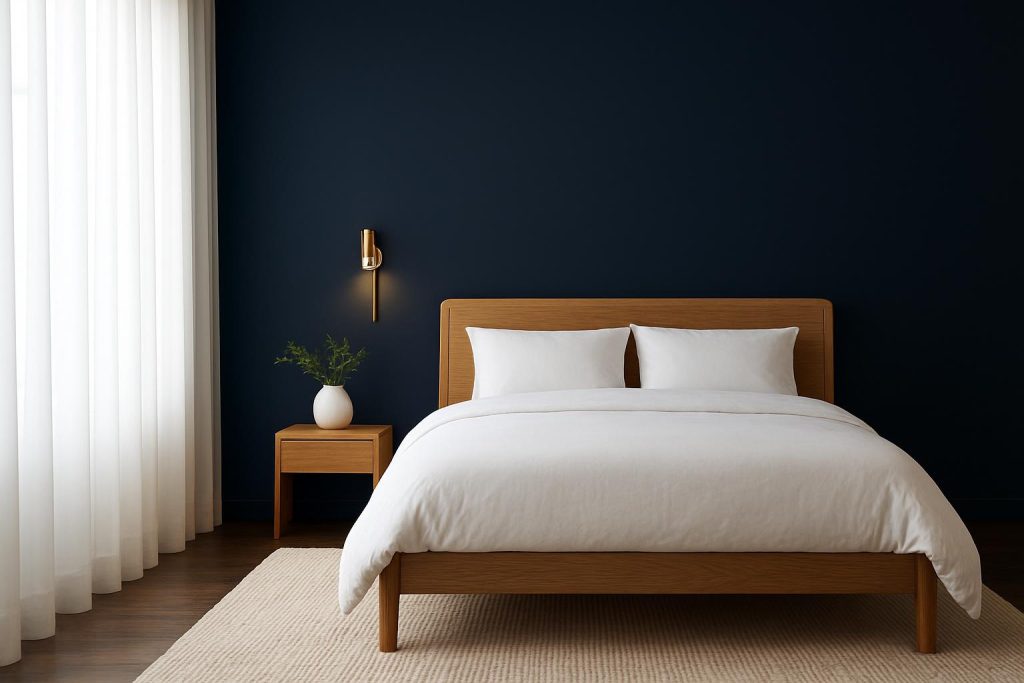
Navy walls can look rich, calm, and modern. They also need careful planning so the room stays bright, cozy, and easy to maintain. This guide walks you through color choices, lighting, furniture, textiles, organization, and cleaning. Follow the steps, and your dark blue bedroom will feel restful rather than heavy, polished rather than busy.
Start with a clear goal. Decide if you want minimal and crisp, warm and layered, or tailored and classic. Then set a simple palette, layer light, and keep clutter low. Each choice should make the space feel calm and intentional.
Plan Your Navy Palette First
Pick the Right Navy Undertone
Not all navies are equal. Some lean green, some lean purple, some are inky. If your room faces north or has cool daylight, choose a navy with a touch of warmth to prevent a cold look. If your room faces south or gets warm afternoon light, a crisp, inky navy will still read deep and balanced. Always test two or three samples on the wall and observe them morning, afternoon, and night.
Choose a Wall Finish You Can Clean
For bedrooms, a matte or eggshell finish hides flaws and diffuses light. Pick a high quality, scrubbable formula so scuffs wipe away. Use satin or semi-gloss on trim and doors for durability and a subtle contrast. Prime walls first if you are covering a light color with navy to improve coverage and color depth.
Limit Your Accent Colors
Too many accents will break the calm. Choose three to four supporting tones and repeat them. Reliable pairings with navy include crisp white, soft gray, warm brass, natural oak, rattan, terracotta, blush, sage, and cream. For a clean hotel look, stick to navy, white, and one metal like brass. For warmth, add wood and a muted earth tone like terracotta or camel.
Manage Light So the Room Feels Balanced
Work With Natural Light
Keep window treatments light in color and lined well. Use white or ivory sheers to soften daylight and preserve privacy. If you need blackout, add a separate blackout panel or a lined curtain in navy paired with white sheers. Hang curtains high and wide to expose the full window and pull in more light. Clean the windows and screens regularly to maximize brightness.
Layer Artificial Lighting
Plan three layers. Ambient light for overall glow, task lights for reading, and accent lights for mood and art. A dimmable ceiling fixture or flush mount covers ambient needs. Bedside lamps or swing-arm sconces handle reading. A small picture light, LED strip on a shelf, or a tiny lamp on a dresser adds a soft accent. Aim for warm white bulbs around 2700 to 3000 Kelvin to keep navy cozy. Use the same color temperature across the room for consistency.
Use Reflective Surfaces Wisely
Add one or two mirrors to bounce light but avoid a wall of mirrors. Position a mirror opposite a window or lamp. Choose frames in wood or brass, not overly shiny chrome, unless your style is very modern. A glossy white ceiling or satin trim can also reflect light and sharpen edges against navy walls.
Select Furniture That Grounds the Color
Bed Frames and Headboards
Navy walls love texture. A light upholstered headboard in linen or boucle softens the contrast. For warmth, choose a medium-tone wood bed frame in oak or walnut. Metal beds in softened brass or matte black create a tailored outline. Keep the headboard height balanced with the wall height. If ceilings are low, avoid very tall headboards to keep the room from feeling top heavy.
Nightstands and Dressers
Pick light or medium finishes so furniture does not disappear into the walls. White, cream, light wood, or mixed wood and cane work well. Avoid too many dark pieces unless you add lighter bedding and rugs to offset the weight. Choose pieces with drawers to reduce surface clutter. If the room is tight, use wall-mounted nightstands or slim side tables with one drawer.
Layout Tips for Small Rooms
Leave clear walk paths on at least one side of the bed. Center the bed on the largest wall if possible. Float the rug under the bed so it extends on the sides for softness underfoot and visual balance. Use mirrors and glass or acrylic lamps to add airiness without visual bulk. Keep the floor clear and avoid bulky benches unless they offer storage and the room can handle the depth.
Layer Textiles for Comfort and Contrast
Bedding That Brightens
Start with crisp white or ivory sheets. Add a quilt or coverlet in white, gray, or a soft color like blush or sage. Layer a duvet in white or a subtle pattern with navy accents. Use two to three pillow colors and repeat them elsewhere in the room. Keep patterns simple, such as thin stripes or small geometric prints, to avoid chaos against navy walls.
Rug Choices That Lift the Room
Choose a rug that is lighter than the walls to break up the dark field. Off-white, cream with a subtle pattern, or a warm natural fiber rug like jute with a cotton blend works well. Size the rug so it extends at least 20 to 30 centimeters beyond each side of the bed for a full look. In small rooms, a larger light rug makes the room feel wider.
Curtains That Balance Weight
If you choose navy curtains, keep them textured and pair them with white sheers. If you choose light curtains, ensure they have blackout lining if needed. Mount the rod high and wide to make the room feel taller and add softness against dark walls.
Use Wall Treatments for Dimension
Accent Wall vs Full Navy Wrap
If you are unsure, start with a navy headboard wall and keep the other walls light. This approach adds depth behind the bed without darkening the entire room. If you want a moody look, paint all four walls navy and lighten everything else with light bedding, light rug, and warm wood furniture.
Color Drenching for a High End Look
For a calm envelope effect, paint the walls, trim, doors, and even radiator the same navy in different sheens. Use matte or eggshell on walls and satin or semi-gloss on trim. This reduces visual contrast and creates a seamless frame for your furniture and art.
Paneling and Molding
Simple board and batten or picture frame molding painted navy adds architectural interest. Keep the profiles simple to avoid a fussy look. If the room is small, run vertical elements to draw the eye up. In a rental, use peel and stick molding strips for a removable option, then paint to match.
Wallpaper as a Feature
Pale patterns with navy elements can soften the mood. Use small scale stripes, subtle geometrics, or a botanical print with light background. Balance patterned wallpaper with plain bedding and simple art so the room stays restful.
Choose Decor That Works With Navy
Art That Pops
Use white or off-white mats and frames to define art against dark walls. Choose one large piece above the bed or a simple pair rather than many small frames. For a calming palette, stick to black and white photography or abstract art with limited colors repeated in your textiles.
Mirrors and Metals
Brass and antique gold bring warmth to navy. Brushed nickel or matte black works for modern minimal rooms. Keep metal finishes consistent across lamps, hardware, and frames to avoid a mismatched look. One dominant metal and one supporting metal is enough.
Greenery for Life and Color
Add real plants or quality faux stems in simple planters. Green pairs well with navy and prevents the room from feeling flat. Place a medium plant in a corner or a small plant on the dresser. Keep the planters neutral and textured to avoid shine overload.
Organize for a Calm, Low Clutter Look
Reduce Visual Noise
Dark walls highlight clutter. Clear surfaces and store small items behind doors and drawers. Use trays on nightstands to corral glasses, remotes, and hand cream. Hide cords with cable clips, cord sleeves, and surge protectors mounted under the nightstand or behind the headboard.
Closet and Underbed Storage
Use matching hangers for a unified closet. Add shelf dividers for sweaters. Store off season bedding in vacuum bags or low bins under the bed. Label bins so you find items without opening everything. Keep a small donation bag in the closet and fill it as you go to prevent buildup.
Bedside Systems That Work
Give each person a charging station and a shallow drawer organizer. Limit nightstand decor to a lamp, a tray, and one personal item. Keep a lidded box for medications so labels and bottles do not show.
DIY Updates on a Budget
Paint Existing Furniture
Lighten heavy pieces with paint. Sand lightly, prime, and paint in warm white, soft gray, or a pale neutral. Swap knobs for brass or wood pulls to tie in your palette. For a modern look, use matte black hardware against light furniture.
Upgrade Lighting Without Rewiring
Use plug-in sconces on each side of the bed and hide the cord with paintable cord covers. Add a dimmer plug to table lamps for flexible mood lighting. Replace harsh bulbs with warm LED bulbs in the same color temperature.
Simple Headboard or Panel Wall
Wrap a plywood headboard in foam and linen fabric for a custom look. For a panel feature, attach thin battens vertically every 30 to 40 centimeters, fill holes, caulk edges, and paint everything navy. This adds depth and looks built in with minimal cost.
Keep Navy Walls Clean and Fresh
Prevent and Treat Marks
Choose scrubbable matte or eggshell paint for easier upkeep. Dust walls monthly with a dry microfiber mop. Spot clean scuffs with a soft sponge and mild soapy water, then blot dry. Avoid abrasive pads that can burnish matte paint. Keep a small jar of touch up paint for quick fixes.
Control Dust and Lint
Dark walls and textiles can show lint. Wash throws and pillow covers regularly and choose low lint fabrics. Use a lint roller on lampshades and a microfiber cloth on frames and baseboards weekly. Replace HVAC filters on schedule to reduce dust.
Manage Pet Hair and Odor
Vacuum rugs and upholstery weekly with a brush attachment. Air the room daily for a few minutes. Use washable covers on pillows and a removable duvet cover for quick laundering. Add a small tray for pet accessories so they do not clutter surfaces.
Style Recipes You Can Copy
Crisp Coastal Calm
Walls in inky navy, white trim, white linen curtains with blackout lining, light oak bed, white bedding with a thin navy stripe, cream textured rug, brass lamps, one large black and white photograph above the bed. Keep decor minimal and repeat navy, white, oak, and brass across the room.
Warm Modern Classic
Walls in balanced navy, color drenched trim and doors, walnut bed and dresser, off-white boucle headboard, ivory quilt, camel throw, brass sconces, patterned rug in cream and taupe, minimal abstract art with a white mat. Use warm bulbs at 2700 Kelvin and dimmers for softness.
Small Room, Big Calm
One navy headboard wall, three walls in soft white, upholstered storage bed, wall-mounted nightstands, white bedding and sheers, large light rug, mirror across from the window, matte black hardware for contrast, plug-in sconces to free the nightstands. Keep surfaces clear and use underbed bins for overflow storage.
Common Mistakes to Avoid
Too Many Accent Colors
Limit accents to three or four. Repeat them often. This keeps the room cohesive and restful.
Skimping on Lighting
One overhead light is not enough. Add dimmable bedside lights and at least one accent light. Keep bulb color consistent.
All Dark Furniture
Dark bed, dark dresser, dark walls will feel heavy. Mix in light bedding, a light rug, and lighter furniture finishes.
Ignoring Maintenance
Dust, lint, and scuffs show on dark colors. Schedule quick weekly dusting and monthly wall checks. Keep touch up paint on hand.
Conclusion
Navy walls can make a bedroom feel calm and refined if you plan the palette, manage light, choose lighter contrasting pieces, and keep clutter under control. Test your navy undertones, keep lighting warm and layered, repeat a small set of accents, and use easy-care finishes. With these steps, your dark blue bedroom will feel inviting, balanced, and simple to maintain.
FAQ
What colors pair best with navy bedroom walls
Crisp white, soft gray, warm brass, natural wood, rattan, terracotta, blush, sage, and cream work well. Limit accents to three or four and repeat them.
How do I keep a navy bedroom from feeling too dark
Use layered lighting with warm bulbs, add mirrors, choose light bedding and a large light rug, keep window treatments high and wide, and consider white or ivory sheers with blackout lining.
Which paint finish should I use on dark blue bedroom walls
Use a high quality matte or eggshell on walls for a soft look and easy touch ups, and satin or semi gloss on trim and doors for durability and subtle contrast.
Can a small bedroom handle navy walls
Yes. Try a navy headboard wall with the other walls light, or color drench with light bedding and a large light rug. Use slim furniture, wall mounted nightstands, and mirrors to keep the room open.
How do I clean and maintain dark blue walls
Dust monthly with a microfiber mop, spot clean with mild soapy water and a soft sponge, avoid abrasive pads, manage lint and dust weekly, and keep touch up paint for quick fixes.