
We are reader supported. When you purchase through links on our site, we may earn an affiliate commission. Also, as an Amazon affiliate, we earn from qualifying purchases.
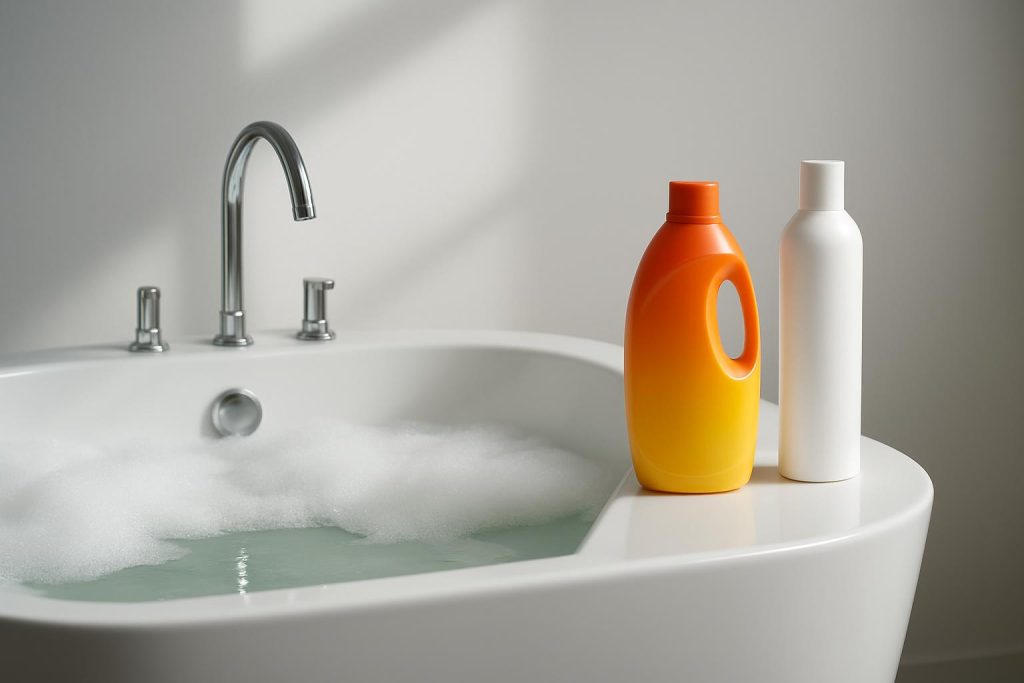
Thinking about using laundry detergent as a bubble bath is common when the bath shelf looks empty. Do not do it. Laundry detergent is made for fabric, not skin. It can irritate skin, eyes, and sensitive areas, and it can trigger allergies. This guide explains the risks, what to do if it already happened, and safe alternatives that still deliver a relaxing bath.
Why Laundry Detergent Is Not a Bubble Bath
What laundry detergent is designed to do
Laundry detergent is formulated to lift soil, body oils, and stains from fabric and suspend them in wash water. To do this, it uses strong surfactants, builders, enzymes, solvents, optical brighteners, dyes, and fragrance. Many formulas are alkaline and powerful because washing machines rinse them out thoroughly. Human skin does not have a built-in rinse cycle.
How a bath changes the exposure
Soaking in hot water opens pores and softens the outer skin layer. This increases absorption and irritation potential. Bathing also exposes sensitive areas and mucous membranes to whatever is in the water. A household product designed for clothes becomes a direct skin soak when used in the tub. That change matters.
Difference between cleaning fabric and caring for skin
Skin has a protective acidic layer called the barrier. It prefers mildly acidic cleansers and short contact times. Laundry detergents are often too alkaline, too concentrated, and too complex for this barrier. Prolonged soaking increases dryness, irritation, and the risk of contact dermatitis.
Safety Warning: Risks You Need to Know
Skin barrier damage and irritation
Detergent surfactants strip oils aggressively. In a bath, this can lead to tightness, redness, itch, and dry patches within hours. Repeated exposure can trigger eczema flares, especially in children or people with sensitive skin.
Allergic contact dermatitis triggers
Many laundry detergents contain preservatives like methylisothiazolinone, methylchloroisothiazolinone, benzisothiazolinone, and formaldehyde releasers. They may also include dyes and complex fragrance blends. These are common allergens. Soaking increases the chance of a reaction and can cause rashes that last days to weeks.
Vulvar, vaginal, and urinary irritation
Fragrances, surfactants, and alkalinity can disrupt the natural balance in intimate areas. This can cause burning, itching, or discharge. It can also increase the risk of irritation that mimics or contributes to urinary discomfort.
Eye irritation
Even diluted detergent can sting eyes and cause redness or watering. Some enzymes and surfactants can injure the corneal surface with prolonged contact. Children are especially vulnerable because they splash and rub their eyes more.
Ingestion risk for kids
Bubble baths invite play, which increases hand-to-mouth behavior. Any accidental swallowing of detergent water can cause nausea, vomiting, or mouth and throat irritation. Keep detergents out of the tub and out of reach.
Respiratory and fragrance sensitivity
Fragrances in detergent can trigger headaches, coughing, or asthma symptoms for sensitive individuals. The heat and steam of a bath can intensify scent and exposure.
Pets and baths
Pets that jump into the tub or drink bath water can suffer stomach upset and irritation. Keep them out of the room if detergent has been used. Better yet, do not bring detergents into the bathroom during bath time.
Common Myths and Why They Fail
It is just soap
Bar soap and body wash are formulated for skin with controlled pH and milder surfactants. Laundry detergent is a different class of cleaner, engineered for fabric and machine cycles. The goals are not the same.
If I dilute it, it is safe
Dilution reduces concentration, but soaking increases contact time and surface area. Heat increases absorption. Sensitive areas are exposed. These factors negate the assumed safety of dilution.
Plant based means gentle
Plant based detergents still contain surfactants and preservatives. Essential oils and natural fragrances can be strong irritants. Without skin testing and cosmetic-grade formulation, plant based does not equal skin safe for a bath soak.
Free and clear is fine
Free and clear detergents can remove dyes and fragrance but still include strong cleaners and enzymes not intended for skin soaking. They are better for laundry sensitivity, not for the bath.
What To Do If You Already Used Laundry Detergent in the Bath
Immediate steps
Drain the tub right away. Rinse your body under a lukewarm shower for at least two to three minutes. Use plain water. Do not scrub. Pat skin dry and apply a bland, fragrance free moisturizer within three minutes to lock in moisture.
If there is any stinging or redness
Apply a cool compress to irritated areas for five to ten minutes. Avoid further products that day. If itch develops, an over the counter 1 percent hydrocortisone cream can be used on intact skin for one to two days, avoiding face and private areas.
Eye exposure
Rinse eyes with clean, lukewarm water for fifteen minutes. Remove contact lenses after the first few minutes if possible. If burning persists or vision changes occur, seek medical care promptly.
When to call for help
Seek medical advice if you have hives, swelling, widespread rash, blisters, wheezing, trouble breathing, severe eye pain, or symptoms that worsen after 24 hours. For ingestion or severe reactions in the United States, contact Poison Control at 1-800-222-1222.
For children
Rinse and dress the skin with a simple moisturizer. Monitor for rash, crying from pain, or rubbing eyes. Call your pediatrician or Poison Control for any ingestion or eye exposure, or if irritation persists.
For pets
Rinse the animal with lukewarm water for several minutes. Prevent licking during and after the rinse. Call your vet if vomiting, drooling, lethargy, or eye redness appears.
Safe Alternatives That Still Make a Nice Bath
Use a purpose made bubble bath
Look for products labeled for bath use, pH balanced, dermatologist tested, or gentle for sensitive skin. Fragrance free options are best for sensitive users. Follow the label dose and pour under running water to maximize bubbles.
Use body wash or baby shampoo as a stand in
As an occasional substitute, a gentle body wash or baby shampoo is far safer than laundry detergent. Use one to two teaspoons under strong running water. Rinse your body with clean water at the end of the soak. Avoid formulas with strong fragrance if you are sensitive.
No bubble options
If bubbles are not essential, choose Epsom salt, fragrance free bath salts, or colloidal oatmeal. These can soothe muscles or calm irritated skin without surfactants. Avoid oils if the tub will be used by children or older adults because oil makes surfaces slippery.
Beginner Friendly DIY Gentle Bubble Bath
Simple bubble base
Ingredients:
– 1 cup fragrance free baby wash
– 2 tablespoons vegetable glycerin
– 1 cup distilled water
Instructions:
– Add baby wash to a clean squeeze bottle.
– Stir in glycerin gently to avoid foaming in the bottle.
– Add water and tip the bottle back and forth to combine.
– To use, pour 2 to 3 tablespoons under running water.
Why it works:
– Baby wash is formulated for skin.
– Glycerin helps stabilize bubbles and reduces dryness.
– Dilution keeps surfactant level modest for a soak.
Safety tips:
– Patch test on the inner arm before first full use.
– Store for up to 2 months and discard if it changes smell or texture.
– Do not add essential oils if you have sensitive skin or are pregnant.
– Rinse body with clean water after soaking and moisturize.
Oatmeal soak add on
For itch prone skin, add 1 cup of colloidal oatmeal to warm running water. This adds comfort without harsh surfactants. You can use it alone or with a small amount of the gentle bubble base.
Cleaning the Tub After a Detergent Mistake
Remove residue
Drain the tub fully. Rinse all surfaces with warm water. Wipe with a microfiber cloth to lift any surfactant film. Rinse again. Dry the floor of the tub to reduce slip risk.
Why cleaning matters
Detergent residue can make the tub slippery and can continue to irritate skin in the next bath. A quick rinse and wipe prevents both issues.
Organizing and Prevention Tips for the Home
Separate zones
Store laundry products in the laundry area only. Keep bath products in a bathroom caddy. Do not mix categories.
Use child safe storage
Place detergents in locked cabinets or on high shelves. Keep original child resistant caps on. Do not decant into food style containers.
Label clearly
If you must decant for space, use durable labels with product name and purpose. Include a clear warning. Avoid amber bottles that look like bath oils.
Avoid bathroom placement for detergents
Do not keep laundry detergent in the bathroom. Convenience leads to mistakes. Removing the option prevents the error.
Build a bath ready kit
Prepare a caddy with body wash, a safe bubble bath, a gentle moisturizer, and washcloths. Restock it weekly. When the kit is full, you are less likely to reach for the wrong product.
Set a refill reminder
Add a calendar reminder or a sticky note on the mirror to check bath supplies. Refill before you run out.
FAQ Quick Answers
Can I use dish soap for bubbles
It is not recommended. Dish soap is a strong degreaser and can dry and irritate skin. If you choose to use it in a one time pinch, limit to one teaspoon, keep the soak short, rinse off afterward, and moisturize. Avoid for children and sensitive skin.
Can I put bubble bath in the washing machine
No. Bubble bath creates too many suds and can overflow or damage the machine. Use only products designed for washers.
I got laundry detergent on my skin while doing laundry. What now
Rinse the area with cool water for several minutes. Pat dry. Apply fragrance free moisturizer. Watch for redness or itch. Seek care if a rash spreads or blisters appear.
Are eco detergents safe in the bath
No. Eco or plant based does not mean skin safe for soaking. The product is still designed for fabric and rinse cycles, not skin exposure in a tub.
Key Ingredient Red Flags in Laundry Detergent
Preservatives
Isothiazolinones and formaldehyde releasers are common and can cause allergies with soaking exposure.
Optical brighteners and dyes
These are for fabric appearance, not skin health. They can irritate sensitive skin.
Enzymes
Protease, amylase, and lipase break down stains. They can also irritate skin and eyes during a soak.
High fragrance loads
Fragrance blends can trigger itch, redness, and headaches. Bath steam amplifies exposure.
Practical Bath Routine That Is Safe
Simple steps
– Fill the tub with warm, not hot water.
– Add a measured amount of a dedicated bubble bath or a gentle body wash.
– Soak for 10 to 20 minutes.
– Rinse with clean water.
– Pat dry and apply a fragrance free moisturizer.
For kids
Use fragrance free, tear free bath products. Limit bath time to 10 to 15 minutes. Rinse well. Moisturize after. Keep all cleaning products out of the bathroom during bath time.
Conclusion
Laundry detergent should never be used as bubble bath. It is formulated for fabric and machines, not for soaking skin. Risks include irritation, allergic reactions, eye injury, and intimate area discomfort. If a mistake happens, rinse, soothe, and seek help if symptoms persist or are severe. For a safe and relaxing bath, choose a product designed for skin, keep the routine simple, and organize your home so laundry products stay in the laundry zone. With the right setup and a few safe options on hand, you can avoid accidents and enjoy worry free baths every time.