
We are reader supported. When you purchase through links on our site, we may earn an affiliate commission. Also, as an Amazon affiliate, we earn from qualifying purchases.
Hand skin meets laundry detergent more often than you think. You measure it, wipe a spill, hand wash a shirt, or grab wet clothes out of the washer. Is this bad for your hands. The short answer is sometimes. The long answer explains the risks, the signs of trouble, and better choices that keep laundry clean without wrecking your skin barrier. Keep reading if you want clear steps that actually work.
How Laundry Detergent Affects Skin
What Laundry Detergent Is Made Of
Detergents rely on surfactants. These lift oils and dirt from fabric. Common types include anionic surfactants like SLES and LAS, and nonionic surfactants that boost cleaning in cooler water. Many formulas add enzymes to break down protein, starch, or fat stains. Some add optical brighteners to make whites look brighter. Many add fragrance and dyes for scent and color. Preservatives keep liquids stable and stop microbes from growing. Some powders are more alkaline. Liquids may include solvents to dissolve ingredients. Every one of these features can matter to your skin.
Why Hands React
Your skin barrier is made of lipids that lock moisture in. Surfactants can remove those lipids along with soil. Alkaline formulas can swell the outer skin layer and make it more porous. Enzymes can irritate damaged skin. Fragrance and certain preservatives can trigger allergy in some people. The result is dryness, tightness, redness, and itching. If you have eczema or frequent hand washing, the risk goes up.
Common Symptoms From Detergent Contact
Short Term Irritation
Look for dry, tight skin after washing. Redness or a burning feel can follow. Stinging cuts and hangnails is common. The skin may look dull and flaky within hours. These signs usually reflect irritation, not allergy. Lowering exposure often solves it.
Allergic Contact Dermatitis
Allergy looks different. Itch can be strong. A red, bumpy rash may appear a day after exposure. Swelling and tiny blisters can develop. Common triggers include fragrance allergens, dyes, and preservatives like methylisothiazolinone or benzisothiazolinone. Enzymes can also trigger reactions in some workers. A dermatologist can confirm with patch testing. If confirmed, strict avoidance is key.
Effects On Nails And Cuticles
Detergent contact dries the nail surface and cuticles. You may see peeling tips, ragged cuticles, and painful hangnails. Long soaking softens nails and can make them split. Cracked skin around nails invites infection. Protection and moisturizer make a big difference here.
Formulas That Are Harsher Or Gentler
Liquids, Powders, Pods, And Sheets
Pods are very concentrated. A small leak on skin is a strong dose. Liquids vary widely and may include solvents and more preservatives. Powders can be more alkaline and can irritate dry skin when hand washing. Detergent sheets aim to be low mess, but you still touch the concentrated surfactant when you handle the sheet. For hand contact, lower concentration and better dilution mean less risk.
Ingredients That Often Bother Hands
Fragrance mixes and essential oil allergens are frequent culprits. Preservatives such as methylisothiazolinone and methylchloroisothiazolinone can cause allergy. Benzisothiazolinone can also trigger reactions. Optical brighteners may irritate some users. High alkalinity irritates broken skin. Oxidizing bleach products can sting and dry skin on contact. Strong anionic surfactants at high dose can strip oils fast.
Gentler Ingredient Systems To Seek
Look for fragrance free and dye free formulas. Mild nonionic surfactants and alkyl polyglucosides like decyl glucoside are often gentler. Amphoteric betaines can reduce harshness. Neutral pH or near neutral helps for hand washing. Minimal enzyme load can help if you react to enzymes. Preservatives like sodium benzoate are less allergenic for many users. Third party marks like EPA Safer Choice or National Eczema Association Seal can guide safer picks. Always test new products with brief, diluted contact first.
Smarter Handling That Lowers Exposure
If You Hand Wash Clothes
Work with cool or lukewarm water. Hot water increases irritation. Pre dilute the detergent in water before your hands touch it. Use the smallest amount that still cleans. Let the garment soak rather than scrubbing with your fingers. Agitate with a spoon handle or tongs to limit contact. Rinse well so residue does not touch your hands after. Avoid handling pods for hand washing. Keep sessions short. Ten to fifteen minutes is a practical limit for sensitive hands.
If You Use A Washing Machine
Measure with the cap or scoop but avoid skin contact. Pour into the dispenser, not directly onto clothes by hand. Wipe any spills with a damp cloth and wash your hands after. Do not cut or puncture pods. Store pods and liquids in a dry, closed container out of reach of children. If you have sensitive skin, run an extra rinse. Keep the washer clean so residues do not redeposit on fabric and then on your skin.
Gloves And Barrier Steps
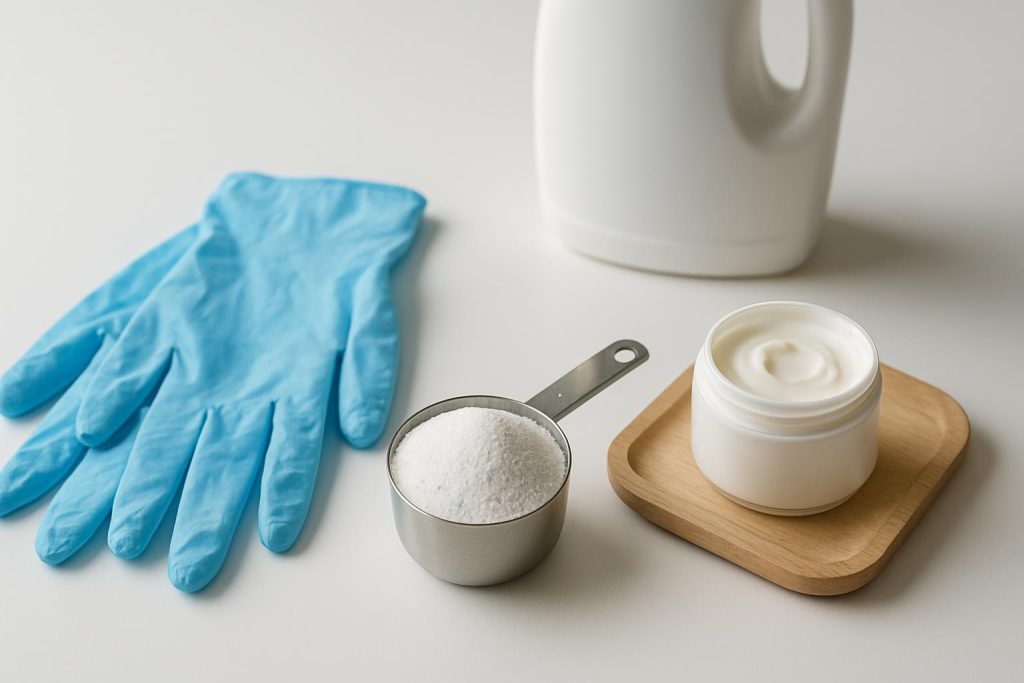
Nitrile gloves protect better than latex for many users and avoid latex allergy. Choose a cuff long enough to cover the wrist. If your hands sweat, wear thin cotton liners under gloves. Replace gloves when they get holes or feel tacky. For brief tasks, a barrier cream with dimethicone can reduce irritation. Barrier creams do not replace gloves for long or wet work.
Moisturize The Right Way
Moisturize right after washing and drying hands. Use a fragrance free cream or ointment. Look for ceramides, glycerin, petrolatum, or shea butter. Avoid scented lotions if you are sensitive. Reapply after each laundry session and before bed. Consistent moisturizing restores the barrier and reduces future irritation.
Better Product Choices For Sensitive Hands
What To Look For On The Label
Fragrance free and dye free is the first filter. Hypoallergenic claims are not regulated, so read the ingredient list. Look for short ingredient lists. Avoid isothiazolinone preservatives if you have a history of rash. Check for mild surfactants and neutral pH claims for hand wash products. Certifications like EPA Safer Choice, EWG Verified, and National Eczema Association Seal can help narrow the field.
Choosing By Fabric And Task
For everyday loads, a free and clear high efficiency liquid with mild surfactants is a solid start. For baby clothes or sensitive skin, stay fragrance free and run an extra rinse. For wool and silk, use a pH neutral delicate detergent without enzymes. For sports gear with odor, use fragrance free formulas with enzymes, but wear gloves if enzymes bother you. For hand washing only, a gentle, fragrance free delicate wash is easiest on skin.
DIY And Simple Alternatives
Simple soap flakes in water can work for quick hand washing of sturdy cotton. Rinse well to avoid residue. Soap plus washing soda can clean but may leave film in hard water and is not ideal for machines. Avoid strong homemade mixes with high pH if you have sensitive skin. Vinegar in the rinse can help reduce soap film but does not replace detergent. Baking soda can soften water for hand wash, but do not rely on it alone for cleaning. Test any DIY mix on a small item and watch your skin response.
Special Situations To Consider
Eczema Or Chronic Hand Dermatitis
Wear gloves for all detergent handling. Switch to fragrance free and dye free products. Consider low enzyme or enzyme free options if you flare. Use cool water and keep contact brief. Moisturize every time after work. If flares persist, talk to a dermatologist about patch testing and barrier repair routines.
Cracked Skin, Cuts, And Hangnails
Avoid direct detergent contact until healed. Cover small cuts with a waterproof bandage under gloves for any wet task. Keep nails trimmed to reduce snagging. File peeling edges smooth. Treat painful hangnails with gentle clipping and heavy moisturizer at night.
Children And Older Adults
Skin is thinner and more reactive at both ends of age. Keep pods and liquids locked away. Do not let children handle pods or measure detergent. Pre dilute any detergent used for hand washing of small items. Rinse kids clothes well if rash is a concern. For older adults with fragile skin, limit hand exposure and moisturize often.
First Aid And When To Seek Help
Sudden Stinging Or Burning Exposure
Rinse hands under cool running water for at least 15 minutes. Remove rings so swelling does not trap them. Do not try to neutralize with another chemical. After rinsing, pat dry and apply a bland, fragrance free moisturizer. If pain, swelling, or blisters persist, seek medical care.
Rash That Points To Allergy
Stop using the suspected product. Switch to a gentle, fragrance free routine. For mild itch, an over the counter hydrocortisone can help in the short term. If the rash spreads, oozes, or does not improve in a week, see a clinician. Ask about patch testing to identify exact allergens.
Eye Or Ingestion Accidents
If detergent gets in the eyes, flush with clean water for at least 15 minutes and seek care if symptoms remain. If swallowed, do not induce vomiting. Rinse the mouth and contact poison help. Pods pose a high risk and need urgent attention.
Practical Steps For Cleaner Clothes And Healthier Hands
Dial In The Dose
Use the lowest amount that still cleans your water hardness and soil level. Too much detergent leaves residue that can touch your skin on damp clothes. If fabric feels stiff or itchy, reduce dose and add an extra rinse.
Control Contact Time
Short contact means less irritation. Pre dilute. Soak instead of scrubbing. Use tools. Keep wash sessions short. Rinse well. Moisturize right after.
Set Up A Hand Safe Laundry Zone
Keep gloves near the machine. Store a pump bottle of fragrance free hand cream on the shelf. Keep a small towel to dry hands and avoid chapping. Place a measuring cup dedicated to detergent to prevent spills. Wipe the area weekly so dried residue does not end up on your skin.
Frequently Asked Questions
Is detergent residue on clean clothes a hand risk
Yes, if there is heavy residue. It can cause itch and dryness when you handle damp laundry or wear it. Use less detergent and run an extra rinse. Clean the washer gasket and drawer to cut buildup.
Are baby detergents always gentler for hands
Not always. Some baby formulas still contain fragrance or strong surfactants. Fragrance free and dye free matters more than the baby label. Check the ingredient list.
Is castile soap safer than detergent for hand washing
Castile soap can be gentler on hands, but it can leave residue on fabric in hard water. It is better for quick hand wash of sturdy items. Rinse well and avoid on silk or technical fabrics.
Do detergent sheets solve skin problems
Sheets reduce liquid spills but still hold concentrated surfactants. They can still irritate if you handle them wet or in high dose. Use dry hands, avoid rubbing the sheet on skin, and choose fragrance free.
Should I avoid enzymes if my hands react
Not everyone reacts to enzymes. If you notice flares after handling enzyme products, try an enzyme free detergent while wearing gloves. Many people with eczema do better with low enzyme or enzyme free options.
Conclusion
Key Takeaways You Can Use Today
Detergent is not automatically bad for your hands, but frequent and strong contact can damage the skin barrier. Lower the dose. Pre dilute. Keep contact short and cool. Wear nitrile gloves for mixing, soaking, or wringing. Choose fragrance free and dye free formulas with milder surfactants. Moisturize right after every laundry task. If a rash persists, seek patch testing and adjust products based on results. With a few smart changes, you can keep laundry clean and your hands comfortable.