
We are reader supported. When you purchase through links on our site, we may earn an affiliate commission. Also, as an Amazon affiliate, we earn from qualifying purchases.
Vinegar can clean hardwood floors safely if you dilute it correctly, use it on the right finish, and keep moisture under control. This guide shows you how to do it step by step, what to avoid, how often to use it, and how to fix common issues like haze or streaks. Follow the process once, and you will have a simple routine you can trust.
Quick answer before you start
Use white distilled vinegar only. Mix one quarter cup of vinegar with one gallon of warm water for regular cleaning. Never go stronger than one half cup per gallon. Mop with a well wrung microfiber pad on sealed polyurethane floors only. Do not use on waxed, oiled, or unfinished wood. Work in small sections, keep the mop only damp, and dry the floor immediately.
Confirm your floor finish first
Cleaning success depends on finish, not just the wood species. Vinegar is mildly acidic. On sealed polyurethane floors, this level is safe when diluted. On other finishes it can dull or strip the protection.
Safe on these floor types
Site finished or factory finished hardwood with a polyurethane or similar film finish. Engineered wood with a sealed topcoat that is polyurethane or aluminum oxide enhanced polyurethane. If you bought the floor in the last decade and it has a glossy, satin, or matte uniform sheen that does not smudge when rubbed, it is likely sealed.
Avoid vinegar on these floor types
Unfinished wood. Waxed floors. Oiled or hardwax oil finishes. Shellac or lacquer. Any floor with worn patches where bare wood shows. Use a cleaner made for that finish instead, such as a dedicated wood soap for oil or an approved wax cleaner.
How to double check quickly
Pick a hidden spot like inside a closet. Place a teaspoon of water on the surface for two minutes. If it beads and wipes away clean, the finish is likely sealed. If it darkens or absorbs, do not use water based cleaning or vinegar. Always test your cleaning mix on that same hidden spot and confirm no dulling after it dries.
What you need
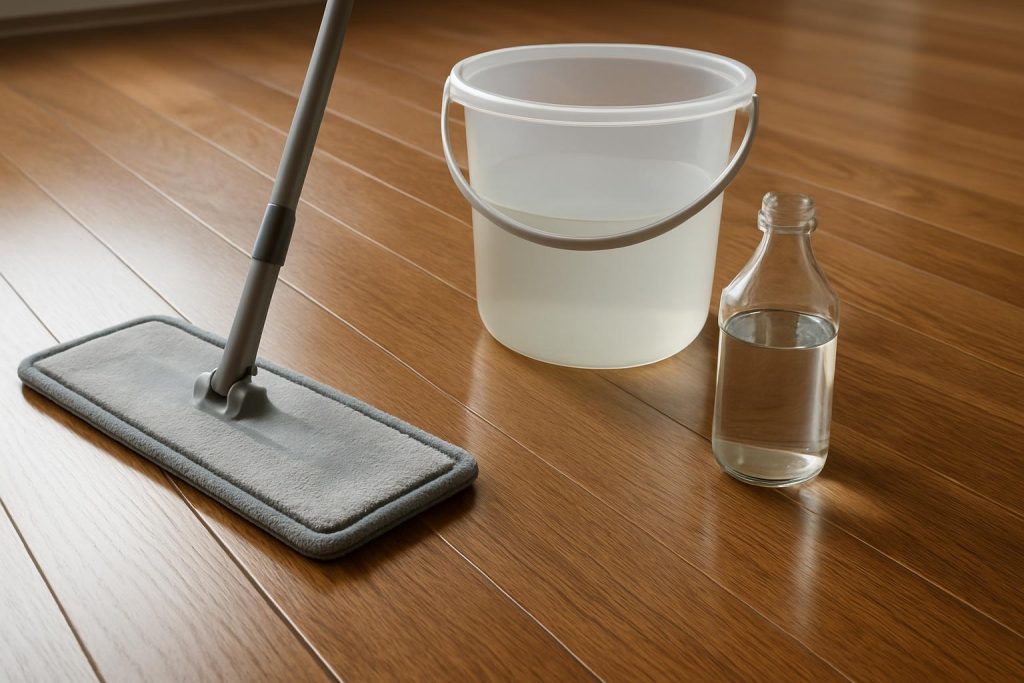
White distilled vinegar. Warm water. Two clean buckets or one bucket and a sink. A flat microfiber mop or microfiber pad mop. A soft vacuum or dust mop for prep. Clean dry microfiber cloths or towels for drying. Optional isopropyl alcohol at 70 percent for greasy spots. Optional distilled water if you have hard water that leaves mineral spots.
Mix the safe vinegar solution
Standard maintenance ratio is one quarter cup of vinegar to one gallon of warm water. For greasy or sticky film, you can go up to one half cup per gallon as a maximum strength. Do not exceed that. If your tap water is hard, use distilled water to prevent haze from minerals. Stir gently to combine. Prepare only what you will use today.
Prepare the room and the floor
Clear small rugs and lightweight furniture. Put felt pads under chair legs if they lack them. Vacuum or dust mop thoroughly. Grit is the biggest cause of scratches, and vinegar will not fix scratches once they happen. Pay attention to baseboards and corners where debris collects.
Damp mopping technique that protects the finish
Dip the microfiber mop pad into the vinegar mix, then wring or press it until it is just damp. No dripping. Start along the far wall and work toward the exit so you do not walk on wet areas. Move the mop with the grain of the wood in overlapping passes. Rinse and wring the pad often. If soil load is high, use a two bucket method. One bucket holds the vinegar mix. The second holds clean water for rinsing the pad between passes. Replace the vinegar mix if it looks dirty. The goal is to lift soil and remove it from the surface, not spread it around.
Dry immediately
After each small section, buff with a dry microfiber cloth or a clean dry mop head. Turn on fans and open windows for airflow if humidity is high. Do not let water sit in seams, near transitions, or under baseboards. Check under dining tables and along entry edges where liquid can pool.
Rinse step when needed
With the standard ratio, a rinse is usually not necessary. If you used the stronger half cup per gallon mix, or if you notice faint streaks, do a quick pass with a mop lightly dampened in plain warm water and dry again. Use very little water during this step.
How often to clean with vinegar
Use vinegar for occasional maintenance, not daily cleaning. For most homes, once every two to four weeks is enough. Dust or vacuum two to four times per week to remove grit. Spot clean spills as they happen with a damp cloth. For frequent wet mopping, switch to a neutral pH wood floor cleaner approved by the floor manufacturer. This reduces long term finish dulling.
Small daily habits that prevent damage
Use doormats at every entrance and clean them weekly. Put felt pads under all furniture legs and replace worn pads twice a year. Keep pet nails trimmed. Wipe spills within minutes. Do not walk on wood floors with wet shoes. Avoid rubber backed mats that trap moisture. Control indoor humidity between forty and sixty percent to reduce gapping and cupping.
Spot cleaning methods with vinegar safely
Sticky food or drink
Blot excess with a paper towel. Spray or dab a cloth with your diluted vinegar mix. Wipe the spot gently. Rinse with a cloth dampened in plain water. Dry at once.
Grease or oily marks
Mix a small bowl with two cups warm water, one tablespoon vinegar, and one tablespoon isopropyl alcohol. Lightly dampen a cloth and wipe the spot. Do a water damp rinse and dry. Test first in a hidden area.
Scuff marks from shoes
Rub the scuff with a clean white microfiber cloth dampened with the vinegar solution. For stubborn scuffs, use a melamine foam lightly with minimal pressure, then wipe with a damp cloth and dry. Do not scrub aggressively.
Pet accidents
Blot liquids immediately. Clean with the standard vinegar mix to neutralize odor. Follow with a plain water pass and dry thoroughly. If odor remains, use an enzymatic cleaner rated safe for sealed wood and follow label directions, keeping moisture minimal.
Salt, ice melt, or mineral spots
Use distilled water for mixing during winter months. Mop with the standard mix, then do a quick plain water pass and dry. If haze persists, see the troubleshooting section.
Troubleshooting common problems
Hazy film after cleaning
Causes include hard water minerals, too strong vinegar, residue from prior cleaners, or soil redeposit. Fix it by doing a quick mop with distilled water and a small splash of isopropyl alcohol at one tablespoon per gallon, then dry. If the haze is from old acrylic polish or oil soap, you may need a dedicated floor polish remover approved for polyurethane finishes. Test first.
Streaks that show in sunlight
Check that the mop is only damp and the pad is clean. Switch to distilled water in your mix. Use the lower vinegar ratio and buff dry with a clean towel. Work smaller sections and change the solution sooner.
Dulling over time
Dullness can come from frequent acidic cleaning or fine scratches from grit. Reduce vinegar use to monthly at most and use a neutral pH cleaner for regular mopping. Improve grit control at entrances. If dullness is widespread and does not respond to cleaning, consult a flooring pro about a screen and recoat, which refreshes the top layer without full sanding.
Lingering vinegar smell
Use the lower ratio and increase ventilation while cleaning. The odor fades as it dries. If it bothers you, add two drops of a wood safe, water soluble fragrance to the bucket or switch to a neutral pH commercial cleaner.
Squeaks or raised edges after cleaning
These point to moisture issues, not the cleaner. Reduce water usage, dry faster, and check indoor humidity. If boards cup, stop wet cleaning and use a dehumidifier until the floor stabilizes.
Important safety rules
Never use undiluted vinegar on wood floors. Never use steam mops on hardwood, sealed or not. Never flood the floor. Keep the mop pad damp only. Do not mix vinegar with bleach or ammonia. Keep kids and pets off the floor until it is dry. Store vinegar and alcohol out of reach.
When to skip vinegar and choose another cleaner
If the floor is waxed, oiled, or has any bare spots, do not use vinegar. Choose a cleaner made for that finish. If your floor manufacturer states to use only brand approved cleaners, follow that policy to protect your warranty. If you clean weekly, favor a neutral pH wood floor cleaner and use vinegar no more than monthly. If you want a one product routine, pick a reputable wood floor cleaner and use it for both regular and deep cleaning.
Deep cleaning method for heavy soil
Vacuum slowly with a soft brush head. Pre treat sticky spots with the standard vinegar mix and a microfiber cloth. Prepare a two bucket setup. Use the stronger half cup per gallon vinegar ratio only for this deep clean, and only on sealed floors. Work in small sections, rinsing the mop in the rinse bucket and wringing fully before dipping back into the vinegar mix. Replace both buckets when dirty. Follow with a fast pass of plain warm water, wring well, and dry immediately. Open windows and run fans to speed drying.
Care tips to keep floors clean longer
Place walk off mats inside and outside doors and wash them frequently. Use runners in high traffic halls with non staining pads. Rotate furniture occasionally to balance wear. Clean spills as soon as they happen. Do not drag furniture. Cut pet nails to reduce micro scratches that trap dirt. Dust with a dry microfiber mop before any damp cleaning.
Answers to common questions
Can I use apple cider vinegar
Do not use it on floors. The color can stain and the residue can leave a film. Use white distilled vinegar only.
Can I put vinegar in a spray mop
Yes if the floor is sealed and you use the safe ratio. Fill with the standard mix. Mist lightly, mop immediately, and avoid overspray on baseboards or adjacent stone.
Is vinegar safe around natural stone thresholds
No. Acid etches marble, travertine, limestone, and some slate. Keep the solution off stone surfaces and wipe any drips at once.
Will vinegar remove disinfectant residue haze
Often yes at the standard ratio, followed by a plain water pass and dry. If the haze remains, use distilled water and a few drops of isopropyl alcohol in a test area.
What if my floor already looks dull from vinegar
Stop using acidic cleaners. Clean with a neutral pH wood floor product for several weeks. If the finish still looks flat, ask a pro about a light abrasion and recoat to restore sheen.
Example routine you can copy today
Monday and Thursday dust mop or vacuum with a soft head. First Saturday of the month damp mop with one quarter cup white vinegar in one gallon of warm distilled water. Use a microfiber pad, wring it well, and dry as you go. Spot clean spills anytime with a cloth dampened in the same mix. On other Saturdays, if you want a wet clean, switch to a neutral pH wood floor cleaner. Replace entry mats each season and refresh felt pads twice a year.
Key takeaways you should remember
Use vinegar only on sealed polyurethane floors. Keep the solution mild at one quarter cup per gallon, maximum one half cup per gallon. Mop with a damp, not wet, microfiber head. Dry immediately. Do not use on waxed, oiled, or unfinished wood. Use vinegar occasionally, not daily. When in doubt, test first in a hidden corner.
Conclusion
Vinegar can be a safe, budget friendly way to clean hardwood floors when you control dilution and moisture. Confirm your finish, mix the solution correctly, use a damp microfiber approach, and dry fast. Keep vinegar for occasional maintenance and rely on daily dusting plus neutral pH cleaners for routine care. With this plan, your floors stay clean, your finish stays protected, and you avoid the common pitfalls that lead to haze or dullness.