
We are reader supported. When you purchase through links on our site, we may earn an affiliate commission. Also, as an Amazon affiliate, we earn from qualifying purchases.
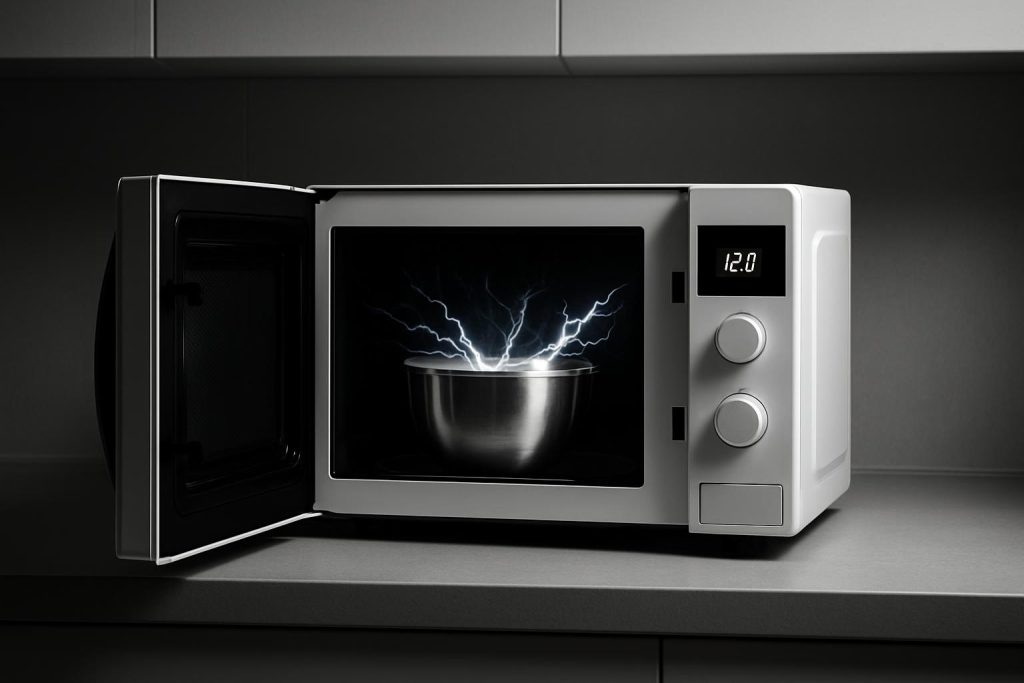
Can you put a metal bowl in a microwave is a common question that can save you from damage and stress. The short answer is usually no. There are a few controlled exceptions, but a typical stainless steel or aluminum mixing bowl should stay out of the microwave. Keep reading to understand why, what really happens with metal, what rare exceptions exist, and what to use instead for safe, even heating.
The short answer
Do not put a metal bowl in a microwave. A metal bowl reflects microwaves, can cause sparks, and can damage the appliance. Some microwaves include factory metal racks or allow small smooth pieces of foil for shielding. That does not make a regular metal bowl safe. When in doubt, transfer food to a microwave safe glass, ceramic, or labeled plastic container.
How microwaves interact with metal
What a microwave does
A microwave oven emits electromagnetic waves that make water, fats, and sugars in food move and heat. Glass, ceramic, and most plastics allow the waves to pass. Metal does not. Metal conducts electricity and reflects microwaves instead of letting them penetrate the food.
Why metal sparks
Microwaves push electrons around the surface of metal. If the metal has sharp points, thin edges, wrinkles, or is very close to the cavity walls, the electric field concentrates and can jump as an arc. That is the bright spark you see. Arcing can scorch the interior, damage the waveguide cover, and create a burning smell.
What a metal bowl does to your food
A metal bowl acts like a shield. Microwaves cannot pass through it, so the food inside does not heat well. The top may warm a little if the bowl is shallow and open, but most of the contents stay cold. If the rim is thin or the bowl touches the cavity walls, you raise the chance of arcing. You also risk hotspots at the rim where fields concentrate.
Risks you take with a metal bowl
Arcing and possible fire
Arcing is not just a flash. It can burn the interior coating, ignite food splatters or paper towels, and produce smoke. Greasy residue on the bowl or inside the oven raises this risk.
Damage to the microwave
Arcing can burn the waveguide cover or interior paint. Once damaged, sparks may occur more easily in future uses. The magnetron can be stressed if too much energy reflects back. Repairs can cost more than a new unit.
Uneven heating and cold centers
Because the bowl blocks microwaves, the food inside heats unevenly. The surface may steam while the middle stays cold. That is a food safety risk with leftovers or proteins. Pathogens can survive in the cool center if you do not heat thoroughly.
Unexpected burns
The bowl itself may not heat much from microwaves, but any food that does get hot can conduct heat into the metal. You might grab the bowl and get burned. Without a microwave safe handle, safe removal is harder.
When any metal can be used safely
Factory supplied metal racks and accessories
Some microwaves include a metal rack or a crisping tray designed for that model. These are engineered for specific positions and clearances. Use only as the manual directs. Do not add extra metal with the rack installed unless the manufacturer says it is allowed.
Small pieces of aluminum foil for shielding
Foil can be used in small, smooth, flat pieces to protect the edges of foods from overcooking. Keep foil away from the walls and ceiling of the microwave. Avoid crumpling and sharp points. Keep the foil to a small portion of the food surface. Monitor the oven and stop if you see any sparking.
Combination ovens with convection or air fry modes
Some ovens have microwave plus convection or air fry. In modes that do not use microwaves, metal cookware is fine. In pure microwave or microwave plus modes, follow the manual. Many allow only certain accessories. A regular metal bowl is still not suitable unless explicitly approved.
Are stainless steel bowls ever safe
In home use, almost never. Stainless steel is highly reflective to microwaves. The typical mixing bowl shape shields food and raises the chance of arcing near the rim. Unless your microwave manual specifically allows a certain metal bowl from the same brand, do not attempt it. Even smooth, thick steel can cause issues if it gets close to the cavity walls or if the interior has any burrs or welded seams.
Common myths explained
A spoon in a mug makes it safe
A metal spoon fully submerged in liquid and not touching the walls often does not spark. That does not make it a good general practice. The spoon can cause uneven heating and can become very hot. If the spoon touches the cavity or has any sharp features above the liquid line, arcing can occur. For routine use, avoid metal and use a microwave safe stir stick after heating.
A flat sheet of metal is fine
Large metal sheets reflect energy and can cause arcing at edges. They also block food from heating. Even a flat lid can fail if it has a rolled rim or if it sits too close to the cavity roof. Without explicit manufacturer approval, skip it.
New microwaves make metal safe
Modern ovens sometimes tolerate small foil or include engineered metal parts. That does not change the basic physics. A standard metal bowl is still a poor choice.
Practical alternatives that work better
Best materials to use
Borosilicate glass, plain glazed ceramic without metallic trim, and containers labeled microwave safe plastic are reliable. Silicone baking cups and lids designed for microwaves also work well. Avoid plates or bowls with metallic rims or decals that look shiny.
How to verify microwave safety
Check the bottom for a microwave safe mark. If uncertain, do a quick test with water. Place the empty container next to a microwave safe mug half full of water. Heat for short intervals. If the container stays cool and the water heats, it is likely safe. If the container becomes hot without food inside, do not use it. Stop the test if you see any unusual behavior.
Use lids and covers to reduce mess
Use vented microwave lids or a microwave safe plate over bowls to reduce splatter. Leave a small gap for steam to escape. This speeds heating and keeps the interior clean.
What to do if your food is in a metal bowl
Transfer quickly and safely
Do not try to microwave the food in the metal bowl. Transfer to a microwave safe container. If the bowl is cold from the fridge, avoid putting it on a hot stove or using sudden heat to prevent warping or burns. Use a silicone spatula to reduce mess.
Reheat large batches efficiently
Shallow, even layers heat faster and safer than deep piles. If the quantity is large, divide it into portions. Stir midway through heating to even out the temperature. Add a splash of water to dry foods to prevent tough edges.
If you already tried the metal bowl and saw sparks
Stop the microwave immediately and unplug it. Let it cool. Inspect the interior. Check the small panel on one side known as the waveguide cover for scorch marks or cracks. If you see damage or smell a persistent burning odor, contact service. Do not run the unit again until you are sure it is sound. Wipe the interior with warm soapy water, then deodorize with a bowl of water and a few lemon slices heated in short bursts, letting steam loosen residue.
Set up your kitchen to avoid mistakes
Label containers clearly
Mark the bottoms of safe bowls and lids with a visible microwave safe note. Use heat safe labels or a paint marker suited for kitchen use. For containers that are not safe, add a clear not for microwave mark.
Store smart
Keep microwave safe bowls, plates, and covers together near the microwave. Store metal mixing bowls in a separate cabinet. This small separation prevents rushed mistakes.
Create a microwave station
Place a trivet, oven mitts, a silicone lid, and a stirring spoon next to the microwave. Include a stack of paper towels or a splatter cover. With everything ready, you are less likely to grab the wrong bowl.
Simple safety checklist
Check the manual for any approved metal accessories. If none are listed, assume no metal. Do not put a metal bowl in the microwave. Avoid plates with metallic rims or decorations. Use glass, ceramic, or labeled plastic instead. If using foil for shielding, keep it small, smooth, flat, and away from the walls. Never let metal touch the interior surfaces. Watch the oven while in use. Stop immediately at any sign of arcing. Stir and rotate food for even heating. Let containers rest after heating to allow carryover heat to equalize. Clean splatters promptly to reduce future arcing risk.
Troubleshooting cold centers without metal
Shallow and spread out
Use a wide, shallow dish instead of a deep bowl. This gives the waves more access to the food and reduces cold spots.
Stir and re-cover
Heat in short intervals, stir, cover again, and continue. For dense foods like pasta bakes, break apart large chunks before heating.
Add moisture
A tablespoon of water or stock in rice or grains helps steam them back to life. Cover loosely to trap steam.
What manufacturers and food safety groups advise
Manufacturers generally advise against metal containers, including bowls, unless they provide a specific accessory. Food safety groups note that small amounts of smooth foil can be used to shield foods when directions allow, but never to line the cavity or cover a dish completely. This guidance aligns with the goal of even heating and avoiding arcing.
Special cases you might wonder about
Takeout containers with metal handles
Remove metal handles or transfer the food to a safe dish. Even a small metal staple or handle can spark.
Enamel coated metal
Some enamelware is metal under a glassy coating. If the enamel is chipped or the rim is exposed metal, it can arc. Unless the manufacturer states microwave safe, do not use it.
Travel mugs with metal walls
Double wall stainless steel mugs are not suitable for microwaves. They block heating and can spark at seams.
If you must use foil for a specific recipe
Use only small smooth patches to protect thin edges like pie crust tips or roast edges. Press the foil flat against the food with no points sticking up. Keep it well away from the oven walls and ceiling. Use medium power to reduce field intensity. Heat in short intervals and watch closely. Remove the foil as soon as the vulnerable edges are protected and continue heating without it for even warming.
Care and cleaning to prevent future arcing
Keep the cavity clean
Grease splatters and burnt residue can arc on their own. Wipe the interior regularly with warm soapy water. Rinse and dry. Steam clean with a bowl of water after messier sessions.
Inspect the waveguide cover
The small panel inside can collect grease. If it looks stained, gently clean it according to the manual. If it is cracked or burned, replace it before using the microwave again.
Use a splatter cover
A vented microwave cover keeps food moisture in and grease off the walls. This improves even heating and reduces cleanup time.
Key takeaways for busy home cooks
A metal bowl does not belong in a microwave. It blocks energy, can spark, and may damage the oven. Use microwave safe glass, ceramic, or labeled plastic. Small pieces of smooth foil are acceptable only when the manual allows and only with strict precautions. When unsure, transfer the food. The right container heats faster, safer, and more evenly.
Conclusion
Do not put a metal bowl in a microwave. The physics work against you, the risks are real, and the results are poor. Reserve metal for stovetop, oven, or convection only modes. Choose microwave safe containers, cover smartly, and stir for even heating. Set up your kitchen so the safe choice is the easy choice. With a few simple habits, you will heat food faster, avoid damage, and keep your microwave working for years.