
We are reader supported. When you purchase through links on our site, we may earn an affiliate commission. Also, as an Amazon affiliate, we earn from qualifying purchases.
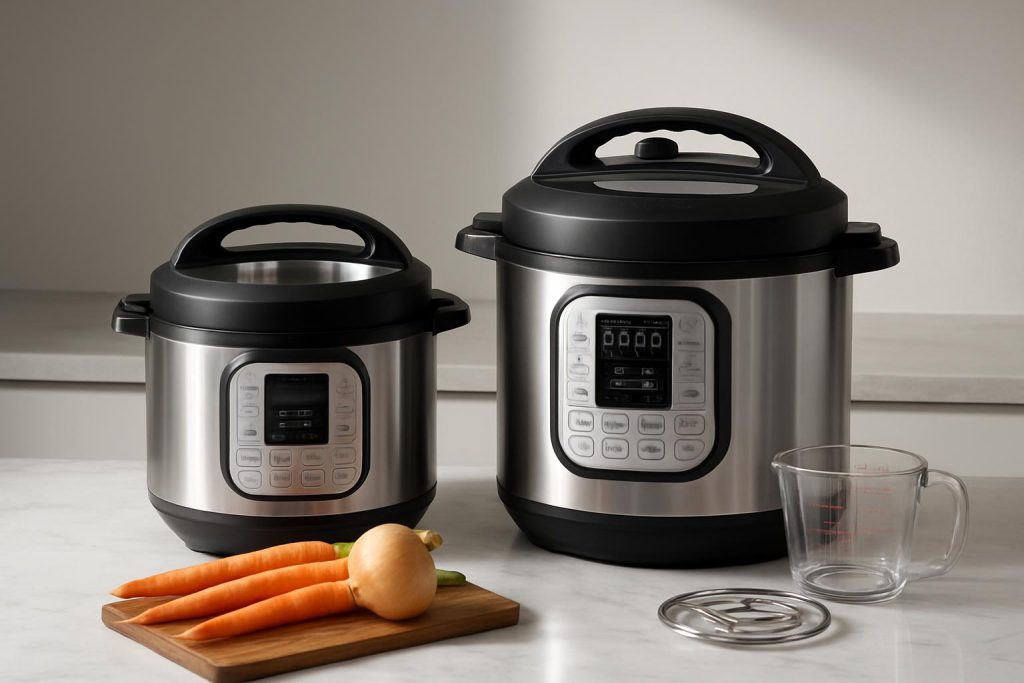
Choosing between a 6 quart and an 8 quart Instant Pot can feel small, but it changes how you cook, how much you store, and how smoothly your week runs. This guide walks you through real differences you will notice on your counter and at the table. You will see where each size shines, what to expect with time and space, and how to decide with confidence. Keep reading for a clear, no-fluff breakdown.
What Actually Changes Between 6 Qt and 8 Qt
Capacity and Servings
The 6 quart suits most everyday recipes and fits typical family portions. It comfortably cooks for 2 to 5 people without struggling with leftovers or storage. The 8 quart handles larger batches and bulkier ingredients. It is ideal if you cook for 6 or more people, love meal prep, or want double recipes in one go. Both sizes share similar programs and functions, but the usable space and flexibility change how you plan meals.
Kitchen Space and Storage
The 8 quart is taller, wider, and heavier than the 6 quart. It needs more counter depth and overhead clearance for safe steam release and lid movement. If you have low cabinets or tight corners, the 6 quart is easier to place and store. The larger inner pot of the 8 quart also takes more cabinet space and is heavier to handle at the sink. If your kitchen is compact, measure the spot you plan to use and store it before you decide.
Time to Pressure and Release
Size affects time. The 8 quart usually takes longer to come to pressure because there is more air volume to heat and vent. Expect it to add a few extra minutes before the cook time starts. Natural release also tends to take longer in the 8 quart due to more steam and liquid volume. In daily use, plan for the 8 quart to add roughly 3 to 8 minutes before pressure cooking begins and 5 to 10 extra minutes for a full natural release compared to the 6 quart.
Saute and Browning
The 8 quart gives you a larger surface area for searing roasts and browning meat without crowding. It can help avoid steaming meat when you are trying to brown. The tradeoff is that the larger base may take a touch longer to preheat on Saute. The 6 quart heats a smaller surface quickly, which feels fast for onions, aromatics, and quick browning. Both sizes can sear well when you avoid crowding and preheat the pot.
Minimum Liquid and Small Batches
Electric pressure cookers need enough thin liquid to build steam. The 6 quart typically needs about 1 cup of thin liquid to pressurize. The 8 quart generally needs about 1.5 cups. If you cook many small recipes or make sauces that are thick, the 6 quart is more forgiving. Very small volumes in the 8 quart can struggle to pressurize or may be at higher risk for scorching if liquid is too low. For rich sauces or pasta, deglaze well and respect minimum liquid rules in either size.
Accessory Fit and Specialty Cooking
Accessory size matters. In the 6 quart, most 7 inch cake pans, springform pans, and steamer baskets fit well. The 8 quart can handle 8 to 9 inch pans and larger double stack accessories. If you bake cheesecakes, want to stack two pans, or often use pot in pot containers, the 8 quart gives more room to maneuver. If you use accessories only sometimes, the 6 quart keeps things simple and compact.
Whole Cuts and Batch Cooking
The 8 quart fits larger roasts, whole chickens on the bigger side, and taller mason jars for pot in pot tasks. It is better for broth, big batches of chili, and doubled recipes you want to freeze. The 6 quart still handles a wide range of family meals and stock, but the 8 quart reduces the squeeze for bulky ingredients.
Cost and Energy Use
The 8 quart usually costs more than the 6 quart. It also warms a larger space and often draws higher wattage during preheat and Saute. If you will not use the extra capacity often, the 6 quart saves money and storage without limiting everyday cooking.
Who Should Choose the 6 Qt
Best For These Households
Choose the 6 quart if you cook for 1 to 5 people most days. It hits the sweet spot for couples, small families, and anyone who likes a tidy footprint with fast heat up and simple cleanup. It is the most common recipe baseline, so you rarely need to adjust quantities.
Meals That Fit Smoothly
Weeknight soups, stews, oatmeal, rice, beans, shredded chicken, and 7 inch cheesecakes all fit easily. Whole chickens on the smaller side fit, as do moderate roasts and a pound or two of dried beans. Most one pot pastas and chilis are sized for the 6 quart by default.
What to Watch
If you often host or want to meal prep double batches in one cycle, you may find the 6 quart limiting. It can feel tight for large roasts, very tall jars, and big family packs. If you only occasionally cook large, the 6 quart still handles it with slight scaling.
Who Should Choose the 8 Qt
Best For These Households
Choose the 8 quart if you cook for 6 or more people, entertain often, or rely on batch cooking. It pays off if leftovers and freezer meals are part of your routine. It is a strong pick if you want the flexibility to double most recipes without running two cycles.
Meals That Fit Smoothly
Large roasts, big whole chickens, hearty double batch soups and stews, and taller pot in pot stacks work well. The wider base supports larger steamers, two-tier racks, bigger springform pans, and more jars in one run. If you make broth or cook beans for the week, the 8 quart gives room to spare.
What to Watch
The 8 quart takes more space and usually needs more liquid to pressurize. It also tends to add a few minutes before and after cooking. If your kitchen is small or you rarely need large capacity, consider whether the extra size will be used weekly, not just on holidays.
Everyday Performance Differences You Will Notice
Preheat and Natural Release
The 6 quart comes to pressure faster and releases steam a bit faster. The 8 quart adds minutes on the front and back end. If you plan dinner around exact times, this matters. If you like set and forget cooking with built-in buffer time, the difference is easy to live with.
Steam and Venting
The 8 quart vents a larger plume of steam. Use it where you have space to vent safely. Angle the lid away from cabinets and always keep faces and hands clear. The 6 quart produces less steam volume and feels more manageable in tight kitchens.
Burn Warnings and Thick Sauces
Both sizes can show burn warnings if sauces are thick and the bottom is not deglazed. The 6 quart is kinder to small or thick recipes because it needs less liquid. In both sizes, scrape the bottom after saute, add enough thin liquid, and layer thick sauces on top rather than stirring in when possible.
Organizing and Storage Tips by Size
Counter and Cabinet Fit
Place the cooker so the steam vent is clear. For the 8 quart, test lid clearance under cabinets before the first run. If space is tight, store the cooker in a lower cabinet and move it to an open counter for use. Keep the condensation collector attached and empty it after each use.
Cleaning and Handling
The 8 quart inner pot is larger and heavier when full. Let contents cool slightly before moving. Use a trivet to protect counters when removing the pot. Both sizes clean easily with warm soapy water and a soft sponge. Wipe the outer housing with a damp cloth and dry fully.
Accessory Management
For the 6 quart, aim for 7 inch accessories to avoid crowding. For the 8 quart, choose 8 to 9 inch pans and double racks to use the width. Store small tools like the trivet, extra ring, and racks in a labeled bin near the cooker so setup stays fast.
How Size Affects Recipes
Liquid and Scaling
Do not scale liquid linearly when doubling. Many recipes only need a modest increase in liquid to reach pressure, especially for soups. Maintain the general rule of about 1 cup minimum thin liquid in the 6 quart and about 1.5 cups in the 8 quart. For foamy foods like pasta and beans, avoid overfilling and leave extra headspace.
Cook Times and Heat-Up
Pressure cook times are usually the same between sizes. The difference is the time to pressure and the time to release. If a recipe lists 10 minutes at pressure, expect the 8 quart to add minutes to the total elapsed time. Plan accordingly for weeknights.
Pot in Pot Setup
The 8 quart offers easier stacking and room for larger bowls and pans. The 6 quart keeps pot in pot simple for sides like rice, vegetables, and small cheesecakes. In both, use a trivet with handles for safe lifting and keep water below the trivet level.
Real-World Scenarios to Help You Decide
Small Family, Limited Storage
You cook for two adults and a child. You have a narrow counter and standard-height uppers. You want fast weeknight meals and minimal cleanup. Choose the 6 quart. It fits, heats quickly, and covers everyday recipes with less dead space.
Meal Prep on Sundays
You cook for four but rely on leftovers for lunches. You like making a big pot of chili and portioning for the freezer. Choose the 8 quart. It doubles your batch in one cycle and gives space for larger accessories and stacking.
Frequent Entertaining
You host family dinners and make big roasts, ribs, or large whole chickens. You want room to maneuver without cramming. Choose the 8 quart. It reduces crowding and gives safer headspace for larger cuts.
Cost, Value, and Long-Term Fit
Upfront Price and Ongoing Use
The 6 quart usually costs less and fits more kitchens. The 8 quart adds capacity that pays off only if you use it often. The best value is the size that matches your weekly cooking volume, not the size you might use a few times a year.
Future-Proofing
If your household may grow or you plan to commit to batch cooking and freezer meals, the 8 quart offers headroom. If your priority is fast, tidy, and consistent weeknights with minimal storage needs, the 6 quart remains the safe default.
Quick Decision Checklist
Pick the 6 Qt if these are true
You cook for 2 to 5 people. Your counter space is tight. You want faster heat-up. You rarely double recipes. You prefer compact accessories.
Pick the 8 Qt if these are true
You cook for 6 or more or want regular leftovers. You batch cook soups, beans, and roasts. You use larger pans and pot in pot stacks. You have room to store and vent safely. You do not mind a few extra minutes per cook.
Conclusion
The Bottom Line
Both sizes are capable. The 6 quart is the best all-around pick for most homes, especially if space is limited and recipes are standard size. The 8 quart is the right tool if you cook for a crowd, double recipes in one run, or want more room for larger cuts and accessories. Match the pot to your weekly habits, not your rare occasions, and your Instant Pot will work harder for you with less hassle.
FAQ
Q: Which Instant Pot size is better for a family of four
A: Both can work, but the 6 quart is ideal if you cook single recipes without big leftovers, while the 8 quart is better if you want to double recipes or plan for meal prep.
Q: Does the 8 quart take longer to come to pressure and release
A: Yes. Plan for roughly 3 to 8 extra minutes before pressure cooking begins and 5 to 10 extra minutes for a full natural release compared to the 6 quart.
Q: How much liquid do I need for each size
A: The 6 quart typically needs about 1 cup of thin liquid to pressurize, and the 8 quart generally needs about 1.5 cups.
Q: What meals are easier in an 8 quart
A: Large roasts, bigger whole chickens, double batch soups and chilis, broth, and recipes using larger or stacked accessories.
Q: Will the 8 quart fit under my cabinets
A: It is taller and wider and may be tight under low cabinets. Place it where you can vent safely with clear overhead space.